Phone
Consular Issues
Phone
Embassy messages
New Opportunities to Expand Cooperation Between Uzbekistan and Serbia
The upcoming visit of the President of the Republic of Uzbekistan to Serbia could mark an important stage in the development of bilateral relations. Over the past year, the political dialogue between Tashkent and Belgrade has intensified noticeably and taken on a more systematic character. Against this backdrop, one of the key tasks now is to translate the political engagement achieved so far into concrete trade, investment, transport, and humanitarian projects.
The current momentum builds on relations that have developed over three decades. Serbia recognized Uzbekistan’s independence on 31 December 1991, and the two countries established diplomatic relations on 18 January 1995. In the early years, the diplomatic mission of the Federal Republic of Yugoslavia in Tashkent maintained contacts between the two sides. In 2003, the mission ceased operations amid the economic situation in Serbia at the time.
Relations gained new momentum in 2025. In September, on the sidelines of events in Beijing marking the 80th anniversary of Victory in the Second World War, President of Uzbekistan Shavkat Mirziyoyev held conversation with President of Serbia Aleksandar Vucic. A key milestone followed on 28–31 October, when the Serbian leader paid his first official visit to Uzbekistan. Following the talks, the two heads of state signed a Joint Declaration and adopted a package of intergovernmental and interagency documents covering the economy, investment, education, tourism, labor migration, and other areas of cooperation.
The mutual accreditation of ambassadors marked another important institutional step. On 7 July 2025, the first Ambassador of Uzbekistan to Serbia presented his credentials to the President of Serbia, and on 27 October the Ambassador of Serbia to Uzbekistan presented his credentials to the Uzbek side.
High-level contacts continued in 2026. In April, the foreign ministers of the two countries held talks on the sidelines of the Antalya Diplomacy Forum, and in May, Serbian Foreign Minister Marko Duric visited Uzbekistan. On 18 May, Sh.Mirziyoyev and A.Vucic met again on the sidelines of the World Urban Forum in Baku. In July, the two leaders held a phone conversation, and on 3 August, the foreign ministries of the two countries held a third round of political consultations in Belgrade.
The political dialogue is gradually being complemented by growing ties between the two countries’ legislatures. The chambers of the Oliy Majlis have set up an inter-parliamentary group for cooperation with the National Assembly of the Republic of Serbia. Senate Chairwoman T.Narbaeva visited Belgrade in June 2026 to take part in the IPU Global Conference of Women Parliamentarians, and a few weeks later Tashkent hosted a delegation from the “Serbia–Uzbekistan” parliamentary friendship group, led by its chairman A.Markovic.
The political and institutional foundation now in place creates favorable conditions for expanding economic cooperation. At the same time, its current scale still falls well short of the existing potential. In 2025, bilateral trade turnover totaled around $12 million. 9 enterprises with Serbian capital currently operate in Uzbekistan, pointing to considerable room for expanding both trade and industrial cooperation.
The cultural and humanitarian dimension of bilateral ties is also gradually expanding. An important step in this direction came in October 2025, when the two sides signed an agreement establishing partnership relations between Tashkent and Belgrade during the Serbian President’s visit. The agreement opens additional opportunities for direct contacts between the two capitals and for joint initiatives.
The progress achieved over the past year lays the groundwork for moving to more systematic work across several areas.
First, significant potential remains in trade and economic cooperation. Priorities here could include broadening the range of Uzbek exports, increasing the share of high-value-added products, and establishing a preferential trade regime. In February 2026, Deputy Prime Minister of Uzbekistan J.Khodjaev and Deputy Prime Minister of Serbia A.Mesarovic identified this as one of the priorities for further work.
Both sides have solid economic grounds for expanding trade. Uzbekistan has a growing industrial base in the textile, chemical, food, and machine-building sectors. Serbia, for its part, enjoys preferential access to the EU market and an extensive network of free trade agreements. This creates opportunities not only for increasing mutual deliveries but also for developing industrial cooperation with a view to reaching third markets.
Second, developing transport connectivity holds practical interest. In February 2026, an Uzbek delegation held talks with representatives of Serbia’s transport sector in Belgrade. In separate meetings, the delegation discussed prospects for rail cooperation with Serbian Railways Infrastructure and explored the possibility of launching direct flights between Tashkent and Belgrade with Air Serbia.
Launching direct flights could substantially ease business, tourism, education, and humanitarian contacts between the two countries. Developing freight links between Central Asia and the Balkans also represents a promising direction. Going forward, growing freight volumes on routes involving Uzbekistan could further strengthen transport connectivity between Central Asia and European markets.
Third, developing labor mobility carries particular significance. Uzbekistan has consistently built up a system of organized external labor migration and established itself as a reliable partner in training skilled personnel. According to the Migration Agency, the country has concluded 48 agreements with 23 states in this area.
This experience provides a practical foundation for building a similar mechanism with Serbia. Reaching agreements would make it possible to establish transparent channels for organized employment, strengthen the protection of citizens, and, at the same time, promote regulated labor mobility between the two countries.
Fourth, education, science, and technology cooperation offer significant opportunities. An intergovernmental agreement on cooperation in education, science, and culture, signed in October 2025, has strengthened the legal basis for this cooperation. One practical avenue could involve Uzbek students participating in Serbian state educational programs, including the “World in Serbia” scholarship program.
Ongoing transformations in Uzbekistan’s higher education system are creating further opportunities to expand such cooperation. The country now has 215 universities, including 30 branches of foreign educational institutions. Uzbek universities continue to strengthen their standing in international rankings, while joint programs with leading foreign educational institutions continue to expand.
Building on the existing institutional foundation, joint educational programs and research projects could become promising directions going forward, particularly in technical fields, digital technologies, and workforce training for priority sectors of both countries’ economies. Such cooperation could give the relationship a long-term character, complementing political contacts with lasting professional and institutional ties.
Fifth, tourism and cultural exchanges serve as an additional resource for rapprochement. In April 2026, the relevant agencies of the two countries discussed joint projects in film tourism, PR promotion, and familiarization trips for media representatives and bloggers. In practical terms, such initiatives could not only help increase tourist flows but also expand direct contacts between the two societies.
In sum, over a relatively short period, Uzbekistan and Serbia have built a fairly solid political and institutional foundation for further developing their relations. At the same time, the level of political dialogue still clearly outpaces the scale of trade, economic, and investment cooperation. The trajectory of the next stage will therefore largely depend on the two sides’ ability to translate the political capital they have accumulated into concrete projects and durable cooperation mechanisms.
The upcoming visit of the President of Uzbekistan to Serbia could give this process additional momentum. Its practical significance will depend above all on progress in trade and investment, transport, labor mobility, education, and tourism. Implementing such initiatives will help fill the rapidly developing political dialogue with more substantial economic and humanitarian content.
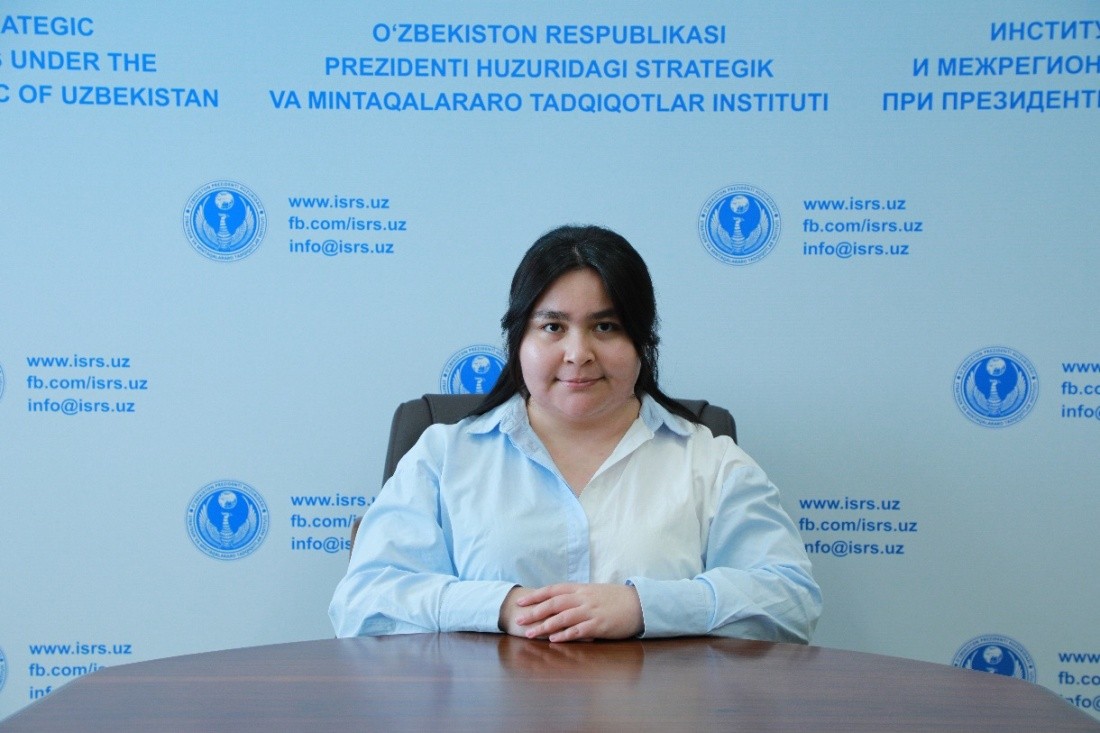
Madinabonu Kayumova,
Leading Researcher
of ISRS under the President of the Republic of Uzbekistan
📅 24.08.2026
Embassy messages
The Ministry of Foreign Affairs of the Republic of Uzbekistan has launched the “Consular Services” mobile application
Consular Services Reception Procedure at the Embassy of Uzbekistan in Latvia
Узбекистан и страны Балтии объединяют усилия в борьбе с коррупцией
Uzbek specialists study Latvia’s best practices in veterinary and livestock sectors
Uzbekistan and Finland discussed prospects for cooperation in the field of entrepreneurship support
A holiday of unity: Navruz celebration connects nations in Riga
Trade union delegation of Uzbekistan discusses in Latvia issues of protecting the rights of compatriots – labor migrants
Ambassador of Uzbekistan presented his credentials to the President of Lithuania
Uzbekistan and Finland are preparing for the next meeting of the intergovernmental commission and a business forum within its framework
Discussions on potential areas of cooperation with the Association of European Chambers of Commerce and Industry were held in Riga
Uzbekistan and Latvia agreed to prepare a bilateral agreement on cooperation in the field of labor migration
Uzbekistan and Latvia ready for permanent dialogue in the field of labor migration
Торговый дом Узбекистана в Латвии провел онлайн-тренинг для хокимов и экспортеров Сырдарьинской области
Uzbek delegation studied Finland's experience in preventing violence against children
A festive evening for compatriots was organized in Estonia
Latvia widely celebrated the anniversary of the adoption of the Basic Law of Uzbekistan
Возможности медицинского туризма в Узбекистане презентованы в Риге
New contracts worth over $4 million signed as part of Uzbek exporters' business mission to Latvia
A roundtable discussion on the topic "Mirzo Ulugbek: a great encyclopedist and a famous statesman" was held in Riga
СМИ Латвии: Явка на выборах в Узбекистане составила 74,72%
Досрочное голосование по выборам в Законодательную палату Олий Мажлиса Узбекистана проходит в Латвии
В Латвии и Литве обсуждаются ключевые аспекты предстоящих парламентских выборов в Узбекистане
Issues related to the development of cooperation between Uzbekistan and Latvia in the field of combating crime discussed in Riga
A round table was held in Latvia on the upcoming elections in Uzbekistan to the Legislative Chamber of the Oliy Majlis and Kengashes of People's Deputies
Uzbek exporters familiarized with requirements for import of Uzbek products to Latvian and European markets
Export of agricultural products from Uzbekistan to the Latvian market increases
ЭЪЛОН!
Uzbek ambassador meets Latvian Saeima speaker to discuss prospects for boosting inter-parliamentary cooperation
Diplomats of Uzbekistan held a visiting reception of fellow citizens living in Estonia and Finland
Ambassador of Uzbekistan presents credentials to President of Latvia

-
 Ministry of Foreign Affairs of the Republic of Uzbekistan
 -
 Diplomatic Service of the Ministry of Foreign Affairs
 -
 State Committee for Tourism Development
 -
Ministry of Investments and Foreign Trade of the Republic of Uzbekistan
-
 invest.gov.uz
 -
-

-

-

-
-

-

of Uzbekistan in the Republic
of Latvia
When using the information, a link to www.uzembassy.lv
must be provided.
All rights reserved
Address
Address: Riga c., LV-1010. 11-11 Elizabetes Str., Latvia
Phone: 37167322424
Fax: 37167322306
Email: embassy@uzbekistan.lv
Useful links
HomeIssuance of biometric passport for departure abroad
Certificate to return to Uzbekistan
Withdrawal of citizenship
Loss of citizenship