Phone
Consular Issues
Phone
Uzbekistan news
We recommend
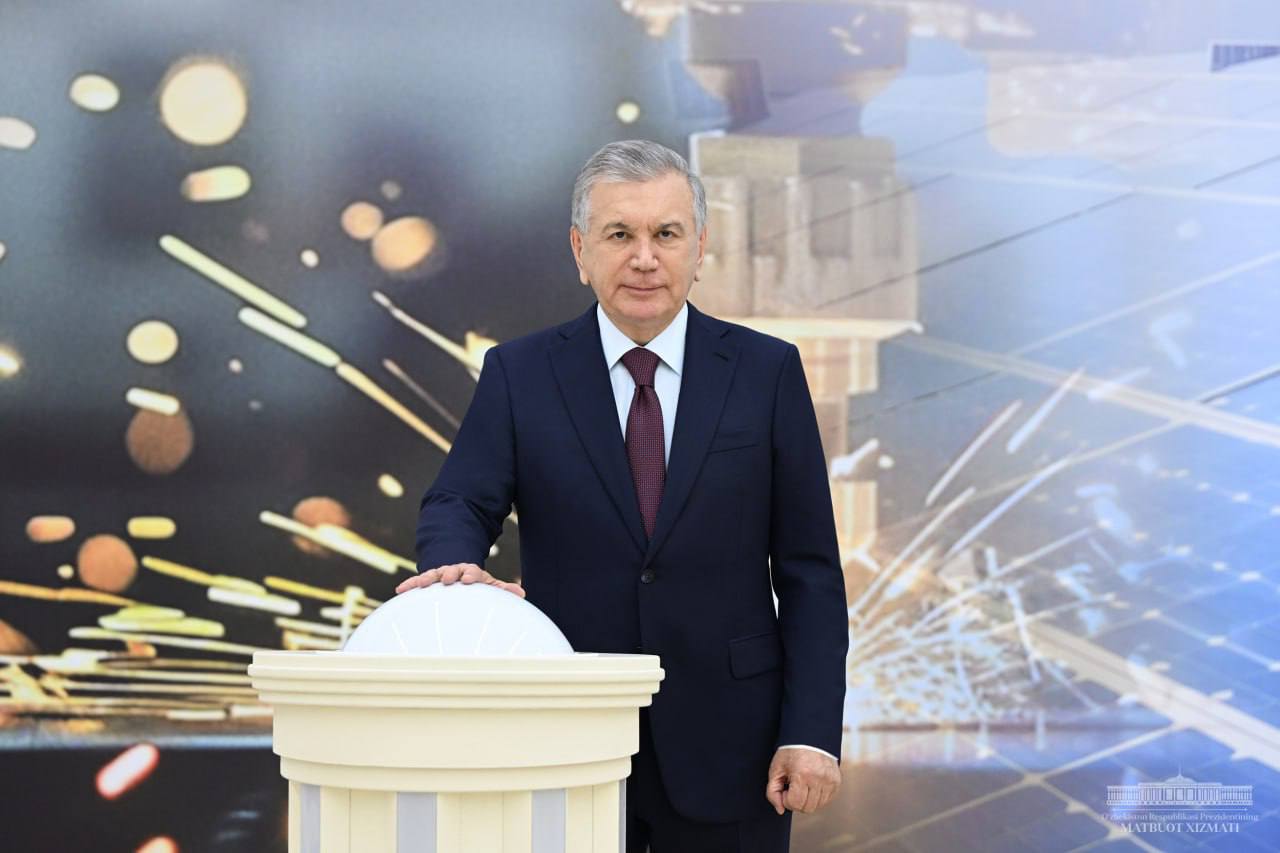
9 projects with a total value of 2 billion dollars
📅 15.10.2024The text of the article is in Uzbek!
In which sectors of the economy does Uzbekistan attract foreign investment
📅 08.08.2024
The "Uzbekistan 2030" strategy aims to increase the country's gross domestic product to $160 billion and per capita income to $4,000. Achieving this goal solely through the domestic market is not possible; therefore, it is crucial to actively attract foreign investments and increase exports.
The Tashkent International Investment Forum plays a significant role in this effort. In May 2024, the third edition of the forum took place in Tashkent, becoming a significant event for the economy of Uzbekistan and the international investment community. The main objective of the forum was to enhance the inflow of foreign investments and promote economic cooperation between Uzbekistan and other countries.
The forum attracted business representatives, investors, government officials, and international organizations, facilitating dialogue and the signing of major investment agreements. In recent years, Uzbekistan has demonstrated significant growth in attracting investments, and the forum has been an important step in this direction.
In his welcoming speech, the head of state noted that Uzbekistan has attracted over $60 billion in foreign investments in recent years, with approximately $14 billion coming from international financial institutions. These investments have been directed towards social and infrastructure sectors.
The forum has gained incredible popularity, with over 2,500 participants from 93 countries, providing a platform for global dialogue and exchange of investment experiences.
It is important to highlight that the forum garnered attention from international media, with coverage from more than 110 foreign publications in 30 countries, including leading global media outlets such as CNN, Euronews, London Post, and Associated Press.
One of the key events of the forum was the presentation of regional energy projects (the construction of Kambarata-1 HPP and Yavan HPP) to foreign investors. The presentation involved the Prime Ministers of the Republic of Uzbekistan and the Kyrgyz Republic, emphasizing the importance of these projects for the entire region.
As a result of the Tashkent International Investment Forum, agreements were signed totaling $26.6 billion, indicating the high investment attractiveness of Uzbekistan and the success of the forum. For comparison, in 2022, 167 documents were signed at the forum, amounting to $11 billion, demonstrating a significant increase in investment interest in the country.
Specifically, agreements were reached on the implementation of the following major investment projects:
- Saudi Arabian company "Data Volt" will be involved in the construction of urban infrastructure in "New Tashkent" for $1 billion and will establish a "data processing center" based on green technologies for $3 billion.
- Saudi Arabian company "ACWA Power" will implement projects for the construction of a 5 GW wind power plant in the Republic of Karakalpakstan and the creation of 2 GW energy storage devices, with a total investment of $6.2 billion.
- UAE company "Amea Power" will carry out a project to build a 1000 MW wind power plant in the Republic of Karakalpakstan for $1.1 billion.
- "Saudi Tabrid" will undertake the modernization of the heating systems in Nukus, Fergana, and Kuvasay for $750 million.
- Egyptian company "Nile Sugar" will engage in sugar beet cultivation and sugar production in the Jizzakh region for $500 million.
- Chinese company "Shanghai Knud International" will implement a project for the production of textile and sewing products in the Namangan region for $205 million.
- "Wilmar International" (Singapore) will produce food products and confectionery in the Tashkent region for $200 million.
Additionally, agreements were reached with several major global companies, such as "Orascom Investment" (Egypt), "Bonafarm Grup" (Hungary), "Sayar" (USA), "Goldwind," "Sinoma" (China), "Sam Yapi" (Türkiye), "Pasha Development" (Azerbaijan), "Lasselsberger" (Austria), and "Petrosat Chexelsoton" (Iran), for the implementation of new investment projects totaling $6.6 billion.
The event included a rich program of panel sessions, discussions, business breakfasts, and roundtable discussions, focusing on key aspects of economic development. The central theme revolved around the role of the state, investors, and entrepreneurs in supporting small and medium-sized businesses.
During the session on combating corruption, experts emphasized that effective anti-corruption measures are crucial for improving the investment climate. They highlighted that creating a safe and transparent business environment plays a vital role in this process.
"The successful fight against corruption requires a comprehensive approach, including strengthening legislation and increasing the transparency of government actions," stated Akmal Burkhanov, Director of the Anti-Corruption Agency of the Republic of Uzbekistan.
The session on retail trade identified the main challenges and opportunities in the industry. Participants expressed the need for improving tax legislation and simplifying import procedures. They also emphasized the importance of creating conditions for successful adaptation of new brands in the market.
"Thanks to the resolution on reducing customs duties, we have managed to establish fair prices, as in the UK and Kazakhstan," shared Ilya Lyapustin, Sales and Marketing Director of "Tashkent City Mall."
During the business breakfast dedicated to women entrepreneurship, the significant impact of women entrepreneurs on society was emphasized. Speakers presented inspiring examples and strategies for achieving a balance between profitability and social responsibility.
Special attention was given to attracting foreign investments through residency programs.
"In recent years, Uzbekistan has proven itself as an attractive destination for global investors due to its openness to cooperation and prospects in the real estate sector," stated Akram Mukhamatkulov, representative of Henley & Partners.
The roundtable discussion on "Supply Chains and Resilience: Finding Balance in Uncertain Times" addressed the problems and strategies for ensuring the resilience of global supply chains.
"Turkey and Uzbekistan have a strategic partnership, and we can significantly strengthen cooperation by working together," noted Deputy Minister of Trade of Turkey, Sezai Ucharmak.
Experts also emphasized the importance of integrating digital technologies into investment strategies. They highlighted that digitization is not just the future but already a reality, playing a key role in accelerating investment processes and increasing transparency.
The pitch session "IT-PARK Uzbekistan: New Perspectives for Development" presented plans to transform Uzbekistan into a regional hub for information technology by 2030.
Sherzod Shermatov, Minister of Digital Technologies of Uzbekistan, highlighted the significance of recent investments. "Yesterday, we witnessed an important event - the start of the construction of the $5 billion green data center, Data Volt, a major project of direct foreign investment. We are creating a favorable environment for IT companies and launching the 'Zero Risk' program to cover all risks associated with opening and operating offices in Uzbekistan," he noted.
The roundtable discussion on "Connectivity: Reviving the Great Silk Road" brought together international experts and representatives of government bodies to explore opportunities for expanding connections, economic cooperation, and cultural exchange along the ancient Silk Road routes.
The roundtable discussion on "Integrated Urban Planning: Quality Investments, Environmental and Human Comfort" involved leading urban planners, architects, and business representatives discussing approaches to the development of the city of Tashkent. In particular, Vladislav Butenko, Managing Director and Senior Partner at BCG, emphasized the importance of integrating innovative solutions into urban planning to achieve sustainable city development. He stressed the need to consider both economic and social aspects in comprehensive planning, ensuring a balance between them.
The forum played a significant role in attracting investments for various ministries and regions of Uzbekistan. The signed agreements indicate the development of key sectors such as industry, energy, pharmaceuticals, and automotive manufacturing.
One of the major achievements of the forum was the agreement between the Ministry of Digital Technologies, the Ministry of Energy, and IT company Data Volt on the construction of a data center based on green technologies. Experts highlighted the importance of such projects for Uzbekistan. The signing ceremony was attended by Laziz Kudratov, Minister of Investment, Industry, and Trade, and Rajit Nanda, Director of Data Volt.
The third Tashkent International Investment Forum has concluded, but the planned initiatives and signed agreements promise active work in attracting investments and ensuring sustainable development. Uzbekistan has once again confirmed its role as a strategic partner on the international stage, attracting the attention of global investors and contributing to the economic growth of the region.
Tengiz Asanov,
Deputy Head of the Department of the Ministry of Investment, Industry and Trade of Uzbekistan
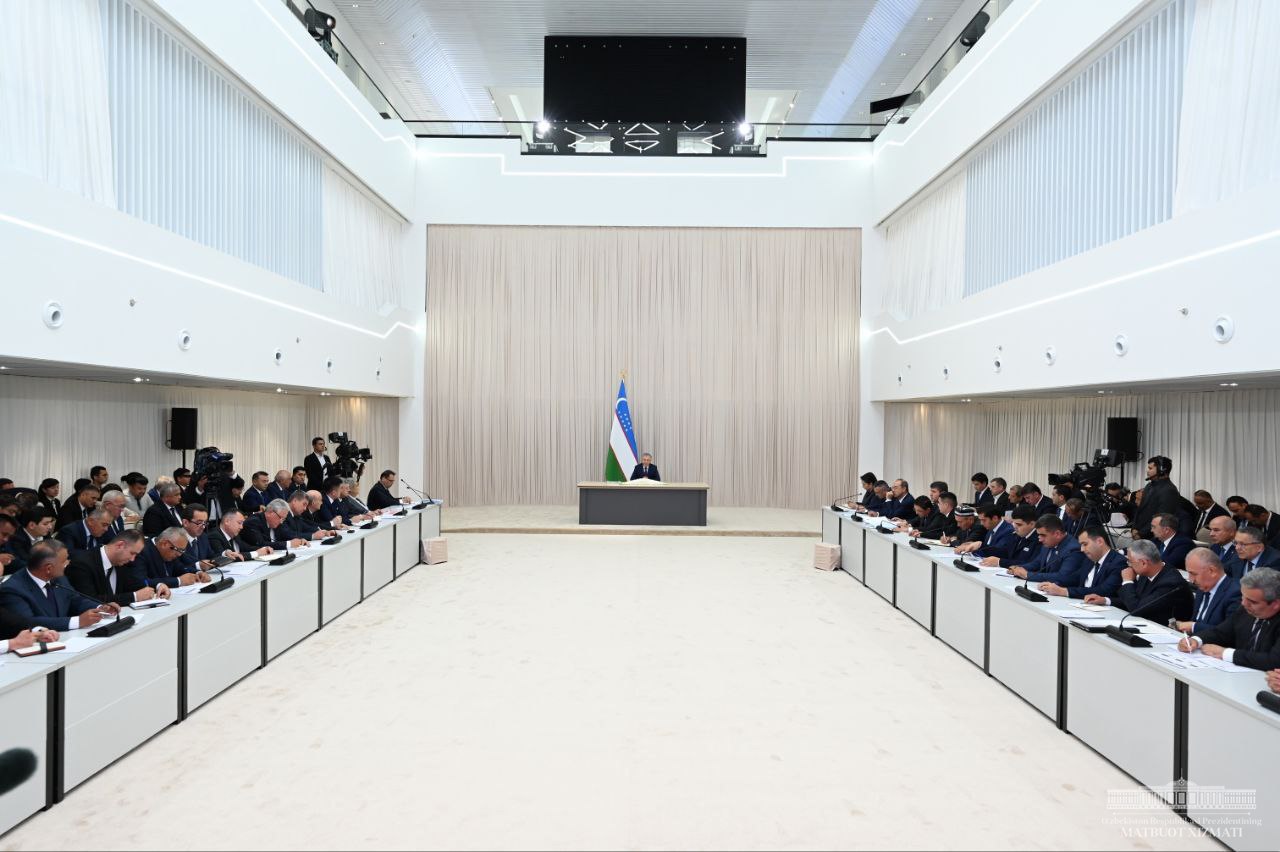
Dialogue on the development of engineering science and education was held
📅 20.06.2024
On June 20, President Shavkat Mirziyoyev chaired a video conference call on training engineering personnel and improving the performance of higher educational institutions.
In today's competitive world, our country, relying on domestic resources, is moving towards industrial development. Every year 3 thousand industrial enterprises are put into operation, about 150 thousand jobs are created.
This year, projects worth 21 trillion soums will be implemented within the framework of state investment programs. Also, projects with foreign and regional investments worth 37.5 billion dollars are planned for this year.
Accordingly, the state pays great attention to science, education and innovation. For example, over the past four years, 2.2 trillion soums have been allocated to 1,727 practical, innovative, fundamental and startup projects. Spending on research and development has doubled.
However, the results in this area and the number of highly qualified engineers are still insufficient. There is a gap between higher education institutions and industry.
That is why rectors of technical universities were also invited to the meeting.
The head of state first of all dwelt on the problems in this sphere.
The 36 state technical higher educational institutions annually graduate 67 thousand specialists. However, the programs and specialties in these universities do not meet the requirements of manufacturers. As a result, 60 percent of engineers do not work in their specialty.
Higher educational institutions are limited to fundamental research, and practical developments for the economy are very rare. Hundreds of startups and innovative projects in engineering fields remain on paper.
In foreign universities there are such specialties as "value engineering", "comparative engineering", "reverse engineering". In our technical universities, these areas are not developed. As a result, industries have to spend a lot of money on training their employees abroad or attract specialists from abroad.
Although the coverage of higher education has increased 5 times in the last seven years, the interest of young people in engineering and technical specialties is very low. Some equipment of universities and scientific laboratories is outdated. Many professors and teachers are disconnected from practice. Rectors do not visit enterprises, do not familiarize themselves with new technologies, do not study equipment and machines.
Over the last four years, the number of research contracts of universities has tripled. Revenues from them have increased 6 times. However, the implementation of the results of scientific developments into production is slow. Not everyone is equally successful in patenting their inventions.
The President presented new initiatives to develop this area.
Now training and research processes in technical areas will be completely changed based on the best practices. 36 universities and their branches will be gradually consolidated, leaving a total of 20 technical universities. They will completely switch to the dual system of education.
Specialties that are not in demand in the labor market will be reduced. Some departments will be merged. The functions of dean offices to serve students will be digitalized. Based on foreign experience, a "Registrar's Office" will be created.
Each university will establish cooperation with prestigious technical universities of developed partner countries such as Germany, Japan, China, Russia, Italy, Turkey, South Korea, Singapore.
Based on the chain "industry-enterprise-university", each university will be assigned an industrial partner.
All engineering universities will open departments at their partner enterprises and introduce dual education. At the same time, the enterprises will allocate funds to equip the departments, stimulate teachers and students. Student internships and graduate training will be fully organized at partner enterprises.
Thirty-two sectoral councils will be established in the system of ministries and enterprises. They will determine priority directions of scientific research in technical fields together with institutes and will be customers of these researches.
Also at the first stage, higher engineering schools will be opened in 10 universities. Two-year applied master's degree programs will be implemented in them, and candidates will be selected by order of manufacturers. Enterprises will financially support the establishment and equipping of laboratories in higher engineering schools. The state will also provide highly qualified engineers-technologists. If every minister, industry leader, rector, professor and teacher feels deep sense of responsibility and works hard, we will definitely achieve this," Shavkat Mirziyoyev said.
The status of pilot production enterprises of universities will be legislated. They will be granted privileges applicable to IT park residents. At least 60 percent of the employees of the subsidiaries will be doctoral candidates and students.
From next year, state grants for projects in technical areas will be increased fourfold. Partner organizations of universities will also be allowed to act as founders of enterprises.
Hokims of regions and heads of industries will be able to directly provide universities with orders for scientific and production projects up to 10 billion soums.
A system of allocating at least half a percent of the cost of investment projects for scientific activities will be introduced.
It has been determined to organize national contests "Best Idea", "Best Project" and "Best Invention" in engineering fields. Teachers, students and practicing engineers will be able to participate in them. The prize for the first place is an electric car.
Also 10 best participants, authors of ideas, projects and inventions will be sent for internship to such countries as Germany, Japan, China, Russia, Italy, Turkey, South Korea, Singapore.
The meeting continued in the format of an open dialog. Industry leaders, scientists, rectors and engineers expressed their opinions on the development of science and education in engineering.
It was assigned to draft a relevant decree based on the proposals.
- We need highly qualified engineers-technologists like air for the accelerated development of the economy. If every minister, industry leader, rector, professor and teacher feels deep sense of responsibility and works hard, we will definitely achieve this," Shavkat Mirziyoyev said.
Uzbekistan promotes initiatives in Central Asia that unlock new opportunities for cooperation
📅 14.10.2026
Today, the Consultative Meetings of the Heads of State of Central Asia provide the region’s leaders with a regular platform to align their positions on issues that shape the future of Central Asia as a whole. Over the course of eight summits, direct dialogue has evolved into sustained engagement at the level of national coordinators, relevant ministries and agencies, regions, and business communities. From an economic perspective, it is particularly important that trade, industry, transport, and investment are being addressed with due consideration for the interdependence of national development plans.
Central Asia has arrived at its current model of cooperation within a relatively short period of time. In 2017, President Shavkat Mirziyoyev proposed holding regular meetings of the region’s leaders, and the first such meeting took place in Astana in March 2018. The format was built around direct dialogue, allowing the states themselves to define the range of common issues and coordinate their positions in areas where results depend on the actions of neighboring countries. At the same time, the format has retained its fundamentally consultative nature, based on the independence of its participants.
As the scope of cooperation expanded, the necessary mechanisms were gradually established. In 2021, establishment of a Business Council was proposed. In 2022, the Treaty on Friendship, Good-Neighbourliness and Cooperation for the Development of Central Asia in the 21st Century was signed. The Council of National Coordinators was established in 2023, and a year later the Central Asia 2040 Concept for the Development of Regional Cooperation was adopted. In this way, political dialogue acquired an institutional and legal framework between summits while preserving the flexibility of the original format.
Uzbekistan’s chairmanship in 2025 significantly strengthened sectoral cooperation. More than 20 major sectoral and interregional events were held, including the Interregional Cooperation Forum at the level of deputy prime ministers. Ahead of the Seventh Consultative Meeting in Tashkent, the first meeting of the Council of Ministers of Trade and Investment of the Central Asian countries and Azerbaijan was held. Discussions focused on practical objectives: increasing mutual trade to USD 20 billion, establishing production facilities under the “Made in Central Asia” brand, and attracting international financial institutions to infrastructure and industrial projects.
The current scale of economic ties makes it possible to pursue more ambitious objectives. By the end of 2025, Uzbekistan’s trade turnover with the Central Asian countries had reached USD 8.3 billion, an increase of 15.2 percent. In the same year, the volume of direct investment and loans attracted from countries in the region amounted to USD 1.3 billion. Growing trade and investment activity is creating a foundation for deeper industrial cooperation and the development of production chains among enterprises across the region.
This is the underlying rationale of “Made in Central Asia.” Enterprises from several countries can participate in the creation of a final product by distributing individual stages of production among themselves. For Uzbek businesses, such a model expands the pool of potential customers and enables production to be planned in response to demand beyond the domestic market. A practical foundation is already taking shape: an Action Plan for the Development of Industrial Cooperation for 2025–2027 has been approved, bilateral investment funds have been established, cross-border trade zones and industrial cooperation centers are being developed, and joint sectoral projects are being implemented.
The economics of production chains is directly dependent on logistics. The China–Kyrgyzstan–Uzbekistan railway, as well as the Trans-Afghan and Trans-Caspian routes, involve different groups of participating countries.
The consultative platform provides an opportunity to coordinate countries’ infrastructure plans, border crossing operations, and logistics hubs in advance. In 2025, Uzbekistan proposed establishing an Infrastructure Development Council at the level of deputy prime ministers in order to place such coordination on a permanent footing.
A more favorable business environment is also being shaped through decisions taken in bilateral and trilateral formats. Since 2023, citizens of Uzbekistan and Kyrgyzstan have been able to cross the shared border using ID cards. In 2025, Uzbekistan, Kyrgyzstan, and Tajikistan signed a treaty on the junction point of their state borders. These measures facilitate travel, business contacts, and cross-border trade.
Azerbaijan’s accession as a full-fledged participant in November 2025 expanded the permanent dialogue toward the South Caucasus and brought into the format a country located along the continuation of the Trans-Caspian routes. This makes it possible to address trade, transport, energy, and investment issues within a broader economic geography.
At the same time, the planning horizon is expanding. The Central Asia 2040 Concept established long-term priorities, while at the Tashkent summit Uzbekistan proposed developing a Comprehensive Regional Program for Trade and Economic Cooperation through 2035, adopting a Declaration on a Common Investment Space, and introducing a joint program for the development of e-commerce. For businesses, these initiatives create a more predictable horizon for planning investments, supply chains, and entry into neighboring markets.
Uzbekistan’s proposal to move toward a strategic “Central Asian Community” format also fits within this longer-term perspective, with the aim of strengthening continuity in the implementation of long-term infrastructure, industrial, and investment initiatives.
Following the conclusion of Uzbekistan’s chairmanship, the focus continued to shift toward new forms of economic connectivity. At the informal meeting of the heads of state of Central Asia and Azerbaijan in July 2026, Uzbekistan proposed substantive work on integrated industrial and technological value chains, shared digital services, and investment platforms.
The mechanisms developed in recent years make it possible to connect suppliers across several countries, establish production facilities serving broader markets, attract capital to projects of regional scale, and incorporate logistics considerations from the earliest stages of investment planning. The established channels of cooperation facilitate the transition from strategic priorities to concrete projects while preserving each state’s independence in decision-making. Translating high-level agreements into programs and measurable results is what defines the substance of the next stage.
For Uzbekistan, this represents a qualitatively new scale of regional economic policy. Central Asia is becoming a space where coordinated decisions expand the potential market for national enterprises, connect production capacities, open new routes, and strengthen the foundation for investment. This is precisely where the strategic significance of the platform lies: the countries of the region are themselves shaping the conditions for long-term growth, while Uzbekistan consistently advances initiatives that translate the potential of good-neighborly relations into tangible economic opportunities.
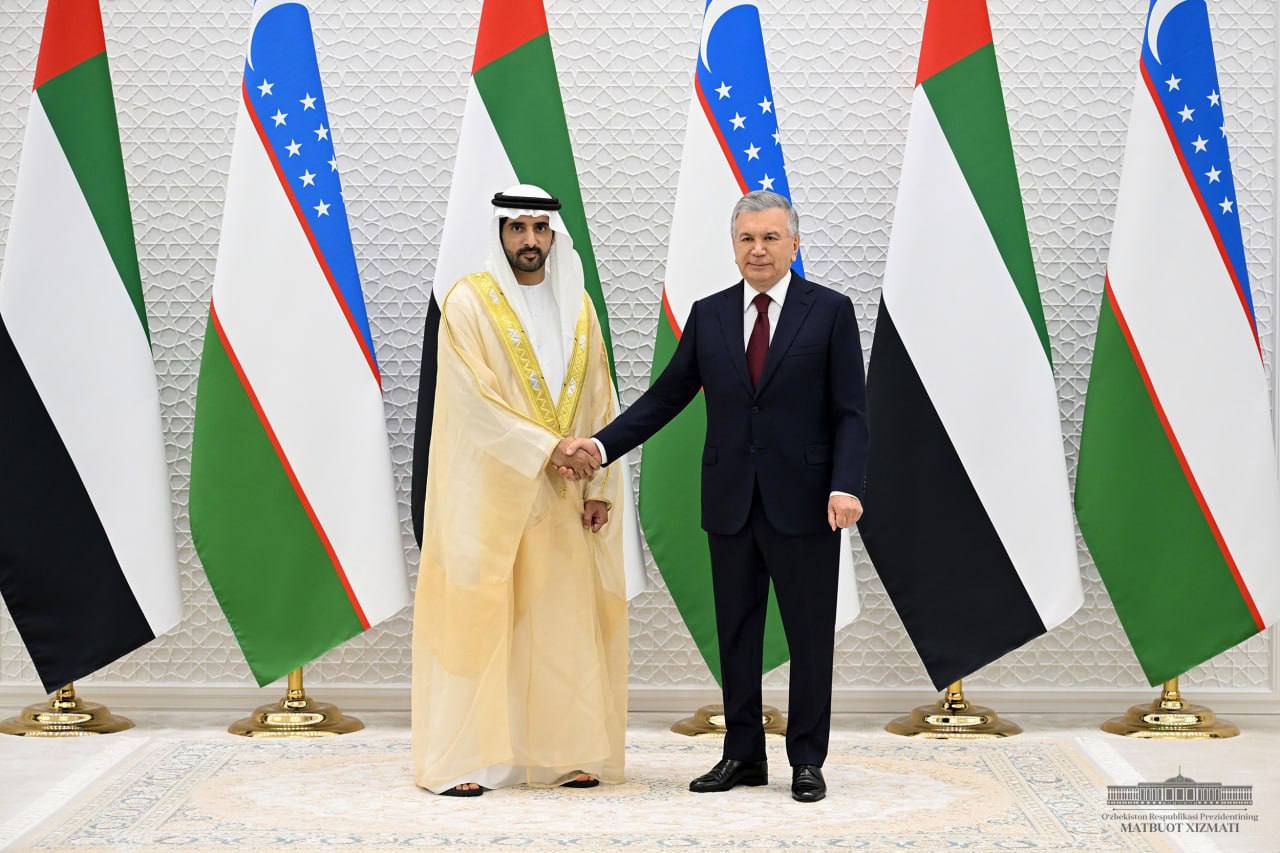
President of Uzbekistan considers promising areas and projects of cooperation with UAE
📅 30.09.2024
Issues of further development of multifaceted partnership, promotion of economic and investment cooperation projects, establishment of practical interaction in the defense sector were discussed at the meeting between President of the Republic of Uzbekistan Shavkat Mirziyoyev and a delegation from the United Arab Emirates headed by Deputy Prime Minister, Minister of Defense, Crown Prince of the Emirate of Dubai Sheikh Hamdan bin Muhammad Al Maktoum.
The Emirati delegation included the Ministers of Government Affairs Muhammad bin Abdullah Al Gergawi, Energy and Infrastructure Suhail bin Muhammad Al Mazroui, Economy Abdullah bin Tuq Al Marri, and Minister of State for Artificial Intelligence and Digital Economy Omar bin Sultan Al Olama.
At the beginning of the conversation, Sheikh Hamdan Al Maktoum expressed his sincere gratitude to our Head of State for the warm welcome and conveyed warm greetings from UAE President Sheikh Mohammad Al Nahyan and Prime Minister of the UAE, Emir of Dubai Sheikh Mohammad Al Maktoum.
During the meeting, special attention was paid to the issues of forming a new long-term agenda of mutually beneficial cooperation in such key areas as investment, innovative development, green energy, infrastructure, education, healthcare, ecology, digital transformation, tourism and others.
The sides highly appreciated the fruitful results of the joint forum on unlocking the potential of mutually beneficial cooperation, bilateral intergovernmental and interdepartmental talks held this morning.
An agreement was reached to adopt a road map for the development of full-scale cooperation in strategic sectors.
It should be noted that the UAE is one of Uzbekistan's key partners in the Asian region.
The latest high-level contacts took place within the framework of the Global Climate Summit in Dubai last December.
The trade turnover in 2023 grew by 21 percent and amounted to 626 million dollars. More than 320 enterprises with the participation of Emirati capital operate in our country. The portfolio of ongoing and prospective investment projects amounts to about 20 billion dollars.

NEW UZBEKISTAN: THE "GREEN" PATH OF DEVELOPMENT
📅 15.05.2025
In the 21st century, "green" development has become not just a trend, but an unavoidable path for all of humanity. In the face of rapid climate change, intensifying water resource scarcity, and loss of biodiversity, sustainable development has become a priority for every nation. The President of the Republic of Uzbekistan, Sh.M. Mirziyoyev, speaking at international, regional, and national forums, consistently promotes the agenda of sustainable "green" development as the key to the prosperity of future generations.
The recently published book "The Path of 'Green' Development for New Uzbekistan" presents 310 quotes and 54 initiatives by Sh. Mirziyoyev, proposed during the period of 2017-2025, addressing climate change mitigation, rational use of water and natural resources, biodiversity conservation, and transition to a "green" economy.
Structurally, the book is divided into three chapters: "'Green' Development - the Path Chosen by Humanity," "Central Asia - The Course Towards 'Green' Development and the Future," and "New Uzbekistan on the Path of Sustainable Development."
Green development: the path humanity has chosen
In the context of the global climate crisis, depletion of natural resources, and deterioration of environmental quality, an increasing number of countries are transitioning to a sustainable development model. Within this concept, a "green" economy is replacing raw material-industrial models centered on extraction, exploitation, and disregard for environmental risks.
The leader of Uzbekistan has repeatedly emphasized that for Central Asian countries, "green" development should become the foundation for a new stage of modernization: ..."only by efficiently utilizing limited land and water resources, addressing environmental issues, and embarking on the path of 'green' development, 'green' economy, and 'green' energy can we ensure sustainable development of the country and the well-being of its population. This is the only correct path." This quote reflects a fundamental shift in state policy: from narrow economic thinking to a strategic approach that focuses not only on profit and growth but also on environmental preservation, ecosystem sustainability, and public health. This is precisely why Sh. Mirziyoyev advocates the idea that the green course is not a fashionable trend, but a long-term necessity. Supporting the transition to green energy sources, reducing greenhouse gas emissions, strengthening environmental legislation, and educating the public are all part of a systemic green reform.
The President consistently emphasizes that responsibility for the future lies not only with developed countries but also with emerging economies. In this context, he declared at the UN General Assembly (2023): "At this pivotal historical moment, we all must reflect on what kind of planet we will leave for future generations." This appeal aims to mobilize the global community, but primarily reflects Uzbekistan's internal transformation - a course towards sustainability, resource conservation, and climate justice. In this regard, we present the following scientifically grounded proposals of the President.
Firstly, "climate change has become one of the main challenges for sustainable development in Central Asia," declared the President of Uzbekistan at the COP28 summit in Dubai. He emphasized that "the transition to a 'green' economy and achieving carbon neutrality are strategic objectives of New Uzbekistan."
Secondly, "Climate change has become one of the main challenges to sustainable development. This is especially acute in Central Asia and adjacent regions against the backdrop of the Aral Sea tragedy - one of the most devastating ecological crises of our time."
Thirdly, "the rise in air temperature in Central Asia is twice the global average, the number of extremely hot days has doubled, and a third of glacier masses have melted."
Fourthly, "soil degradation, regular dust and sand storms, drinking water shortages, air pollution, biodiversity loss, sharp decline in crop yields, and many other factors are negatively impacting the quality of life of millions of residents in the region."
Fifthly, the President also called for "swift agreement on the Global Framework for Climate Change Adaptation within the Paris Agreement." He also addressed the topic of global transition to a low-carbon economy. According to him, this process "must be fair, transparent, and inclusive" and "must necessarily take into account the interests of developing countries."
Sixthly, to transform the Aral Sea region into a Zone of Innovation, Technology, and New Opportunities, the head of Uzbekistan invited everyone to close cooperation "in creating an International Climate Technology Expo Hub in this region." Additionally, the President proposed to "establish scientific exchange and conduct joint research on the platform of the Climate Science Forum," which is being created on the basis of Green University in Tashkent, involving scientists and experts from foreign countries.
Central Asia: Charting a Course Towards "Green" Development and Future
Global climate change is one of the most serious problems of our time, affecting all countries worldwide and becoming a significant obstacle to sustainable "green" development. The observed warming is causing extreme natural phenomena across the globe, such as droughts, hurricanes, scorching heat, fires, torrential rains, and floods.
Uzbekistan and other Central Asian states are among the countries most vulnerable to environmental disasters. Against the backdrop of a general increase in climate threats, Central Asia is developing its own regional response to the challenges of global warming and environmental degradation. The initiatives of the President of Uzbekistan on international platforms demonstrate that green transformation is not just a national priority, but also an interstate one.
Speaking at the 78th session of the UN General Assembly (2023), the President emphasized: "Today, the world is facing a severe ecological situation. The triple planetary crisis, caused by climate change, loss of biodiversity, and environmental pollution, is intensifying.
Under these challenging conditions, Central Asia, which continues to grapple with the tragedy of the Aral Sea, is becoming one of the regions most vulnerable to climate change."
This quote indicates the need for regional integration in the field of environmental safety. The President emphasizes the importance of joint actions in the management of natural resources, in particular transboundary waters. He initiated the development of a Regional Strategy to combat desertification and land degradation, emphasizing that sustainable agriculture and biodiversity conservation are only possible through coordinated efforts.
As part of this initiative, the following proposals were put forward:
First proposal: establishment of a Regional Center for Climate Technologies;
Second proposal: creation of a unified "green" energy space;
Third proposal: joint projects for reforestation and combating desertification, particularly in the dried-up seabed of the Aral Sea;
Fourth proposal: development of transboundary water diplomacy based on the principles of the Helsinki Convention.
In recent years, at Uzbekistan's initiative, the UN General Assembly has adopted more than ten special resolutions. Many of these directly address environmental issues in Central Asia and reflect Uzbekistan's active role in regional environmental diplomacy.
It is particularly noteworthy that all international initiatives and efforts of Uzbekistan's leader in this field are rooted in our national values, passed down from our ancestors over millennia. It should be emphasized that the environmental initiatives presented by the head of state at global forums receive widespread support from the international community and make a tangible contribution to ensuring sustainable "green" development at the global level.
For instance, one of Uzbekistan's landmark achievements was the adoption of a Special Resolution by the UN General Assembly in 2021, declaring the Aral Sea region a zone of environmental innovations and technologies. This marks the first time the UN General Assembly has granted such a high status to a region. This is because, due to the drying up of the Aral Sea, the Aral Sea region has become the epicenter of a global ecological disaster, a territory with an elevated risk to human health and ecosystem instability.
Water resource management issues in the region also remain within the focus of the President of Uzbekistan. "Effective water resource management with neighboring countries is key to sustainable development not only for Uzbekistan but for our entire region." This statement is particularly relevant for Central Asia, where water is becoming an increasingly scarce and politically sensitive resource. The leader of Uzbekistan advocates for the establishment of sustainable mechanisms for the distribution and joint management of water flows, which should reduce tensions and ensure harmonious development.
At the SCO summit in Bishkek (June 14, 2019), Shavkat Mirziyoyev proposed adopting the SCO "Green Belt" program to introduce resource-saving and environmentally friendly technologies in the organization's member countries. At the 14th ECO Summit (March 4, 2021), the Head of Uzbekistan put forward an initiative to develop and approve a medium-term strategy aimed at ensuring energy sustainability and broadly attracting investments and modern technologies to this sector.
At the Third Consultative Meeting of Central Asian Heads of State, held on August 6, 2021, in Turkmenistan, the President of Uzbekistan advocated for the development of a regional "Green Agenda" program for Central Asia. This program aims to facilitate the adaptation of countries in the region to climate change. The main focus areas of the program could include gradual decarbonization of the economy, rational use of water resources, integration of energy-efficient technologies into the economy, and increasing the share of renewable energy production.
Overall, against the backdrop of the increasing prominence of the international climate agenda, Uzbekistan's ongoing systemic environmental policy in the field of environmental protection aims to further improve the ecological situation in the Central Asian region.
Uzbekistan's New Path Towards Sustainable Development
Today, Uzbekistan is actively integrating the principles of "green" transformation into its development strategies, laying the foundation for long-term sustainable growth. This is not merely a response to global challenges, but also an aspiration to enhance the quality of life for our citizens, generate new employment opportunities, and foster the country's sustainable "green" development. At present, "green" development in Uzbekistan has been elevated to the status of a nationwide movement. The primary objective of New Uzbekistan's transition to a "green" course is to safeguard human dignity, improve the population's well-being, and protect the fundamental rights of its citizens.
For Uzbekistan, the transition to "green" development is not an abstract concept or something far removed from reality. This notion has become an integral part of our country's constitutional course, encompassing all sectors of the economy and public life.
President Sh. Mirziyoyev emphasizes: "It is of great importance to accelerate the transition to an economy based on the careful management of water, energy, and other natural resources.
The task of developing 'green' and digital technologies, as well as production enterprises, is also crucial for us."
This is not merely a scientific and philosophical statement, but a guiding principle of state environmental policy. Under this slogan, various programs are being developed:
- increasing the share of renewable energy (target - at least 30% by 2030);
- reducing water losses in the agricultural sector through the use of digital systems and precision farming;
- improving energy efficiency of residential and industrial buildings;
- creating "smart" and "green" cities, including within the framework of the "Tashkent - Green Capital" project.
One example is the construction of solar and wind power plants in Navoi, Bukhara, and Samarkand regions. These projects are being implemented with the participation of major foreign investors (Masdar, ACWA Power) and are creating new jobs while reducing the burden on hydrocarbon resources.
Sh.Mirziyoyev also emphasizes the need to cultivate new ecological thinking in young people: "Understanding nature, environmental education and upbringing, forming environmental awareness and ecological culture among the population, especially among youth, which promote kindness, compassion, and mercy, are among the important tasks that must be accomplished to preserve the environment."
In this context, special attention is paid to environmental education, promoting sustainable practices, and supporting startups in the field of eco-technologies and green innovations. The creation of a national environmental performance rating for regions and institutions has become a tool for stimulating sustainable change.
Thus, Uzbekistan is becoming an example of a systematic approach to sustainable "green" development, combining environmental goals with economic growth and social justice. The principles of the "green" economy are increasingly being integrated into national planning, making Uzbekistan not only a participant but also an active driver of the international green agenda.
Conclusions: Prospects for the Future
First conclusion. The approach being implemented in New Uzbekistan under the leadership of President Shavkat Mirziyoyev exemplifies the synergy of political will, scientific knowledge, national policy, and international cooperation. "Green" development is not a trend or a temporary solution. It is a strategic choice, a path chosen by humanity, and Uzbekistan demonstrates how this path can be realized in the face of global challenges.
Second conclusion. The initiatives and statements of Uzbekistan's leader demonstrate that green development for Uzbekistan is not a temporary agenda, but a strategic vector for a promising future. The framework of an environmentally responsible state is being systematically formed: with new laws, institutions, technologies, and public awareness.
Third conclusion. A distinctive feature of the Uzbek approach is its comprehensiveness: from global leadership in climate diplomacy to the practical transformation of energy, land use, and water management. Sh. Mirziyoyev not only articulates the principles of sustainable development but also ensures their institutional establishment, investment, and public support.
Fourth conclusion. Thus, the path to a "green" future, proposed and implemented by New Uzbekistan, can serve as a model for countries facing similar challenges and opportunities. This is a path where economic progress goes hand in hand with care for the planet, where political will translates into concrete actions, and sustainability becomes a new norm for human development.

Improving Housing Conditions in Uzbekistan: The Role of Demographic Growth and Urbanization
📅 13.05.2026
In recent years, improving the living standards of the population and ensuring access to housing has become one of the top priorities of state policy in Uzbekistan. The reforms being implemented in this area go beyond simply increasing construction volumes — they are being carried out through a comprehensive approach closely linked to accelerating demographic growth and urbanization.
Demographic Factor and Growing Housing Demand
The high rates of demographic growth observed in the country require a fundamental review of housing policy. In recent years, the country’s population has been growing by nearly 800,000 people per year, and the number of new families by 250,000 — figures that demand a sharp acceleration of efforts to meet housing needs. To address this demand, the construction of 110,000 apartments for 2025 alone. By 2040, the goal is to double the number of housing units built annually to 421,000 and increase the mortgage loan portfolio to $56.7 billion.
Urbanization and the Shift to Integrated Construction (Vertical Growth)
Due to rapid population growth and limited land resources, the approach to urban expansion is changing. The approximately 40% of the country’s multi-apartment housing stock, currently made up of 2–3-story buildings, is being replaced by modern housing built on the principle of vertical growth, incorporating social infrastructure and green spaces.
Strict urbanization criteria have been established for the development of “New Uzbekistan” residential districts. In particular, new sites are selected based on the following criteria:
- The district must be located near the district (or city) center (within 2 km) and have existing infrastructure.
- At least 70,000 residents must live in the area.
- Construction of buildings covering at least 100,000 square meters and no fewer than 7 stories.
Institutional Reforms and Digitalization
To effectively manage urbanization and the housing market, the National Committee for the Sustainable Development of Urbanization and the Housing Market has been established. This committee coordinates urbanization processes, renovation programs, and the construction of “New Uzbekistan” districts. To prevent uncontrolled urban sprawl, plans are underway to designate 45 agglomeration zones across the country and launch the “Sustainable City” platform. Additionally, a unified digital urbanization platform called “Uy-joy” is being created to consolidate all urban planning processes, a land bank, and project data.
Environmental Sustainability and “Green” Standards
Environmental sustainability is a priority in the modern urbanization process. According to state programs, in “New Uzbekistan” districts, at least 2% of the cost of constructing multi-apartment housing must be allocated to creating green spaces around residential buildings. For large investment projects in Tashkent, it is mandatory that green spaces occupy at least 30% of the area. Housing and construction projects are evaluated and certified according to special “green” standards.
Social Protection and Financing (Mortgage Subsidies)
The acceleration of urbanization must not leave socially vulnerable segments of the population behind in the housing market. To this end, the mortgage subsidy system has been fully automated through the “subsidiya.idm.uz” platform. The system of providing state budget subsidies to cover down payments and interest has been expanded for low-income families, young people under 30, single women in difficult social circumstances, and official labor migrants.
In general, the reforms aimed at improving housing conditions in Uzbekistan are not simply about constructing new buildings — they represent a broad state policy directed at creating a modern urbanization environment that can withstand strong demographic growth, is ecologically clean, have infrastructure, and is comfortable for the population.

On July 24–25, Samarkand Will Bring Together Global Sister Cities at International Forum
📅 16.07.2026
On 24–25 July, 2026, the city of Samarkand will host the International Forum of Brother Cities.
The forum will serve as an important international platform for dialogue, aimed at expanding Uzbekistan’s international cooperation, strengthening partnerships between cities, and promoting public diplomacy.
The forum program includes:
- An international scientific and practical conference dedicated to developing cooperation between the cities of Uzbekistan and foreign countries;
- Panel sessions and roundtable discussions covering a wide range of sectors;
- Signing ceremonies for memorandums of cooperation and partnership agreements between brother cities;
- Presentations focused on promoting public diplomacy and interregional cooperation;
- Cultural and educational events with the participation of foreign delegations;
- Guided tours of Samarkand’s historical and cultural landmarks;
- Exhibitions showcasing the investment, tourism, and cultural potential of Uzbekistan’s regions.
According to the organizers, the International Forum of Brother Cities will provide a valuable opportunity to strengthen international partnerships, exchange best practices, and foster long-term cooperation.
Dunyo IA

The dynamics of Uzbek-Turkish relations reflect pragmatism, mutual trust and a focus on concrete results.
📅 30.01.2026
The First Deputy Director of the Institute for Strategic and Regional Studies under the President of the Republic of Uzbekistan Akramjon Nematov shared this assessment, commenting on the results of President of the Republic of Uzbekistan Shavkat Mirziyoyev's visit to Turkiye.
According to him, the official visit of the Uzbek leader to the Republic of Turkiye, which concluded on January 29, 2026, should be viewed not only as another event on the bilateral political calendar, but above all as an important milestone in the institutional strengthening of Uzbek-Turkish relations. Its results convincingly confirmed that the interaction between Tashkent and Ankara, which was largely fragmented just a few years ago, has reached a qualitatively new level – the level of a comprehensive strategic partnership based on pragmatism and mutual benefit.
The personal role of President Shavkat Mirziyoyev in shaping this new quality of relations deserves special mention. His proactive policies and strategic approach have enabled bilateral cooperation to reach a systemic level, where pragmatism is combined with a long-term focus on sustainable development. Thanks to the President's initiative, visits and cooperation programs have become regular and institutionalized, and the agreements reached have begun to be implemented with clear planning and measurable results, strengthening trust between the countries and creating a reliable platform for economic, humanitarian, and technological ties.
Thus, the current visit's program, which included talks in narrow and expanded formats, as well as the fourth meeting of the High-Level Strategic Cooperation Council, demonstrated a high level of political trust and the maturity of the bilateral dialogue. While such meetings were previously held sporadically, today the Strategic Cooperation Council functions on a regular basis, ensuring the continuity of decisions and overseeing their implementation. Symbolically, the key events took place on the eve of the holy month of Ramadan and the 30th anniversary of the Treaty of Eternal Friendship and Cooperation, underscoring the value-based and historical foundation of the partnership.
Of fundamental importance is the fact that Uzbek-Turkish cooperation is currently characterized by constructive and pragmatic mutual approaches, and is being built as an open partnership model focused on ensuring shared security and sustainable development. This is reflected in the finalization of the "4+4" format, which brings together coordination across foreign policy, defense, and law enforcement agencies. Unlike previous consultation mechanisms, this format is practical in nature and allows for a systemic response to cyber threats, cross-border crime, and other unconventional challenges.
The economic dimension of the partnership demonstrates sustained positive momentum and a high degree of complementarity. In recent years, mutual trade has more than doubled, reaching $3 billion by the end of 2025, compared to just $1.5 billion at the beginning of the decade. The goal set by the heads of state to increase trade turnover to $5 billion is supported not by mere declarations, but by a real investment portfolio of approximately $9 billion. The number of enterprises with Turkish capital has also increased significantly: while there were previously hundreds, today over 2,100 such companies operate in Uzbekistan, demonstrating growing business confidence and the formation of a solid material foundation for the strategic partnership. The need for further advancement of projects in industry, agriculture, social protection, and other priority areas was emphasized, including by expanding the list of goods covered by the Preferential Trade Agreement.
In preparation for the visit, new priority areas of industrial cooperation were identified, which will be implemented under a separate program. Compared to previous stages of cooperation, which focused primarily on trade and construction, the current emphasis is on joint production, localization, and export-oriented industries. Particular attention is paid to developing cooperation in tourism, theater festivals and cultural weeks, joint production of historical films, and the restoration of cultural heritage sites, reflecting the expanding humanitarian component of the partnership.
It is particularly noteworthy that the agreements reached are directly aimed at addressing the structural challenges of Uzbekistan's national development. The development of the Middle Corridor and the cooperation in transport and transit enshrined in the corresponding protocol are aimed at overcoming the country's geographic isolation and diversifying external logistics routes. Compared to traditional routes, these solutions reduce delivery times and increase the resilience of supply chains. Agreements on industrial cooperation, the management of special economic zones, and the creation of joint clusters contribute to reducing the economy's reliance on raw materials and fostering high-value-added production. The transfer of technological competencies, including nuclear safety and digitalization, should be viewed as an element of sovereign modernization, not technological dependence.
A fundamentally new stage has been the expansion of cooperation to the regional level. The intention to organize visits by delegations from all regions of Uzbekistan to Turkiye reflects the transition from a centralized model of interaction to a more flexible, decentralized partnership architecture. While interregional contacts were previously limited, the Action Plan for 2026–2027 envisages the formation of sustainable partnerships between the regions of the two countries, the launch of joint projects, and the development of a portfolio of local initiatives. Significant potential for implementing advanced Turkish practices in agriculture, horticulture, healthcare, and medical tourism has also been noted.
The military-technical cooperation sector deserves special attention. Compared to previous years, when interaction was limited to consultations, the signed agreements provide for deeper cooperation in military medicine, personnel training, and the implementation of surveillance systems and unmanned aerial vehicles. This cooperation is exclusively defensive in nature and is aimed at enhancing the professional level and technical capabilities of the Armed Forces of Uzbekistan, which is a rational contribution to strengthening national defense capability.
The humanitarian dimension of the Uzbek-Turkish partnership lends further depth and stability to the relationship. The implementation of the Cultural Cooperation Plan for 2026–2027, the agreement to hold the fourth Rectors' Forum in Bukhara, and joint education projects form a long-term foundation for cooperation. Uzbekistan's participation in the reconstruction of the earthquake-damaged Hatay province, the construction of the "Uzbekistan" residential complex, and a comprehensive school have become clear examples of practical solidarity. The start of construction of an Uzbek school in the Bekirkoy district of Istanbul—Uzbekistan's first educational institution abroad—is also symbolic, reflecting the strategic focus on the humanitarian aspect of cooperation and outreach to the diaspora.
Overall, the visit to Turkiye confirmed that Uzbek-Turkish relations are developing as a pragmatic, dynamic, and responsible partnership. Compared to previous stages of bilateral cooperation, the current format is characterized by greater institutional stability, expanded economic and regional cooperation, and deepened humanitarian ties. The agreements reached create additional tools for overcoming transportation and technological constraints, modernizing the economy, strengthening defense capabilities, and ensuring shared security, forming a solid foundation for further expanding Uzbekistan's international cooperation in a changing global environment.
«Dunyo» IA
Tashkent
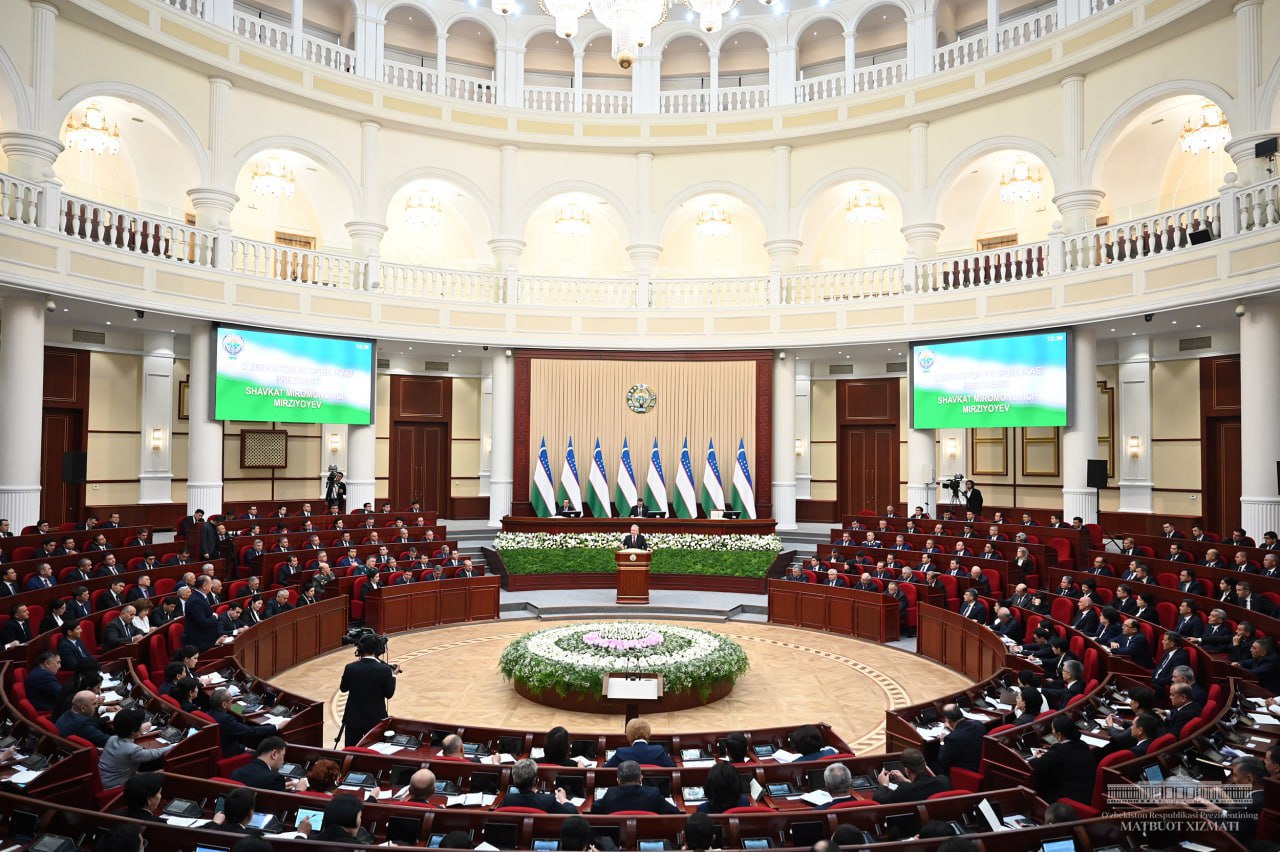
President participates in the session of the Legislative Chamber
📅 19.11.2024
On November 18, the first session of the Legislative Chamber of the Oliy Majlis of the Republic of Uzbekistan after the elections was held in Tashkent.
It was attended by President of the Republic of Uzbekistan Shavkat Mirziyoyev.
The session was opened by Chairman of the Central Election Commission Zayniddin Nizamkhodzhaev.
The National Anthem of the Republic of Uzbekistan was played.
Temporary Secretariat of the first session, Counting Commission and temporary group on control over the use of electronic vote counting system were elected. The agenda was approved. The CEC Chairman presented information on the results of the elections to the Legislative Chamber.
On the proposal of the Council of Representatives of Political Parties, deputies elected Nuriddin Ismoilov to the post of Speaker of the Legislative Chamber of Oliy Majlis by secret ballot.
Then the chairmanship of the session passed to the Speaker. Deputy Speakers were elected. The factions of five political parties were registered. Ten committees of the Legislative Chamber were established in accordance with their agreed proposals.
President of Uzbekistan Shavkat Mirziyoyev addressed the session.
At the beginning of his speech, the Head of State congratulated the deputies on their election, emphasizing that this is the embodiment of high trust and respect of our people.
It was emphasized that the current parliamentary elections have entered the history as being the first ones held in accordance with the updated Constitution. This process was conducted for the first time under a mixed electoral system.
As a result of the elections, 150 deputies were elected to the Legislative Chamber. Among them were 57 women and 11 young people under 35 years of age. Overall, the composition of the lower house was renewed by almost 60 percent.
The activities of the Chamber over the past five years were discussed. During this period, the Constitution has been updated and more than 130 new laws have been adopted, which is 1.5 times more than in the previous period.
The President also drew attention to the issues that remained out of parliamentary attention. For example, the share of laws with direct action and clear enforcement mechanisms remains low. Parliamentary and deputy control is still not effective enough. The activity of deputies in constituencies is mostly limited to organizing meetings, answering complaints and questions.
The Head of State outlined his vision of the new tasks ahead of the Legislative Chamber.
In particular, it was proposed to create public councils under each committee with the participation of representatives of civil society to strengthen the dialogue.
It is important to establish not only control and requirements in the work of parliamentary committees, but also close cooperation with ministries. It is also necessary to strengthen party and fractional discipline.
The President emphasized that lawmaking, primarily, should be aimed at solving urgent problems of society, and put forward a number of legislative initiatives. Among them are the construction of modern residential buildings replacing outdated ones, guaranteeing the protection of citizens' funds allocated for housing construction, support for private education and investors in the energy sector, introduction of compulsory health insurance, creation of a legal framework for franchising, capital market and startups, and relations arising in the field of artificial intelligence.
In order to boost the opposition, it was proposed to increase the number of guaranteed rights of the parliamentary opposition from 3 to 6, including giving it the positions of one committee chairman and two deputy committee chairmen, as well as additional rights to submit questions within the framework of the “government hour” and parliamentary inquiries.
Particular attention was paid to the need to transition to a system of broad, high-quality parliamentary control. In particular, in accordance with the updated Constitution, the control over the execution of the State Budget is the exclusive competence of the Legislative Chamber. In this regard, it is necessary to strengthen the work of the Chamber in this direction, including the introduction of the practice of submitting all reports of the Government on the State Budget to the Chamber only together with the audit report provided for by the Budget Code.
- A deputy is a servant of the people, a model for all, a person with a high level of political culture and knowledge, who sincerely loves his homeland. Our people, all of us, above all rely on you to strengthen peace, mutual understanding and harmony in the family, mahalla and society, to educate the youth in the spirit of patriotism, to defend the interests of Uzbekistan in the international arena, - said Shavkat Mirziyoyev.
Heads of political party factions and deputies addressed the session. The President supported their views, urged the deputies to work harder and be closer to the people.
- The voice of a deputy is the voice of the people. If you consider every issue concerning the fate of the country and first of all see our hardworking, generous and noble people in front of you, if you act thinking not only about today, but also about peace and happiness of future generations, then our people will be satisfied with you, - emphasized the Head of State.
The Legislative Chamber of the Oliy Majlis adopted resolutions on the agenda.
Strengthening Transport Connectivity in Asia through the Development of the Trans-Caspian International Transport Corridor
📅 12.10.2026
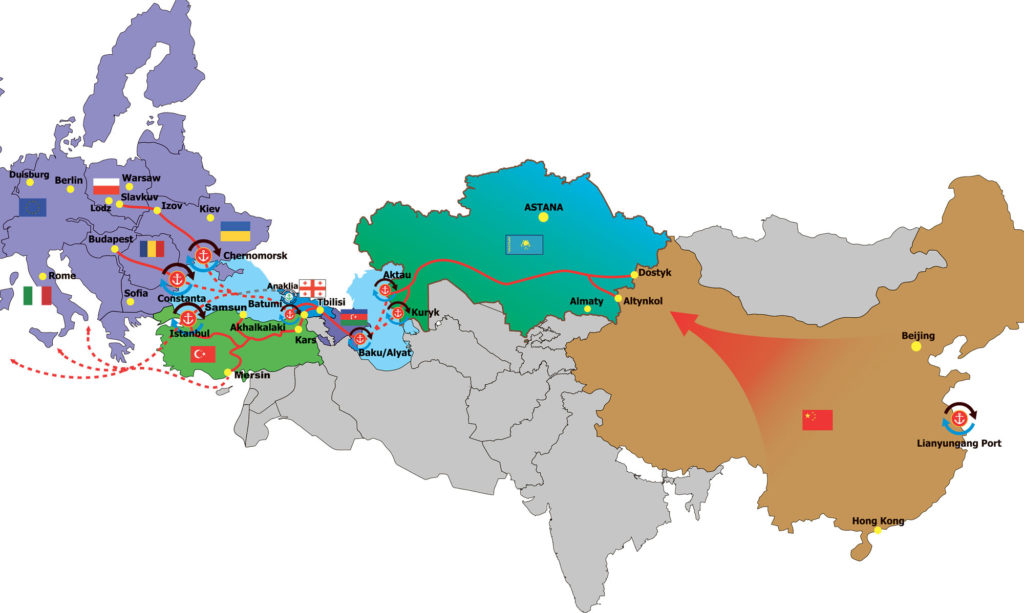
Shifting international supply chains and expanding trade in Asia are driving demand for sustainable transport routes. For businesses, predictable delivery times, competitive rates, and reliable access to foreign markets are becoming increasingly important. Against this backdrop, the Trans-Caspian International Transport Corridor – linking China and Central Asia to Turkey and Europe via the Caspian Sea and the South Caucasus – is emerging as a key area for regional cooperation.
For landlocked Uzbekistan, developing this corridor is part of a broader policy to diversify foreign trade routes. The country’s participation not only expands the cargo volume along this route but also strengthens transport links between Asian nations. A primary objective is to establish a seamless logistics chain that ensures effective coordination between rail, road, and maritime transport.
The route’s growing importance is evidenced by the rise in the volume of Uzbek cargo shipments. By the end of 2025, this volume reached 1.2 million tonnes – a twofold increase over the past five years. The share of the "Middle Corridor" in Uzbekistan’s freight trade with the European Union rose from 12 percent in 2021 to 28 percent in 2025. This demonstrates the route's gradual integration into the logistics chains of domestic businesses.
The CASCA+ international multimodal route serves as a key cooperation mechanism, linking the Asia-Pacific region to Europe via China, Kyrgyzstan, Uzbekistan, Turkmenistan, Azerbaijan, Georgia, and Turkey. Within this framework, railway authorities coordinate transport terms and offer tariff discounts that reach up to 70 percent on certain segments. Future efforts will focus on ensuring regular shipments, synchronizing schedules, and expanding container transport.
New Railway Links
The China – Kyrgyzstan – Uzbekistan railway holds strategic importance for the development of the Trans-Caspian Corridor. Integrating this line with Central Asia’s transport network and Caspian ports will establish an additional route between China and Europe via Uzbekistan. This will create opportunities to boost transit volumes, develop logistics services, and expand industrial cooperation among the region's states.
Looking ahead, advancing the Uzbekistan – Afghanistan – Pakistan railway project and linking it with the Trans-Caspian route could strengthen connections between South Asia, Central Asia, and the South Caucasus. The interplay of these routes lays the foundation for developing transport along both East – West and North – South axes.
Particular attention is being paid to Uzbekistan’s potential participation in developing the Nakhchivan railway route. This project offers a promising way to expand cargo delivery options via the South Caucasus to Turkey and, subsequently, to Europe. Defining the format of participation involves assessing potential cargo flows, economic viability, and integration with existing routes. Developing this corridor could provide greater flexibility in selecting transport routes within the Trans-Caspian network.
Ferry Service and Logistics Center in Poti
Maritime transport across the Caspian Sea remains a key link in the corridor. Vessel availability, port coordination, and the timely arrival of ground transport directly impact overall delivery times. Therefore, expanding maritime capacity must be accompanied by more frequent and reliable service.
In this regard, Uzbekistan is working with Azerbaijani partners to procure two ferries for Caspian Sea operations. These additional vessels aim to reduce cargo waiting times at ports and enable more precise delivery planning. Project planning takes into account technical specifications, port infrastructure, and operational cost-effectiveness. For national exporters, regular service is particularly crucial when transporting perishable goods and fulfilling contracts with fixed delivery deadlines.
Another practical initiative involves establishing a logistics center near the port of Poti in Georgia. Uzbekistan is leasing a four-hectare site for the facility's construction. The project includes plans for standard and refrigerated warehouses to handle export-import cargo, including fruit and vegetable products.
The center will facilitate the storage, accumulation, and consolidation of cargo shipments for subsequent transport across the Black Sea. This will provide national exporters with new opportunities to organize shipments to European markets, while allowing freight forwarding companies to expand their service offerings. Thus, the Poti facility, the additional ferries, and the Nakhchivan railway route complement one another, strengthening various segments of the integrated transport chain.
Digitalization and Harmonized Procedures
Infrastructure development must be accompanied by the removal of administrative barriers. The need to resubmit information, inconsistent document requirements, and lengthy border processing times reduce transport efficiency. Creating a seamless corridor requires the interoperability of information systems, the advance exchange of data, and the mutual recognition of electronic documents.
Uzbekistan is making a practical contribution through the development of "E-Permit," a system for the electronic exchange of international road transport permits. The experience gained lays the groundwork for expanding digital cooperation among the corridor's participating states. Also of great importance is the Agreement on the Unified TRACECA Transit Permit, signed on May 15, 2026, in Astana by Uzbekistan, Kazakhstan, Kyrgyzstan, Azerbaijan, and Ukraine. Once domestic procedures are completed and the agreement enters into force, it will enable transit operations to be carried out using a single, unified permit.
Future work will focus on developing electronic waybills (e-CMR and e-CIM/SMGS), harmonizing customs operations, and implementing electronic queuing systems. Shipment data must accompany the cargo during intermodal transfers, thereby minimizing data re-entry and accelerating processing times.
Uzbekistan views the development of the Trans-Caspian Corridor as a practical contribution to strengthening transport connectivity across Asia. New rail links, plans to acquire vessels, the establishment of a logistics center in Poti, and the digitalization of transport operations are expanding opportunities for trade and regional cooperation. The coordinated implementation of these initiatives will enhance supply reliability, reduce logistics costs, and strengthen ties between Asian and European markets.
Ildar Renatovich Yaushev
Chief Specialist, Department of the Center for the Study of Transport and Logistics Development Issues, Ministry of Transport of the Republic of Uzbekistan.

Education, Science and Innovation – the Main Driver of Integration Among Turkic States
📅 13.05.2026
In the context of today’s global development, the competitiveness of states is determined прежде всего by their intellectual potential, modern education systems, scientific advancement, and innovative capabilities. In this regard, education, science, and innovation are gaining strategic importance in elevating cooperation among Turkic states to a fundamentally new level. These areas contribute not only to economic growth and human capital development, but also to strengthening spiritual closeness among peoples, creating a common civilizational space, and building a solid foundation for future progress.
In recent years, thanks to the efforts of the President of the Republic of Uzbekistan, Shavkat Mirziyoyev, an entirely new atmosphere has emerged in relations with the Turkic states. In particular, large-scale projects implemented in the fields of higher education, science, and innovation are gradually becoming a practical mechanism for Turkic integration. Today, hundreds of inter-university agreements, joint educational programs, academic exchanges, and research projects are being implemented with Türkiye, Kazakhstan, Kyrgyzstan, Azerbaijan, and Turkmenistan.
Cooperation with Kazakhstan is among the most active areas in this regard. Currently, more than 280 agreements and memorandums are in force between higher education institutions of Uzbekistan and Kazakhstan. In recent years, student exchange between the two countries has increased significantly. In particular, during the 2025/2026 academic year, the number of Kazakh students studying at universities in Uzbekistan exceeded 1,000. At the same time, more than 5,500 Uzbek students are pursuing higher education in Kazakhstan.
The practice of opening branch campuses of universities has also marked a new stage in Turkic educational integration. The branch of South Kazakhstan University in Chirchiq and the branch of the National Research University “TIIAME” in Almaty are vivid examples of such important initiatives. These projects contribute not only to training qualified personnel, but also to developing common educational standards.
Cooperation with Kyrgyzstan is also developing consistently. In recent years, more than 90 agreements and memorandums have been signed between the universities of the two countries. In 2023, a forum of rectors was held in Osh, and in 2024 another forum took place in Samarkand, resulting in dozens of new agreements. These forums are becoming important platforms for shaping a common higher education space among the Turkic states.
Uzbekistan’s allocation of state grants for Kyrgyz youth is also of particular importance. Since 2021, 100 state grants have been allocated annually for citizens of Kyrgyzstan. This contributes to strengthening the integration of human capital through education.
In cooperation with Azerbaijan, cultural and educational initiatives occupy a special place. Universities of the two countries are implementing joint projects in philology, literature, arts, tourism, oil and gas studies, and medicine.
The operation of the Fuzuli Center for Azerbaijani Culture, Education and Research at the Tashkent State University of Uzbek Language and Literature, as well as the establishment of the Alisher Navoi Scientific Center in Baku, are vivid examples of the spiritual closeness between the two peoples. Such centers contribute to the in-depth study of the common literary and cultural heritage of the Turkic nations.
It should be emphasized that the joint study and promotion of the legacy of great ancestors plays an important role in strengthening the spiritual foundations of Turkic integration. In particular, the legacy of Alisher Navoi serves as a powerful spiritual bridge uniting Turkic peoples. On February 13, 2026, an international conference titled “Alisher Navoi — the Great Representative of Turkic Literature” was held at the TURKSOY headquarters in Ankara to mark the 585th anniversary of the poet’s birth. The event brought together representatives of science, literature, and diplomacy from across the Turkic world, as well as prominent scholars and cultural figures.
During the conference, TURKSOY Secretary General Sultan Raev described Navoi as the common conscience and civilizational symbol of the Turkic world. Discussions focused on researching Navoi’s works using modern scientific approaches, studying manuscripts, and expanding publishing and translation activities. In particular, the full publication of the “Khamsa” in Azerbaijani and the translation of “Mahbub ul-Qulub” into several Turkic languages demonstrate that Navoi’s legacy has become a shared spiritual treasure of the Turkic world.
As part of the conference, international scientific projects implemented by the Tashkent State University of Uzbek Language and Literature were presented. In addition, the awarding of TURKSOY medals to several Uzbek scholars and cultural figures for their contributions to Turkic culture and literature became a high recognition of spiritual cooperation.
Turkology occupies a special place in the scientific and cultural cooperation among Turkic states. The International Conference on Turkological Studies dedicated to the 100th anniversary of the First Turkological Congress, held on April 8, 2025, at Baku Slavic University, demonstrated that cooperation in this sphere is reaching a new level. The event brought together representatives of the Azerbaijan National Academy of Sciences, leaders of universities from Türkiye, Kazakhstan, and Uzbekistan, prominent scholars, and a delegation from Namangan State University. Discussions focused on promising directions in Turkological research, the study of shared historical and cultural heritage, and the expansion of international academic cooperation.
Humanitarian and scientific cooperation with Turkmenistan is also developing harmoniously. Joint research, olympiads, international conferences, and scientific projects are regularly organized between Uzbek and Turkmen scholars. In particular, the launch of a joint scientific project competition and the financing of four joint research initiatives starting from 2024 are of great significance.
Cooperation with Türkiye has become one of the largest and most institutionalized dimensions of Turkic integration. In recent years, more than 200 cooperation agreements have been signed between higher education institutions of Uzbekistan and Türkiye. Dozens of new projects have also been launched within the framework of rectors’ forums between the two countries.
Joint educational programs, technoparks, and projects in engineering and high technologies are being implemented with leading Turkish universities. In particular, training courses on drone technologies organized in cooperation with the company TUSAŞ, the establishment of an innovative educational and industrial technopark based on the “Yildiz” technopark concept, and the activities of the branch campus of the Turkish University of Economics and Technology in Tashkent are creating a new model of Turkic innovation cooperation.
Today, the integration of Turkic states is no longer limited to cultural proximity or historical commonality. It is gaining new substance through innovation, startups, digital technologies, artificial intelligence, engineering, and scientific research. Joint scientific project competitions conducted between Uzbekistan and Türkiye in cooperation with TÜBİTAK are a practical manifestation of this process.
At the same time, initiatives are being advanced to strengthen academic mobility among Turkic states, ensure mutual recognition of diplomas and qualifications, create unified educational platforms, and establish scientific journals and research funds. Most importantly, these processes are driven by the idea of investing in human capital, educating younger generations on the basis of shared values, and ensuring intellectual unity. In the 21st century, the fate of nations is determined not by oil or gas, but by knowledge, technology, and innovation.
In this sense, cooperation in education, science, and innovation is becoming the most sustainable, promising, and powerful driver of integration among Turkic states. This process not only brings Turkic peoples closer together, but also contributes to the emergence of a new intellectual and technological center across the Eurasian region.
One of the important factors elevating Turkic integration to a new stage is the strengthening of institutional cooperation among higher education institutions. Uzbekistan’s chairmanship of the Union of Turkic Universities — TÜRKÜNİB — during 2025–2026, an organization uniting more than 100 universities, clearly demonstrates the country’s active and initiative-driven policy in this area.
On October 15, 2025, the 8th General Assembly of TÜRKÜNİB was held at Tashkent International University within the framework of the “Days of Turkic Science and Innovation.” The event was attended by the Secretary General of the Organization of Turkic States, Kubanychbek Omuraliev, President of the Turkic Academy Shahin Mustafayev, representatives of the OTS and TURKSOY leadership, university rectors, scholars, and representatives of international organizations. Around 200 delegates from 69 universities of Azerbaijan, Türkiye, Kazakhstan, Kyrgyzstan, Hungary, Northern Cyprus, and Uzbekistan participated in the Assembly.
During the event, the results of the “TurkBarometer” project were presented, and socio-political processes and integration trends within the Turkic states were discussed. Meetings held in the U2U — “University-to-University” — format served as a practical platform for establishing new inter-university partnerships.
Today, one of the important institutional platforms contributing to the formation of a unified academic space among Turkic states is the International University of Turkic States established in Tashkent. The university operates with the aim of deepening cooperation in education, science, and innovation among Turkic countries, training modern specialists, and developing joint scientific research.
The university’s academic programs, governance model, and educational processes are being developed based on the principles of mutual integration among Turkic states. In addition, the institution serves as an important platform for expanding academic exchange among faculty members and students, as well as for implementing joint educational programs and scientific projects.
Integration among Turkic states is no longer confined solely to education and science. Youth policy, student exchange, and sports diplomacy are also becoming important components of this process. In particular, at the 3rd Turkic States Universiade held in Cholpon-Ata, Kyrgyzstan, in September 2025, the Uzbek delegation participated with 80 student-athletes across seven sports disciplines. These competitions contribute to strengthening friendship and solidarity among the youth of Turkic countries, fostering a healthy competitive environment, and developing a shared youth space.
Today, cooperation among Turkic states in the fields of education, science, and innovation is becoming one of the key drivers of common development. Relations strengthened through universities, scientific centers, academic platforms, and youth initiatives are helping to unite the intellectual potential of the Turkic world.
Importantly, these processes are not limited to current interests or short-term projects. Their significance lies in the creation of a common space of knowledge and development for future generations. Convergence in science, innovation, and modern technologies plays a crucial role in enhancing the international competitiveness of Turkic states.
Today, the intellectual cooperation developing among Turkic states is bringing not only universities and research institutions closer together, but also the peoples themselves. This creates an opportunity to build a new model of modern development based on shared history and spiritual heritage.
In this regard, education, science, and innovation are becoming the strongest spiritual and intellectual bridge connecting the common future of the Turkic states.
Nazokat ABDUQUNDUZOVA, Head of the Information Service
Ministry of Higher Education, Science and Innovation

-
 Ministry of Foreign Affairs of the Republic of Uzbekistan
 -
 Diplomatic Service of the Ministry of Foreign Affairs
 -
 State Committee for Tourism Development
 -
Ministry of Investments and Foreign Trade of the Republic of Uzbekistan
-
 invest.gov.uz
 -
-

-

-

-

-

-

of Uzbekistan in the Republic
of Latvia
When using the information, a link to www.uzembassy.lv
must be provided.
All rights reserved
Address
Address: Riga c., LV-1010. 11-11 Elizabetes Str., Latvia
Phone: 37167322424
Fax: 37167322306
Email: embassy@uzbekistan.lv
Useful links
HomeIssuance of biometric passport for departure abroad
Certificate to return to Uzbekistan
Withdrawal of citizenship
Loss of citizenship