Phone
Consular Issues
Phone
Migration issues
We recommend

External migration - today and before: analysis and attitudes
📅 22.06.2024Sharif Kucharov, an expert of the Republican Research Center for Employment and Labor Protection under the Ministry of Employment and Labor Relations of the Republic of Uzbekistan, spoke about the study of labor migration trends in 2018-2020.
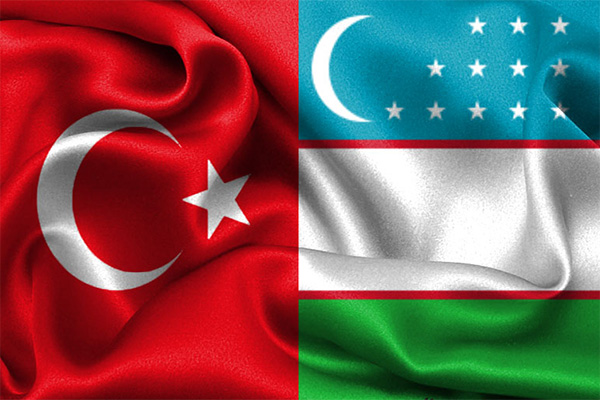
Strategic Cooperation between Uzbekistan and Turkey in the Labor Market and Professional Qualifications: A New Stage
📅 29.01.2026
In the context of globalization, modernizing the labor market, ensuring employment, and reducing poverty cannot be effectively addressed without international cooperation. From this perspective, the systematic collaboration between the Ministry of Poverty Reduction and Employment of the Republic of Uzbekistan and the Ministry of Labor and Social Security of the Republic of Turkey holds strategic importance for both countries. This cooperation encompasses comprehensive reforms aimed at increasing the competitiveness of labor resources, aligning the professional qualification system with international standards, and creating sustainable employment opportunities for citizens.
Within the framework of the Memorandum of Cooperation signed between Uzbekistan and Turkey, the first meeting of the Joint Working Commission was held in Tashkent on May 7, 2025. During this meeting, the Joint Action Plan for 2025–2026 was approved, and priority areas of cooperation were defined.
As part of the plan’s implementation, in October of this year, a delegation from the Ministry, led by Acting Deputy Minister of Poverty Reduction and Employment A. Muratov, visited the Republic of Turkey. During the visit, the delegation thoroughly studied the formation and implementation practices of the Turkish National Qualifications Framework (TQF), developed in accordance with European standards (EQF).
Specifically, the role of testing and certification centers, their accreditation and monitoring mechanisms, and opportunities for implementing joint projects in professional qualifications were reviewed. Additionally, discussions were held on jointly developing mechanisms for aligning Uzbekistan’s National Classifier of Occupations with the European Qualifications Framework (EQF).
Within this cooperation, practical work has begun to deeply analyze the differences between Turkish and Uzbek professional standards, utilize Turkey’s experience in establishing Qualification Assessment Centers, and define the role of professional standards and assessment tools in the functioning of these centers. Special attention is given to ensuring that evaluation procedures fully meet employer requirements.
To develop professional standards aligned with international benchmarks for occupations in high demand in the local labor market, the initial stage involved translating Turkey’s professional standards and qualification requirements for 22 occupations from Turkish into Uzbek. These documents are currently undergoing comparative analysis with the professional standards in force in Uzbekistan.
The ongoing initiatives are intended to create modern and optimal professional standards that fully meet the needs of the local labor market and will serve as a solid foundation for the activities of the Qualification Assessment Centers.
Furthermore, assessment tools, including tests, practical assignments, and evaluation criteria, are being developed for these 22 occupational fields. In the next stage, it is planned that the qualification certificates issued by these centers will be directly recognized within the territory of the Republic of Turkey.
Overall, the cooperation between Uzbekistan and Turkey in the labor market and professional qualifications clearly demonstrates a transition of bilateral relations to a new, qualitatively higher level. These efforts play a key role in reforming Uzbekistan’s professional qualification system in accordance with international standards, achieving global recognition of national certificates, and expanding citizens’ opportunities to work abroad.
Moreover, these initiatives represent a logical continuation of the systematic reforms implemented by the Ministry of Poverty Reduction and Employment, aimed at evaluating qualifications, ensuring employment, and reducing poverty, thereby contributing to sustainable socio-economic development.Uzbekistan and Japan: A New Stage of Strategic Cooperation in Labor Migration
📅 14.12.2025
Cooperation between Uzbekistan and Japan in the field of labor migration has significantly expanded in recent years, becoming one of the key pillars of the broader strategic partnership. What began in 2019 with the signing of initial legal frameworks has evolved by 2025 into a comprehensive system that includes professional training, Japanese-language education, digital platforms, employer partnerships, and large-scale employment programs.
2019–2020: Building the Legal Foundation
The partnership’s foundation was laid on 15 January 2019 with the signing of a Memorandum between Uzbekistan's Ministry of Employment and Japan’s Ministries of Justice, Foreign Affairs, Health, Labor and Welfare. Later that year, on 17 December 2019, a crucial agreement on the implementation of Japan’s Specified Skilled Worker (SSW) program was signed, opening the way for structured and legal employment of Uzbek citizens in Japan.
In January 2020, an intergovernmental cooperation agreement formalized Uzbekistan’s participation in the SSW system. The same year, the TOKUTEI GINOU Testing Center for Japanese language and professional skills was established in Tashkent.
2021–2025: Workforce Demand and Investment in Human Capital
Between 2021 and 2025, Uzbekistan’s Migration Agency signed more than 20 agreements with Japanese companies and cooperatives, including Kobe International Trade Promotion Association, Techtas Kyodo Kumiai, Tokai Builders Support Cooperative, Shimizu Corporation, JPC Corporation, and Proud Partners, among others.
These agreements expanded employment opportunities in construction, manufacturing, agriculture, hospitality, automotive services, and other in-demand sectors in Japan.
Japan’s Interest in Uzbekistan’s Human Resources
High-level visits in 2022 and 2025 boosted cooperation even further. On 21 January 2025, the Migration Agency and JICA launched the Japan Career Portal — the first JICA project of its kind in Central Asia, supporting the development of skilled human resources for Japan’s labor market.
The platform provides:
- job listings,
- online tests,
- Japanese-language training,
- direct communication with employers.
Major Initiative: Employment of 10,000 Uzbek Specialists
One of the largest projects was launched in 2025 through a memorandum with the Japan-China-Asia Medical Educational Cultural Exchange Association (JCAEMCE):
A five-year program to employ 10,000 Uzbek specialists in Japan.
The project includes the opening of training centers – “Light of Japanese Mastery” – in Tashkent, Samarkand, and Namangan, which will provide six-month Japanese-language and professional training for at least 3,000 candidates annually.
“Study + Work” Model Expands
Several Japanese companies have opened training centers in Uzbekistan:
- Onodera User Run – training in five specialties with free Japanese-language and vocational instruction
- Proud Partners – training for drivers, construction workers, hotel and restaurant staff
The centers include modern classrooms, skill laboratories, and dormitories with full amenities.
Growing Recognition of Uzbek Workers
Japanese companies increasingly recognize the strengths of Uzbek workers, describing them as:
- disciplined
- hardworking
- law-abiding
- quick to adapt
Several Japanese prefecture governors, including Yuji Kuroiwa of Kanagawa, expressed readiness to further expand cooperation.
Challenges and Solutions
Key issues identified:
- insufficient Japanese-language proficiency
- long visa processing times (4–6 months)
- activities of illegal intermediaries
- low legal awareness among migrants
To address these, both sides agreed to:
- accelerate visa procedures through digitalization
- exchange information between migration agencies
- expand testing centers within Uzbekistan
- strengthen public awareness campaigns
Conclusion
Uzbekistan–Japan labor migration cooperation has grown from basic memoranda to a full-scale human capital development model. Major initiatives — including training centers, digital platforms, and the 10,000-worker program — are establishing a new, sustainable system of skills development and fair labor mobility.
This partnership not only provides employment opportunities but also facilitates knowledge exchange, professional growth, and technological progress, shaping a strong foundation for long-term bilateral cooperation.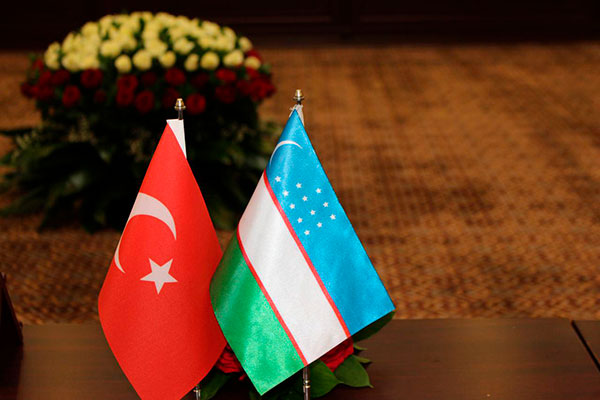
Uzbekistan and Turkey Establish a New Model of Cooperation in Workforce Development
📅 29.01.2026
In the context of globalization, issues of poverty reduction and sustainable employment are addressed not only through national efforts but also through international experience and institutional cooperation. Particularly, the enhancement of knowledge and professional capacity of public officials responsible for these areas is a crucial strategic factor. In this regard, the new collaboration between the Center for the Professional Development of Employees of the Ministry of Poverty Reduction and Employment of the Republic of Uzbekistan and the Republic of Turkey is recognized as an important initiative aimed at developing human capital.
The Memorandum of Understanding signed between the Center for the Professional Development of Employees of the Ministry of Poverty Reduction and Employment of the Republic of Uzbekistan and the Training Center of the Ministry of Labor and Social Protection of the Republic of Turkey serves as an institutional framework for professional development and scientific-practical cooperation between the two countries. The Memorandum was signed by A.X. Rakhmonov, Director of the Uzbek Center, and Dr. Elif Gökçearslan, Director of the Turkish Training Center.
The primary objective of the Memorandum is to effectively utilize available potential and resources to enhance the qualifications of employees working in the labor market, occupational safety, and human resource management sectors, support research activities, and develop professional competencies through the design and implementation of joint projects.
Within the framework of the document, knowledge and experience sharing, development of training programs and methodological materials, organization of seminars, trainings, roundtables, and master classes are planned. Additionally, the cooperation includes the improvement of sectoral regulatory documents, preparation of expert evaluations, and the involvement of specialists in scientific and practical research activities.
The Memorandum establishes the general principles of cooperation between the parties and does not impose financial obligations. To expand and deepen cooperation, the parties may conclude separate agreements and contracts and, if necessary, involve resources from third-party organizations, international funds, and institutions.
Furthermore, the activities and projects carried out within the scope of the cooperation will be regularly published on the official information resources of the parties, ensuring transparency and openness. All activities are conducted in full compliance with the current legislation of the Republic of Uzbekistan and the Republic of Turkey.
In conclusion, the Memorandum signed between the Center for the Professional Development of Employees of the Ministry of Poverty Reduction and Employment of the Republic of Uzbekistan and the Training Center of the Ministry of Labor and Social Protection of the Republic of Turkey establishes an important institutional foundation for strengthening the professional capacity of personnel and developing modern knowledge and competencies. This cooperation contributes to improving the quality of public administration, enhancing employment policy, and increasing the effectiveness of reforms aimed at reducing poverty.
This initiative clearly demonstrates Uzbekistan’s openness to international cooperation, its readiness to adopt best practices, and its prioritization of human capital, while simultaneously reinforcing the country’s positive image on the international stage.

-
 Ministry of Foreign Affairs of the Republic of Uzbekistan
 -
 Diplomatic Service of the Ministry of Foreign Affairs
 -
 State Committee for Tourism Development
 -
Ministry of Investments and Foreign Trade of the Republic of Uzbekistan
-
 invest.gov.uz
 -
-

-

-
-

-

-

of Uzbekistan in the Republic
of Latvia
When using the information, a link to www.uzembassy.lv
must be provided.
All rights reserved
Address
Address: Riga c., LV-1010. 11-11 Elizabetes Str., Latvia
Phone: 37167322424
Fax: 37167322306
Email: embassy@uzbekistan.lv
Useful links
HomeIssuance of biometric passport for departure abroad
Certificate to return to Uzbekistan
Withdrawal of citizenship
Loss of citizenship