25.03.2026 Infographics: Trade, Economic and Investment Cooperation between Uzbekistan and Tajikistan        25.03.2026 CERR Assesses Economic Activity Across Uzbekistan’s Regions Over Five Years Using Satellite Data        25.03.2026 Uzbekistan-Tajikistan Alliance: Towards Further Expansion of Multidimensional Cooperation        20.03.2026 AMIR TEMUR AND DIPLOMACY        19.03.2026 Business Climate Improved Across All Key Sectors of the Economy – CERR Survey        19.03.2026 Navruz – A symbol of national tradition and new life        18.03.2026 CERR Assesses the Potential for Expanding Trade Between Uzbekistan and Tajikistan        18.03.2026 A masterpiece of our distinguished history        18.03.2026 Influence of Amir Temur on Western Culture        18.03.2026 February demonstrated a noticeable acceleration in business activity in Uzbekistan        18.03.2026 Two Nations — One Culture        12.03.2026 Third Renaissance: Center of Islamic Civilization as a strategy for Spiritual and Intellectual Advancement of New Uzbekistan       

News


Infographics: Trade, Economic and Investment Cooperation between Uzbekistan and Tajikistan
25.03.2026

The Center for Economic Research and Reforms (CERR) has prepared an infographic presenting key indicators of trade, economic and investment cooperation between Uzbekistan and Tajikistan over a nine-year period.

In recent years, economic cooperation between Uzbekistan and Tajikistan has been steadily expanding, now encompassing not only trade but also industrial cooperation across various sectors, particularly energy and agriculture.

A solid legal framework has been established to support bilateral cooperation across multiple areas. In 2018, the countries signed a Treaty on Strategic Partnership, followed by a Treaty on Allied Relations in 2024.

Tajikistan is among Uzbekistan’s key trade and economic partners, ranking 9th among importers of Uzbek goods and accounting for 2% of Uzbekistan’s total exports.

Bilateral trade between Uzbekistan and Tajikistan is conducted under a free trade regime, with total trade turnover approaching $1 bn.

Bilateral Trade Indicators

Trade turnover between Uzbekistan and Tajikistan increased 3.8 times over 2017–2025, from $237.9 mln to $912.4 mln. Exports grew 3.7 times, from $186.1 mln to $683.1 mln, while imports rose 4.4 times, from $51.8 mln to $229.3 mln. Uzbekistan’s positive trade balance expanded 3.4 times, from $134.3 mln to $453.8 mln.

In 2025, compared to 2024, trade turnover increased by 29.9%, exports by 24.1%, and imports by 13.8%.

The structure of Uzbekistan’s exports to Tajikistan in 2025 totaled $683.1 mln and included: industrial goods (various knitted and felt products, plastic products, rolled metal, etc.) – $222.7 mln (32.6%); machinery and transport equipment (including electrical goods) – $58.7 mln (8.6%); petroleum products (gasoline, gas oil, bitumen) – $53.1 mln (7.8%); chemical products (polymers, sulfates, silicates, fertilizers, paints) – $53 mln (7.8%); food products (animal feed, eggs, confectionery, processed meat products, etc.) – $48.2 mln (7.1%); miscellaneous manufactured goods (construction materials, ready-made garments, silk fabrics) – $21 mln (3.1%); non-food raw materials– $8.1 mln (1.2%); other goods (including goods traded by individuals) – $70.1 mln (10.3%); as well as services (mainly railway transport) – $147.4 mln (21.6%).

The structure of imports from Tajikistan in 2025 totaled $229.3 mln and included: metal ores and concentrates (zinc, copper and precious metals) – $108.9 mln (47.5%); coal – $22.3 mln (9.7%); aluminum – $25.4 mln (11%); electricity – $17.9 mln (7.8%); cotton fiber – $17.6 mln (7.8%); fruits – $7.4 mln (3.2%); ferrous metals – $5.1 mln (2.2%); poultry — $2.4 mln (1.1%); plastic waste – $1.8 mln (0.8%); sulfur, feldspar and others; as well as services (mainly railway transport) – $6.6 mln (2.9%).

Investment Cooperation

As of March 1, 2026, there are 420 enterprises in Uzbekistan with Tajik investment (2.2% of the total number of enterprises with foreign investment), including 110 joint ventures and 310 enterprises with 100% Tajik capital.

In 2025, compared to 2024, the volume of foreign direct investment (FDI) and loans attracted from Tajikistan tripled, increasing from $64 mln to $196 mln. Over 2017–2025, the total volume of attracted FDI and loans from Tajikistan amounted to $373 mln.

The main areas of activity of enterprises with Tajik capital include trade, construction materials production, food industry, transport and other services.

Enterprises with Uzbek investment are also successfully operating in Tajikistan. In particular, major joint projects are being implemented in the energy sector, including the construction of hydropower plants on the Zarafshan River. With the participation of private capital from Uzbekistan, the joint venture “Artel Avesto Electronics” was established in Tajikistan in 2019, producing more than 10 types of household appliances.

Prospects for Trade Expansion

Uzbekistan and Tajikistan share a common border and have well-developed transport infrastructure. Given the short delivery distances, transportation costs can be relatively low, which creates favorable conditions for expanding exports.

In this context, Tajikistan represents a promising market for increasing exports of finished products from Uzbekistan that are not produced domestically in Tajikistan and are imported. These include automobiles, household appliances—especially large-sized goods such as refrigerators, washing machines and air conditioners—as well as certain food products, textiles, chemical and other goods.

CERR Assesses Economic Activity Across Uzbekistan’s Regions Over Five Years Using Satellite Data
25.03.2026

An analysis of nighttime satellite illumination data indicates a strengthening of economic activity across regions and an expansion in the number of territories exhibiting urban-type development.

The Center for Economic Research and Reforms (CERR) applied satellite-based nighttime lights (NTL) data to assess economic activity at the level of regions and cities in Uzbekistan.

The analysis shows that higher light intensity corresponds to higher levels of economic activity and more advanced urban infrastructure.

CERR’s findings demonstrate a high degree of consistency between satellite-based indicators and official statistics. In particular, according to estimates based on NASA nighttime lights data, nominal GDP per capita in Uzbekistan grew by 80.3% in 2020–2025, corresponding to an average annual growth rate of 15.8%, increasing from $2,090 to $3,887 over five years.

For comparison, according to official statistics, GDP per capita increased by 81.8% over the same period, with an average annual growth rate of 16.1%, rising from $2,048 to $3,881.

Economic Activity in Large and Medium-Sized Cities

According to the data, over the past five years the highest growth in gross regional product (GRP) per capita among regions was recorded in the city of Tashkent, where the indicator increased by approximately $5,000, reaching $9.3 thousand by the end of 2025 (according to official statistics — $9.2 thousand).

Estimates for 2025 also show high GRP per capita levels in a number of large and medium-sized cities. In Navoi, the NTL-based estimate reached $9.3 thousand, in Zarafshan $7.9 thousand, in Samarkand $7.2 thousand, in Kokand and Andijan $6.7 thousand each, and in Akhangaran, Yangiyul, and Bukhara ranged from $5.8 thousand to $5.2 thousand, respectively.

Relatively high growth rates of GRP per capita were also observed across several regions. In Tashkent region, the indicator increased by $1.8 thousand to reach around $4 thousand. In Navoi region, GRP per capita also grew by $1.8 thousand to approximately $4 thousand. In Fergana and Syrdarya regions, the increase amounted to $1.6 thousand, reaching about $3.5 thousand and $3.4 thousand, respectively.

Economic Activity in Small and Medium-Sized Cities

Relatively high GRP per capita levels were also recorded in a number of small and medium-sized cities. In Termez, the indicator reached $5.1 thousand, in Margilan and Chirchik around $5 thousand, and in Namangan $4.8 thousand. Economic activity levels also remain relatively high in the cities of Kagan and Urgench.

Economic Activity at the District Level

At the district level, the highest GRP per capita growth dynamics in 2020–2025 were observed in Mirabad district, where the indicator increased by $7.1 thousand, in Yakkasaray district by $6.3 thousand, and in Chilanzar district by $5.6 thousand. As a result, GRP per capita in these districts exceeded $10 thousand, which is nearly three times higher than the average across other districts and cities in the country.

Among districts, the highest growth rates of economic activity were also recorded in Karmana district (2.5-fold increase), Yashnabad and Bektemir districts (2.4-fold), as well as Sergeli, Yangi Hayot, and Mirzo Ulugbek districts (2.3-fold).

Expansion of Territories with High Economic Activity

The use of nighttime lights data also made it possible to assess urbanization processes at the district level. In particular, between 2020 and 2025, the number of territories with high nighttime light intensity (NTL above 10), characteristic of urban agglomerations, increased from 22 to 31. The average GRP per capita in these territories rose from $3.8 thousand to $7 thousand.

At the same time, over five years the number of districts with low nighttime light intensity (NTL below 1) declined from 129 to 85, confirming the transition of 44 districts toward an urban-type development model.

In these districts, NTL levels increased on average by more than 2.5 times, while GRP per capita rose from $1.7 thousand to $3.2 thousand.

Conclusion

The results confirm that satellite-based nighttime lights data can effectively complement official statistics and be used for timely assessment of regional economic activity.

This approach enables the identification of new growth points and allows for more targeted allocation of state support toward infrastructure development and investment activity in the regions.

Abdulaziz Gaybullayev, CERR

CERR Public Relations Sector

Tel.: (+998) 78 150-32-20 (417)

Uzbekistan-Tajikistan Alliance: Towards Further Expansion of Multidimensional Cooperation
25.03.2026

The upcoming visit of the President of Tajikistan, Emomali Rahmon, to Uzbekistan on March 26–27 is set to provide additional momentum to Uzbek-Tajik relations, which have demonstrated steady positive dynamics in recent years.

Today, bilateral ties are on the rise, experiencing the best period in their history. Tashkent and Dushanbe have successfully resolved long-standing issues, creating a solid foundation for a transition to a qualitatively new stage of engagement. While cooperation was previously characterized as episodic and largely dependent on opportunistic factors, it has now acquired a systemic, multi-level, and strategic nature.

The consistent and far-sighted policies of the two heads of state have played a pivotal role in this process. Regular and trust-based contacts between Shavkat Mirziyoyev and Emomali Rahmon have contributed to the renewal of the entire system of interstate relations, imparting a resilient internal dynamic.

Since 2017, the leaders of Uzbekistan and Tajikistan have held over 40 meetings, underscoring a shared political will for the consistent development of cooperation. The logical culmination of this course was the signing of the Treaty on Allied Relations in 2024, which institutionalized the long-term strategic character of their interaction. The upcoming negotiations are expected to consolidate achieved results and define new benchmarks for the partnership.

This atmosphere of trust has been reinforced by a robust institutional framework. Regular consultations between foreign ministries, expanded cooperation across line agencies, and the effective work of the Intergovernmental Commission form a stable architecture for bilateral engagement. The inter-parliamentary dimension has also strengthened significantly: the cooperation group established in 2020 provides essential support for initiatives and oversees their implementation.

The intensive political dialogue is naturally reflected in the economy, which serves as a barometer of profound structural changes. Since 2017, bilateral trade turnover has increased nearly fourfold – from $237 million to over $900 million by the end of 2025 – demonstrating sustainable growth. Furthermore, the trade structure is evolving: alongside traditional commodities, the share of high-value-added products, such as textiles, construction materials, electrical engineering, and machinery, is increasing. This indicates a transition to a more diversified model of economic engagement aimed at reaching the $2 billion mark in the medium term.

Simultaneously, the focus is gradually shifting from trade to investment and industrial cooperation. Since 2017, the number of enterprises with Tajik capital in Uzbekistan has grown more than 13 times, reaching 343. Uzbek business is also actively expanding in Tajikistan, where approximately 70 companies currently operate, reflecting the growing mutual trust within the business community.

As part of this cooperation, the Uzbek-Tajik Interregional Investment Forum was launched in 2021. In the same year, a joint investment company was established with an authorized capital that subsequently increased more than fourfold – from $12 million to over $50 million. This has provided a financial base for implementing major projects in industry, energy, agriculture, healthcare, banking, and construction.

The development of modern border infrastructure is of substantial importance for further integration. Specifically, the creation of a trade and logistics hub at the "Fotekhobod – Oybek" border crossing will enhance the efficiency of trans-border trade. Concurrently, the Urgut district is being developed as a comprehensive transport, logistics, and trade hub, capable of transforming border areas into centers of economic activity.

Ongoing projects include the establishment of trade, logistics, and medical complexes, as well as a logistics center with a capacity of up to 100 heavy-duty trucks per day. In parallel, efforts are underway to simplify customs procedures. The construction of the Samarkand–Urgut railway line will be a significant step toward reducing transport costs and enhancing regional connectivity.

Equally indicative is the transformation of cooperation in the water and energy sector – traditionally one of the most sensitive issues in the region. Moving away from past competition, the parties are consistently building a pragmatic model that accounts for mutual interests, implementing joint projects to modernize irrigation systems and develop hydropower. This approach demonstrates that even the most complex issues can serve as a basis for sustainable cooperation and development.

The most profound changes are occurring in the cultural and humanitarian sphere. Expanding contacts between citizens, the growth of mutual travel, and the development of cultural and educational exchanges are forming a shared humanitarian space where interstate ties have acquired a new quality.

The liberalization of travel regulations has revitalized tourism cooperation. In June 2022, the Tashkent–Dushanbe passenger train was launched; regular bus routes between Tashkent–Khujand and Kokand–Shaidon were resumed; and air connectivity has expanded, currently reaching 16 flights per week.

As a result, 2.7 million citizens of Tajikistan visited Uzbekistan last year alone, reflecting a high level of mutual trust and openness. Political agreements are increasingly translating into the practical reality of daily interaction.

This process is further bolstered by the historical and ethno-cultural proximity of the two nations. The presence of significant Tajik communities in Uzbekistan and Uzbek communities in Tajikistan makes this cooperation a natural extension of established social and cultural ties. In this context, the humanitarian dimension has become a key factor in the stability of the allied relationship.

Against this backdrop, the upcoming visit of Emomali Rahmon to Tashkent is intended not only to consolidate achieved milestones but also to set new strategic directions for future engagement. Its outcomes will undoubtedly be reflected in concrete projects and initiatives that will further strengthen the bilateral partnership and enhance the resilience of the entire region.


AMIR TEMUR AND DIPLOMACY
20.03.2026

Amir Temur occupies a place in world history not only as a great commander and statesman who built a powerful and prosperous state. The great ruler turned his capital, Samarkand, into one of the cultural, architectural, scientific and spiritual centers of the world.

Therefore, the study of Amir Temur's exemplary life and statecraft, the history of his reign, the study of science and culture in it, as one of the major scientific directions of historiography, has always been and remains the focus of attention of world scientists, heads of state, and politicians. Also, sources on the history of the Timurids have been translated into various languages and scientific research has been carried out worldwide.

The number of publications on the study of the era of Amir Temur is increasing day by day in world historiography. Ultimately, an independent scientific direction of "Temur studies" has been formed in world social science.

Today, no one doubts the immeasurable contribution of Amir Temur and the Temurid dynasty to the development of world civilization, to the sharp rise in the scientific, political-legal, spiritual-ideal, cultural and intellectual level of humanity. It should be noted that the Timurid Renaissance was recognized by the whole world. The fact that the French scientist Vincent Fournier was the first to use the phrase "Temurid Renaissance" is evidence of this.

The world community recognizes the Timurid era as an era that was reflected in the development of science, culture, art and literature, as well as great discoveries and inventions, and our people as a people who have founded the Renaissance twice so far. That is, it is commendable that our people rightfully belong to the small number of "peoples who were able to create a Renaissance" in the full sense of the word.

In this sense, it is considered that there is every reason to believe that the efforts of President Shavkat Mirziyoyev to create a new Renaissance in New Uzbekistan, that is, the foundation of the Third Renaissance, through large-scale democratic changes in our country, including reforms in the fields of science and education, will yield the expected results.

One of the greatest services of the Leader of the Nation to our people is the restoration of the dignity and broken national pride of our people, who have lost hope in their own country, who have lost hope in a prosperous and good life, and who have lost faith in the future, the formation of a consciousness specific to New Uzbekistan, the subsequent elevation of their spirits, and the return of respect for spiritual and educational values ​​and historical figures.

At a new stage of the development of the Republic of Uzbekistan, along with radical renewal and improvement in every sphere of the state and society, comprehensive measures are being implemented to strengthen national statehood, establish a stable track and develop the political, legal, economic and social life of our country.

In particular, in historiography, a wide path has been opened for studying the history of our ancestors, giving them a correct and objective scientific assessment, and on this basis restoring our national values. Because, as the President of Uzbekistan emphasized: “We have a great history that is worth admiring. We have great ancestors that are worth admiring.”


Amir Temur: "I declare peace and tranquility!"


At the current stage of the development of new Uzbekistan, it is very important that the period of Uzbek diplomacy from ancient times to the present day - the formation and development of independent Uzbek diplomacy - is comprehensively and systematically studied. In particular, the book "History of Uzbek diplomacy", published in 2022, is the VII volume of the "History of Uzbekistan" multi-volume work. The book is a practical response to the proposals made by President Shavkat Mirziyoyev at a meeting with Uzbek diplomats in January 2018.

The publication of a book on the history of Uzbek diplomacy is a major political event. As the head of our state noted, "our national statehood has a history of several thousand years and a rich culture. Therefore, diplomatic relations also go back to the deepest layers of our history. This fact is widely recognized not only by our country, but also by scientists from around the world."

One of the most striking qualities of our great ancestor, Sahibkiran Amir Temur, is that six centuries ago he deeply understood that the development of mutually beneficial cooperation between states, the strengthening of friendship and solidarity between distant and close peoples was an important factor in ensuring the prospects of his empire. Therefore, he carried out great works that served to connect Europe and Asia. On the one hand, he established contacts with China, India, on the other hand, France, Spain, England and other countries and sought to strengthen these relations.

As recognized on a scientific basis by our country's scientists and foreign experts, Amir Temur also left a deep mark in history as the most skillful diplomat of his time. As a great statesman, Sahibkiran skillfully combined the peaceful path of diplomacy and military measures in achieving his goals.

The great empire built by Amir Temur since that time has attracted not only neighboring countries and their kings, but also rulers of distant lands. Historical documents indicate that from the 70s of the 14th century, representatives of European countries came to Transoxiana and were seriously interested in the power and potential of the new, independent state here.

Sahibkiran, in turn, especially after the formation of a powerful empire, established active diplomatic relations with almost all major states of that time and their rulers. He sent his ambassadors to various countries, as well as received foreign ambassadors sent to him.

Amir Temur sent ambassadors to the court of Don Enrique III of Castile and Leon (in some sources - King Henry III of Spain), the ruler of France Charles VI (in some sources - Charles VI), and the king of England Henry IV, who, in turn, received ambassadors from Spain, France, England, China and a number of others - a total of more than 20 foreign states - in his capital Samarkand, which clearly confirms this idea.

According to historical sources, on July 28, 1402, the Ambassadors of King Don Enrique III of Castile and Leon, who were present at the presence of Amir Temur, included Payo de Soto Mayor and Hernan Sanchez de Palazuelos. When the time came for the ambassadors to return, Sahibkiran sent one of the capable beys, Muhammad Keshi, with letters and gifts to Castile as an Ambassador with them, in order to further strengthen relations between the two states. Muhammad Keshi arrived there safely and handed over the letters and gifts to Don Enrique III.

It is known that Amir Temur recruited Nasaf and Kesh scholars, capable individuals knowledgeable in religious and secular sciences, and proficient in foreign languages ​​to his palace. They performed various duties, including the duties of Ambassador. For example, Muhammad Keshi lived in Spain for some time as Sahibqiran's ambassador, while Maulana Abdullah Keshi was sent by Amir Temur as an ambassador to Faraj, the Sultan of Egypt.

Amir Temur usually sent Christian leaders to European countries as ambassadors. Of the Muslim diplomats, only Muhammad Keshi managed to go to Europe. This also indicates his ability, knowledge of several languages, probably one of the European languages.

At that time, the fame of Amir Temur had spread throughout Europe. Therefore, Muhammad Keshi was received with great respect by the King of Castile, Don Enrique III. He attended receptions at the Royal Palace and in the palaces of the great nobles. The King accompanied him to Samarkand with his ambassadors, led by Rui Gonzalez de Clavijo, and respectfully escorted him.

One of the distinctive features of Amir Temur's diplomacy was that in all his addresses, even in letters written in the form of strict demands, he adhered to the etiquette of Eastern diplomacy. It is not difficult to learn from historical letters that have survived from those times that Sahibkiran always responded to the letters of the rulers of some countries, written in a rude manner, sometimes with anger and ignorance, expressing his opinion clearly, with culture and decency. The fact that Amir Temur's letter to the French King Charles VI contains the words "I declare peace and tranquility!" clearly confirms this.


Diplomatic correspondence of Amir Temur


The correspondence that has survived from that time to the present clearly testifies to the skillful diplomatic activity of Amir Temur and the Temurids. Currently, 4 letters are kept in the National Archives of France:

the first is the original copy of Amir Temur's letter to the French King Charles IV in Persian;

the second is a copy of this letter translated into Latin by Archbishop John himself or one of his contemporaries;

the third, a copy of a letter written in Latin by the French King Charles IV to Amir Temur;

the fourth, a Latin translation of a letter sent by Mironshah Mirzo to three European kings. The original copy was kept by John and later shown to the King of England.

When it comes to the study of relations between Amir Temur and Europe during the former Soviet era, it is worth noting that I. Umnyakov's article "International relations of Central Asia at the beginning of the 15th century. Amir Temur's relations with Byzantium and France" and other works are quite informative.

Amir Temur also conducted diplomatic correspondence with distant states of Western Europe, in particular, with the representative of the Valois dynasty - King Charles VI of France (1380-1422) and King Henry IV of England (1399-1413). The first brief information about the correspondence between Amir Temur and Charles VI in 1402-1403 was provided by the French historian Flossant, who lived at the beginning of the 19th century, in his research published in 1811.

Amir Temur's letter to Charles VI was written in Persian, in an unusual style, not similar to the style of the rulers of the East. The letter mentions that "the preacher Francis" brought letters to Amir Temur from the French king.

As far as we know, there was no official exchange of ambassadors between Amir Temur and Charles VI, as there was between King Henry III of Castile. At the same time, the text of the letter suggests that Amir Temur had previously received letters from France. However, these letters have not reached us.

There is no doubt that this letter is an original. This is clearly confirmed by the fact that Amir Temur's miraculous seal is stamped on two places on the letter. The fact that the seal on the letter actually belongs to Sahibkiran has been proven by most historians, including Ambassador Clavijo and historian Ibn Arabshah.

An important point is that Clavijo is one of the few, that is, one of four people who saw Amir Temur and wrote memoirs based on direct conversations with him. This fact further increases the authenticity of the diaries of the Spanish Ambassador, as well as the memoirs created by Ibn Arabshah, Ibn Khaldun, and Archbishop John. Therefore, honesty is the path to truth and justice.

The National Library in Paris preserves the second letter of Amir Temur to Charles VI. The Latin translation of this letter has come down to us, first published by Sylvester de Sacy.

At the same time, there is also a Latin translation of the letter sent by Charles VI to Amir Temur. This is a unique document of particular value as the only letter from the French king to Sahibkiran that has survived to this day. While both letters of Amir Temur are dated August 1, 1402, the letter of Charles VI is dated June 15, 1403.

The foreign policy and diplomatic correspondence of His Majesty Amir Temur have been and are being studied in detail by scholars around the world, including specialists from our country. Some time ago, when I met with Jean-Louis Bacquet-Grammon, a well-known French orientalist and orientalist, in Paris, he presented me with a rare copy of the book "Amir Temur's Campaign in Anatolia (1402)" written by the Romanian historian and Turkologist Maria-Matilda Alexandrescu-Dersca, published in 1942.

Despite the fact that Amir Temur's letters were written almost seven centuries ago, some of their aspects resonate as an extremely important call for our day: it is understood that the prosperity of the world with merchants, the glory of the empire is determined primarily by recognizing the glory of other empires, respecting the dignity of citizens, regardless of official and unofficial differences, and firmly adhering to human rights and freedoms.

In addition, as material evidence of the diplomatic correspondence of the Timurids, one can cite the letters between Amir Timur and his third son, the ruler of Western Iran, Iraq and Azerbaijan, Miranshah Mirza, and the kings of France, England, Castile and other countries. Some of these letters are kept in the French National Archives, the British Museum and the Spanish archives.

The diplomatic correspondence of Amir Timur and the Timurids clearly shows, firstly, that Europe has always reached out to the East, which awakened long before it, and secondly, that the East also sought to establish contacts with these countries, cooperate, establish trade and commerce, and, despite religious differences, honor merchants and protect their rights.


Akmal SAIDOV,

academician

Business Climate Improved Across All Key Sectors of the Economy – CERR Survey
19.03.2026

According to the survey results, entrepreneurs are increasingly reporting higher demand, employment growth, and an overall improvement in business conditions.

The Center for Economic Research and Reforms (CERR) presented the results of its business climate analysis based on monthly surveys of entrepreneurs across the country.

Based on the collected data, a composite Business Climate Index has been developed, reflecting both current business conditions and expectations for the next three months.

Business Climate Dynamics in Uzbekistan

As of February 2026, the composite Business Climate Index reached 65 points (on a scale from −100 to +100), which is 11 points higher than in the same period last year.

The improvement in the business climate was primarily driven by rising business expectations, which increased by 13 points to 81. Additional support came from improved assessments of current business conditions, which rose by 10 points to 51.

The survey indicates positive trends across key business activity indicators. The share of entrepreneurs assessing the current business situation as “good” increased to 44%, compared to 38% in February of the previous year.

The proportion of enterprises that increased their workforce rose to 19%, up from 12% a year earlier. Meanwhile, 34% of respondents reported an improvement in business conditions over the past three months, compared to 28% last year.

In addition, 39% of respondents reported increased demand for their products, up from 22% in the same period last year.

Sectoral Dynamics of the Business Climate Index

In a sectoral breakdown, improvements in the business climate were observed across all major sectors of the economy compared to the previous year.

The most significant improvement was recorded in agriculture, where the index increased by 29 points to reach 73. This growth was driven by both improved current conditions and a substantial rise in expectations.

The share of entrepreneurs assessing conditions as “good” rose to 56%, compared to 41% a year earlier. Meanwhile, 52% reported increased demand (35% previously), and 49% noted an improvement in the business environment over the past three months (32% previously).

In the services sector, the business climate index increased by 8 points to 61. While assessments of current conditions remained relatively stable, expectations improved.

Entrepreneurs maintain strong expectations regarding demand in the coming three months, with 72% reporting anticipated growth, close to last year’s level (71%). At the same time, employment has been gradually increasing, with the share of firms expanding their workforce rising to 16%, compared to 12% previously.

In the construction sector, the business climate index rose by 8 points to 69. Improvements were observed in both current assessments and expectations. Entrepreneurs are increasingly reporting higher employment and demand, reflecting stable sectoral dynamics.

The share of respondents reporting improved business conditions over the past three months increased to 34%, compared to 26% a year earlier. Meanwhile, 27% reported workforce expansion (15% previously), and 80% expect demand to increase in the next three months, up from 77% last year.

In industry, business climate growth was more moderate, increasing by 2 points to 67. At the same time, business expectations remain high, with continued growth in demand and gradual employment expansion.

Over the past three months, 32% of entrepreneurs reported increased demand, compared to 29% a year earlier. Workforce expansion was noted by 22% (13% previously), while 77% expect further demand growth in the next three months, also exceeding last year’s level.

Barriers to Business Activity

According to the survey, 61% of entrepreneurs reported no constraints in their operations, up from 57% in the previous month, indicating an overall improvement in the business environment.

Compared to the previous month, the share of respondents reporting difficulties related to access to credit, electricity supply, transport, and logistics has declined. At the same time, there has been a moderate increase in concerns related to access to land resources, utility costs, and tax rates.

CERR Sector for Competitiveness and Investment Activity Analysis

Tel: (78) 150 02 02 (441)

CERR Public Relations and Media Sector

Tel: (78) 150 02 02 (417)

Navruz – A symbol of national tradition and new life
19.03.2026

Navruz is considered one of the ancient and widely celebrated traditional holidays, embodying values such as humanity, kindness, generosity and diligence.

This holiday holds a significant place in the culture of the peoples of Central Asia, Iran, the Caucasus, the Near East and South Asia, reflecting the continuity of centuries-old civilizational traditions.

According to historical sources, the tradition of Navruz dates back at least three thousand years. Detailed information on this subject was provided by Abu Rayhan Beruni in his work “The Remaining Signs of Past Ages” (Athar al-Baqiya).

Navruz is closely linked to the calendar systems of ancient Iranian and Turkic peoples and is celebrated during the vernal equinox. The origins of Navruz are directly connected to astronomical events: during the equinox, the Sun moves along the ecliptic and enters the sign of Aries, making day and night equal in length. Ancient peoples interpreted this natural phenomenon as the beginning of a new year. Consequently, since antiquity, Navruz has been regarded as a symbol of nature's awakening, fertility and the renewal of life.

Today, Navruz is recognized as a cultural tradition celebrated across a vast geographical area. The holiday is observed in various forms in countries such as Uzbekistan, Iran, Afghanistan, Azerbaijan, Tajikistan, Kazakhstan, Kyrgyzstan, Türkiye, India and Pakistan. Its shared core philosophy is centered on harmony with nature, fostering friendship between people and strengthening unity within society.

The international significance of Navruz has received special recognition. In 2009, UNESCO inscribed Navruz on the Representative List of the Intangible Cultural Heritage of Humanity. Subsequently, the United Nations General Assembly proclaimed March 21 as International Nowruz Day, highlighting the holiday's role in strengthening cultural ties and mutual respect among nations.

The traditional festive table (dasturkhon) plays a central role in Navruz ceremonies. Various dishes prepared from spring bounties, including Uzbek national specialties such as kuk somsa (green somsa), kuk chuchvara (herb dumplings), halim and sumalak, are considered symbolic elements of the holiday. In particular, ceremony of preparing sumalak represents a centuries-old communal tradition. Made from wheat sprouts, this dish is interpreted as a symbol of abundance and prosperity.

Historical sources record that ceremonies associated with sumalak were held in the form of ancient communal festivities. Some researchers note that these traditions continued through the Middle Ages. In particular, historical records from the Timurid era contain information about spring festivals and public celebrations. These ceremonies were often organized in open fields, gardens, or city centers, featuring various traditional folk games.

Another ancient tradition associated with Navruz is the spring festival. Events such as the Tulip Festival (Lola Sayli) or the Red Flower Festival (Guli Surkh Sayli) are dedicated to celebrating the awakening of nature. These festivities were primarily held in mountain and foothill regions, evolving as ceremonies linked to the blooming of spring flowers.

Cultural scholars explain the significance of Navruz in society through several key aspects. First and foremost, it ensures the continuity of centuries-old traditions and values. Secondly, the holiday strengthens social virtues such as collectivism, generosity, and tolerance. Thirdly, Navruz serves as an important platform for promoting cultural dialogue and mutual understanding among diverse peoples.

From this perspective, Navruz is regarded not only as a spring holiday but as a unique cultural phenomenon shaped throughout the history of human civilization. Its ancient customs, ceremonies and symbolic meaning continue to play a vital role today in strengthening social harmony, preserving historical heritage, and passing it on to future generations.


Dunyo IA

CERR Assesses the Potential for Expanding Trade Between Uzbekistan and Tajikistan
18.03.2026

According to estimates by the Center for Economic Research and Reforms (CERR), there is potential to increase mutual trade between Uzbekistan and Tajikistan by 30–40%. Additional opportunities for expanding economic cooperation are primarily linked to the development of industrial cooperation between the two countries.

Economic cooperation between Uzbekistan and Tajikistan has demonstrated steady positive dynamics; however, the potential of bilateral relations remains only partially realized. This was stated today by Khurshed Asadov, Deputy Director of the Center for Economic Research and Reforms (CERR), during the international scientific and practical conference “Uzbekistan – Tajikistan: New Prospects for Alliance and Regional Cooperation”, held in Tashkent.

According to the expert, relations between the two countries have reached a qualitatively new level in recent years. Cooperation, reinforced by agreements on strategic partnership and allied relations, has created an institutional foundation for the active development of economic ties.

According to CERR estimates, mutual trade between Uzbekistan and Tajikistan increased 3.8 times during 2017–2025, rising from $238 mln to $912 mln. During the same period, Uzbekistan’s exports grew 3.7 times, while imports from Tajikistan increased more than fourfold.

Today, Tajikistan ranks among Uzbekistan’s key regional partners, occupying ninth place among the countries importing Uzbek products.

At the same time, current indicators reflect only part of the possible potential of economic interaction. According to CERR estimates, mutual trade could increase by an additional 30–40% solely through the substitution of Tajikistan’s imports from third countries with products manufactured by Uzbek producers.

The expert emphasized that geographical proximity, a shared border, and well-developed transport connections create favorable conditions for deepening trade relations. In particular, significant prospects remain for expanding Uzbekistan’s industrial exports, including automobiles, household appliances, textile products, and chemical goods.

At the same time, considerable potential also exists in the sphere of industrial cooperation. According to the expert, one of the most promising cooperation models could involve the establishment of joint processing facilities in border regions, particularly focused on the processing of agricultural raw materials and the development of agrologistics centers.

Asadov also noted that further development of transport infrastructure and the expansion of transit opportunities in Central Asia could serve as an additional driver of economic integration.

As emphasized by the Deputy Director of CERR, the current level of allied relations between Uzbekistan and Tajikistan creates the foundation for transitioning to a deeper model of economic cooperation, focused on joint investments, industrial cooperation, and the development of regional infrastructure, which could become an important factor in strengthening economic connectivity and promoting the development of Central Asia.

For reference: The international scientific and practical conference “Uzbekistan – Tajikistan: New Prospects for Alliance and Regional Cooperation” was organized by the International Institute for Central Asia (IICA). The event brought together representatives of government institutions, the diplomatic corps, and expert and academic communities from both countries. Participants discussed the current state and prospects for developing trade-economic, investment, and humanitarian cooperation between Uzbekistan and Tajikistan.

CERR Public Relations Sector

A masterpiece of our distinguished history
18.03.2026

During one of his visits to the Kashkadarya province, President of Uzbekistan, Shavkat Mirziyoyev, emphasized the profound wisdom and exemplary value embedded in the literary works dedicated to our historical figures. In particular, he highlighted the significance of texts related to Amir Temur, most notably the Temur tuzuklari (Institutes of Temour), which he identified as a critical source for understanding our national heritage. The President stressed again the necessity of comprehensive scholarly engagement with this text, recognizing it as a testament to the intellectual and statecraft traditions of the Uzbek people.

The Temur tuzuklari commissioned by Amir Temur, occupies a prominent place in the historiography of world civilization. Its significance is multifaceted. First, the authorship is attributed to a statesman of exceptional strategic and intellectual capacity, and the text has remained a subject of sustained scholarly interest. Second, the clarity of the work’s prose enhances both its accessibility and its continued relevance. Third, the work was produced in a period marked by geopolitical realignments and intellectual developments that would later contribute to the European Renaissance. Finally, Amir Temur’s enduring stature within a multipolar global order, all of these factors emphasize the broader historical value of the text, which continues to engage both academic and general audiences.

Temur tuzuklari is a very simple yet deeply meaningful and richly substantive work. To write such a piece, the author must possess a broad worldview, have personally experienced the heavy footsteps of history and the hardships of building an immense state, and must have attained the status of a noble figure who could easily fathom the world, deeply understand history and geography, be well-versed in ethnonymy, toponymy, and be capable of drawing profound conclusions about life, the flow of the world, and the paths of existence, a figure at the level of a wise philosopher. In other words, the Turon saltanati (Turanian kingdom) was the creation of Amir Temur. He referred to himself as the “Sultan of Turan”. In 1391, these words were inscribed in Old Uzbek on stone in Dasht-i Kipchak Steppe. That empire was built through the arduous labor of our forefather, and its institutions did not emerge spontaneously, but arose from pressing necessity (emphasis by the author). Temur tuzuklari came about as a vivid expression of all of this.

Only an individual of Amir Temur’s stature, who, as the historian Nizomiddin Shomiy described, attained perfection and high rank through his own mature effort and determined striving,” and who had acquired firsthand experience in the art of empire-building, could have created the Tuzuklar. The authorship of such a piece lies solely within the capacity of such a figure; there can be no room for doubt in this regard. In fact, a close reading of the Temur tuzuklari reveals the expansive intellectual breadth of its author.

Another important point: it would be illogical, a fundamental error, to suggest that this intellectually rich and thematically mature work, which has been the subject of scholarly inquiry for six centuries and continues to attract global interest, was authored by an anonymous writer and merely “presented” to Amir Temur, with authorship later attributed to him as a gesture of “flattery”. Such speculation lacks credibility. Moreover, Major William Davy, Persian secretary to the Commander in Chief of the Bengal Forces, was the first translator of the Tuzuklar into English, emphasizing that Amir Temur was the genuine author of the work.

The composition of the Tuzuklar appears to have been an iterative process, spanning several years and undergoing multiple revisions, abridgments and expansions.

The Arab historian Mazhar Shihab, as cited by Ubaydulla Uvatov, affirms that “Amir Temur began recording his memoirs long before he assumed power”. This observation suggests that Temur maintained a long-standing interest in documenting his thoughts and experiences and that he may have been reluctant to delegate such a task to others, either  out of concern for accuracy or due to the absence of individuals he deemed suitably qualified.

The Temur tuzuklari, enriched with wisdom, also offers invaluable insight into Amir Temur’s character. The text depicts him as a champion of justice, committed to truth, loyalty, and the well-being of his people. He is portrayed as magnanimous, fearless, and principled ruler. He bravely strives to uphold the rights of the oppressed against the tyrants, for he knows that a country may endure with disbelief but cannot tolerate oppression.

Alisher Navoi, a contemporary of Amir Temur’s legacy, begins the seventh chapter (majlis) of his work “Majalis un-Nafais” (The Assemblies of the Refined) with the name of Amir Temur Kuragon. Navoi portrays the Sahibkiran as an intellectual and a man of high spirituality, awarding him the most prestigious place among the “refined souls”.

Navoiy also recounts a remarkable episode that illustrates the Sohibqiron’s powerful memory. When a long-sought criminal–Xoja Abdulkadir Marogi, famous composer, musician, the Qur’an reciter–was finally brought before Amir Temur, the man began reciting the Qur’an in a melodious voice. Moved by the recitation, Temur’s wrath softened and he forgave the offender. Deeply affected, the Sohibqiron then recited a line of poetry in response.

Navoiy was astonished by this poetic line. The Sohibqiron had recited the fourth line of a rubai (quatrain) composed by the renowned Sufi poet and sheikh Abusaid Abulxayr, who had lived about four centuries earlier. Amir Temur had become enamored with this verse and had committed it to memory. This incident reveals not only his deep appreciation for poetry but also his exceptional memory and reverence for spiritual literature. These are precisely such moments that justify the inclusion of Temur’s name in “Majalis un-Nafais”.

Amir Temur was deeply invested in ensuring the accuracy and truthfulness of the work being produced. In this context, the guidance, instructions, demands, advice, and reflections he directed toward the authors, reflecting his intellectual acuity and refined cultural sensibilities, are particularly compelling and merit close scholarly attention.

One thing appears particularly striking: for nearly two centuries after Amir Temur’s death, no information can be found regarding Tuzuklar or its fate. The work seemed to have been engulfed in a darkness of neglect and oblivion.

“The 'Tuzuk-i-Timuri” (Temur Tuzuklari) was a high document of the empire and a state secret; such a document exists in only one, at most two copies, kept in strict confidentiality and secrecy.

Major Davy once wrote the following about Boburnoma: “The book of Baburnama, too, remained in the shadows of neglect and forgetfulness until nearly the middle of the reign of Bobur’s grandson, Emperor Akbar (1566–1605), when it was finally translated from Chagatai Turkic into Persian. Until that time, no one in either Asia or Europe had questioned the authenticity of Babur’s memoirs. Nevertheless, this work, like Tuzuklar, eventually faced a similar degree of scholarly neglect.

An essential scholarly and cultural imperative now rests with leading institutions, including the International Amir Temur Public Foundation, the State Museum of the History of the Temurids, the Al-Beruniy Institute of Oriental Studies of the Academy of Sciences of Uzbekistan, Institute of History of the Academy of Sciences and the Center for Islamic Civilization in Uzbekistan, as well as with the broader intellectual community: namely, to locate the original manuscript of the “The 'Tuzuk-i-Timuri” - Temur tuzuklari, subject it to rigorous academic scrutiny, and reintegrate this foundational text into the corpus of the nation’s cultural and historical legacy.

The recovery of the authentic manuscript, an unparalleled artifact that reflects the political thought and historical consciousness of a pivotal epoch, would constitute a landmark achievement in the advancement of Uzbek historiography and civilizational self-understanding.


        Muhammad ALI

                              Chairman, International Amir Temur Public Foundation

                                      Distinguished Writer of Uzbekistan, Professor


Influence of Amir Temur on Western Culture
18.03.2026

The beginning of the 15th century presented profound lessons, primarily for Europe and, moreover, for the entire world. These were the fruits of the activities of Amir Temur (Tamerlane), who was raised in the spirit of the traditions of Turanian statehood, drew inspiration from the life-giving ideas of Islam and elevated social thought to a new level by analyzing his life through the scales of genius.

With the brilliant personality of Amir Temur, the period known globally as the Middle Ages - an evolutionary era that brought numerous innovations to human civilization - came to an end and a new era based on industrial and intellectual revolutions began. Amir Temur’s lessons also had a positive impact on the development of the old continent, Europe. We can clearly observe this through specific parameters.

First of all, the luminous personality of Amir Temur redefined concepts such as ruler, king, and emperor for Europe. In an environment where absolute monarchy and other systems prevailed, the right to rule was passed down from generation to generation based on inheritance. The question of who would hold the reins of the state remained a matter of fate (cases of mentally challenged or disabled individuals ascending the throne occurred in European history).

Furthermore, there were periods when the internal structures of power lacked integrity: the administration functioned on its own, the military sphere acted according to the demands of the situation and the economy developed based on natural potential. Although such circumstances created a practical need for a single, strong hand to unify authority, there were no established legal or social foundations to legitimize such centralized power.

This kind of fragmentation and, moreover, chaos led to various conflicts. From this perspective, “palace games” and “palace intrigues” were commonplace and caused significant headaches. Through Amir Temur’s activities, however, it was proven in practice that one person could manage all tasks (and that a head of state could simultaneously be a military commander, a reformer in economic and spiritual spheres, a patron of science and even a creator). Consequently, concept of a state leader and guide acquired a broader meaning and essence.

Through his activities, the Sahibkiran (Sovereign) elevated Eurasian cooperation to a new level. Although conquerors from Asia such as Attila, Balamber, Genghis Khan, Batu and others captured significant parts of Europe during various historical shifts, leaving a certain mark on its history and managing to impose their policies, the traces left by their nature as steppe nomads -characterized by cruelty, intransigence and severity - came to be remembered in the life of these regions through ruins and atrocities.

Amir Temur’s policy based on compromise, safety and peace he granted to peoples who voluntarily came under his rule without resistance, as well as his creative activities (there is ample evidence of him restoring neglected graves, constructing buildings and digging canals to establish agriculture wherever he went), fundamentally changed the witnesses' perception of the Eastern ruler. Gradually, stereotypes such as “barbarians” and “savages” began to break down. Overall, views towards the East, Asia and specifically the Islamic religion shifted for the better and interest grew.

In Europe, the influence of the church was powerful and often played a brutal role. Campaigns known as the Crusades claimed countless lives. Conflicts arising from tensions between Catholics and Protestants, as well as the Inquisition - which burned enlightened thinkers like Giordano Bruno at the stake and movements like the Jesuits, were opposed to any freedom-seeking endeavor. In Amir Temur’s state, the separation of religion from the state and the clear definition of religion's role and functions within the empire represented a significant progress. This situation laid the foundation for the introduction of progressive ideas into the governance of European states.

In this regard, specific criteria began to be established and were refined over the years. Whereas previously science and education were under the control of the church, the state now began to involve itself in these sectors. Consequently, secular directions were strengthened in educational institutions, which led to the advancement of science.

The personality and name of the Sahibkiran (Sovereign) became famous throughout the world. As the “Saviour of Europe”, a golden statue of him adorned the halls of the Louvre in Paris. English playwright Christopher Marlowe initiated the process of creating the image of Amir Temur in world literature by writing the tragedy ‘Tamburlaine the Great’ (1587). In 1681, another English writer, Charles Saunders, wrote and staged the tragedy “Tamerlane”.

Those who viewed Amir Temur with an impartial eye recognized and valued him as a statesman and military leader who influenced and initiated the European Renaissance and as the one who saved Europe and Russia.


Hakim SATTORIY,

Writer
February demonstrated a noticeable acceleration in business activity in Uzbekistan
18.03.2026

The Business Activity Index (BAI), estimated by the Center for Economic Research and Reforms, reached 1124 points in February 2026, increasing by 12.4% compared with the previous month (and by 24.2% compared with the same period last year, Chart No.1).

In February of the current year, the following changes were observed across the BAI components:

  • the component reflecting the number of transactions on business entities’ bank accounts increased by 22%;
  • the intensity of raw material purchases on the commodity exchange rose by 10.6%;
  • the component reflecting active business entities increased by 0.9%;
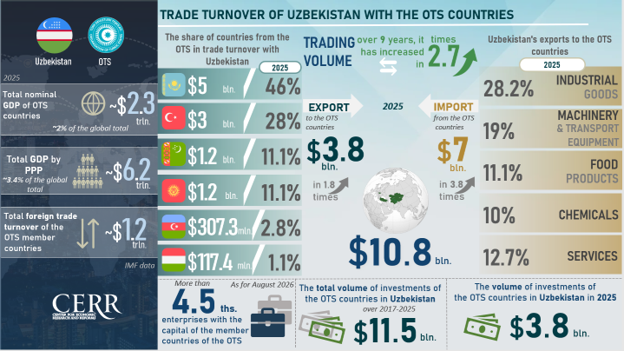
  • the trademark component grew by 9.4%.

In February 2026, the BAI also increased in 13 regions compared with the previous month (Chart No.2).


In particular, notable growth was observed in Andijan region (44.8%), Syrdarya region (41.7%), Tashkent region (33.3%), and Kashkadarya region (28.2%).

At the same time, in the Republic of Karakalpakstan the indicator slightly declined by 0.5%, remaining at a moderate level.

Banking operations


During the reporting period, the number of interbank payment transactions reached 6,760.3 thousand, increasing by 1,220.5 thousand transactions (22%) compared with January 2026.

An increase in interbank payment operations was recorded in 12 regions. In particular, a significant rise in banking operations between legal entities compared with the previous month was observed in Tashkent city (24.1%), Surkhandarya region (23.3%), Samarkand region (21.4%), and Navoi region (17.7%).

At the same time, this indicator declined in Syrdarya region (8.1%) and the Republic of Karakalpakstan (1.6%).

Exchange component


In February of the current year, the exchange component of the BAI reached 1.1058 points, increasing by 10.6% compared with the previous month.

This reflected a 36.2% increase in the number of transactions concluded, while the average volume of goods purchased per transaction declined by 15.1%.

The total turnover of goods traded on the UzEx amounted to 6,296 billion soums in February 2026, which is 6.5% higher than in the previous month.

Component of active business entities
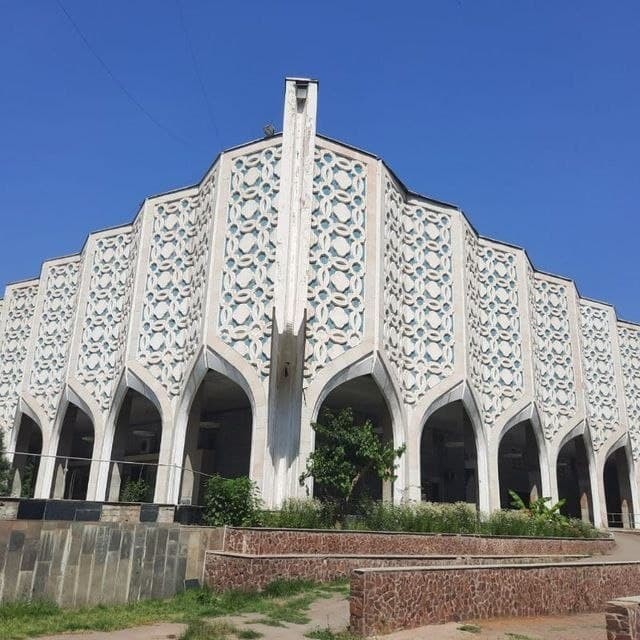
 

During the reporting period, this component amounted to 1.0088 points, increasing by 0.9% compared with the previous month.

At the same time, the total number of operating business entities increased by 4,079 units, reaching 508.5 thousand.
The number of large enterprises increased by 51 units, reaching 4,161.
The number of small enterprises rose by 3.9 thousand, reaching 415.1 thousand.
The number of farms increased by 36, reaching 89.2 thousand.

Trademark component


In February 2026, the trademark component reached 1.0641 points, increasing by 9.4% compared with the previous month.

During this period, 430 trademarks and product names were registered by legal entities.

Islombek SaparmatovCERR


Two Nations — One Culture
18.03.2026

Cultural ties between Uzbekistan and Tajikistan are among the key factors bringing the two countries closer together. This cooperation continues to strengthen the historical, spiritual, and cultural affinity between the two peoples. In recent years, collaboration in the cultural sphere has entered a new phase and become more active through a growing number of festivals, concerts, film events, and theatre tours.

At the same time, the sincere and warm relationship between the leaders of the two states further reinforces this cooperation. Mutual visits by the heads of state, their joint participation in cultural events, and initiatives aimed at supporting culture and the arts deepen friendship and mutual respect between the two nations and give fresh momentum to cultural cooperation.

The legal foundation for cooperation in the cultural sector is the Agreement between the Government of the Republic of Uzbekistan and the Government of the Republic of Tajikistan on deepening cooperation in the fields of culture, science, education, tourism, and sport, signed on 16 January 1994, as well as the Cultural Cooperation Programme for 2024–2026 adopted by the two countries’ ministries of culture. These documents have created a solid legal framework for developing cultural ties and implementing joint projects.

Today, cultural cooperation between Uzbekistan and Tajikistan is expanding across multiple areas. Cultural forums, festivals, joint concert programmes, theatre tours, and film days are held on a regular basis. Over the past four years, the Minister of Culture of Uzbekistan and his deputies have visited Tajikistan 11 times, while the Minister of Culture of Tajikistan and his deputies have made 8 visits to Uzbekistan. This clearly demonstrates the steady development of cultural relations between the two states.

A number of major cultural events have also been organised within the partnership. “Days of Uzbek Culture” have been held repeatedly in Dushanbe, while “Days of Tajik Culture” have taken place in Tashkent. In addition, concert programmes titled “Friendship Evening” were staged in both countries, with the participation of the two nations’ leaders.

Representatives of Tajikistan also take an active part in international festivals held in Uzbekistan. In particular, Tajikistan’s “Lola” dance ensemble won an award at the International Dance Festival “Lazgi,” while a soloist of the Tajik National Conservatory achieved a high result at the International Maqom Art Forum. This reflects the cultural harmony between the two peoples and the tangible outcomes of cooperation.

Joint initiatives are also being implemented in the film industry. Specifically, the Cinematography Agency of the Republic of Uzbekistan and Tajikistan’s state institution “Tojikfilm” signed a memorandum to produce the feature film “Starry Sky: Jami and Navoi.” The film has been produced, and editing work is currently under way. Furthermore, in 2024 Tajikistan hosted the “Days of Uzbek Cinema,” and in 2025 Tashkent hosted the “Days of Tajik Cinema.”

One of the major cultural events of 2025 was the celebration of Navruz in the city of Khujand (Tajikistan). The leaders of Uzbekistan, Kyrgyzstan, and Tajikistan took part, and a joint concert featuring artists from all three countries was organised. In addition, Uzbek theatre companies toured in Dushanbe, while Tajik performers took part in international music festivals held in Tashkent.

The Minister of Culture of Tajikistan also participated in the first meeting of Central Asian Ministers of Culture, where issues related to further strengthening regional cultural cooperation were discussed.

Looking ahead, a number of new initiatives are planned to broaden cultural cooperation. These include holding the “Days of Tajik Culture and Cinema” in Uzbekistan, organising the “Friendship Evening” concert programme, arranging theatre tours, and hosting the three-generation gathering “Navro‘zi olam.” It is also planned to sign a new programme of cultural cooperation activities for 2026–2027.

In conclusion, cultural cooperation between Uzbekistan and Tajikistan continues to develop steadily, reinforcing friendship and mutual understanding between the two peoples.

Third Renaissance: Center of Islamic Civilization as a strategy for Spiritual and Intellectual Advancement of New Uzbekistan
12.03.2026

Human history demonstrates that every great advancement is built upon intellectual and spiritual foundations. Today, a project emerging from the heart of Central Asia is drawing global attention for its scale and significance - Center of Islamic Civilization is not merely an architectural landmark, but an intellectual bridge connecting the past, present and future of the region.

The anticipated opening of the complex in March 2026 has already attracted the attention of leading international publications and organizations, recognizing it as one of the most significant cultural projects of the New Uzbekistan.

The foundation for the project was laid in 2017, when President Shavkat Mirziyoyev introduced the initiative at the 72nd session of the United Nations General Assembly. At that time, Leader of Uzbekistan emphasized the need to show the international community the true humanistic essence of Islam - enlightenment, peace and creation. This was not only a political statement but also a program for returning to the roots of a land that for centuries served as a cradle of science and culture.

The emergence of this monumental project coincides with a global need for spiritual transformation. In an era where Islamophobia and radicalism are spreading across different parts of the world, Uzbekistan has proposed a model to confront these challenges through science and education.


Today, this vision has materialized in a majestic complex covering ten hectares in the historic center of Tashkent. Its 65-meter azure dome and four golden gates symbolically represent the unity of all regions of Uzbekistan. Across every line of the building, architectural traditions of the Timurid era are harmoniously integrated with modern technological solutions.

Center embodies a balance of religion and science. Its main pillar, reflecting the rich architectural traditions of Ulugh Beg Madrasah, is adorned with a calligraphic inscription of the first revealed verse of the Qur’an, “Iqra” (“Read in the name of your Lord”), symbolizing the pursuit of knowledge as the highest spiritual duty of every individual.

The centerpiece of the exhibition is the 7th-century Uthman Qur’an, a unique sacred relic inscribed by UNESCO in the “Memory of the World” Register.

The architectural concept of the complex impresses not only with its grandeur but also with its full compliance with contemporary urban planning and environmental sustainability standards. Every element of the project - from the foundation to the dome - has been constructed with respect for historical heritage and designed for longevity. The landscaped grounds surrounding the complex transform it into more than a scientific center, creating a spacious cultural and educational zone accessible to both city residents and international visitors.

The exhibition concept of the Center fundamentally departs from that of traditional museums. Built upon the principle endorsed by Shavkat Mirziyoyev, “Civilization – Personalities – Discoveries”, it does more than present historical facts; it immerses visitors in a living intellectual innovation. The exhibition is organized chronologically: the pre-Islamic period, the First and Second Renaissance and New Uzbekistan - forming the foundation of the Third Renaissance.

A special feature is the “Wall of Civilizations”, which showcases humanity’s intellectual progress as a continuous process. It illustrates how the discoveries of great figures from each era - including Al-Khwarizmi, Al-Farghani, Ibn Sina, Al-Biruni, and Mirzo Ulughbek - are directly linked to modern high technologies.

The extensive use of VR and AR technologies, holograms, and artificial intelligence enables the Center to “bring to life” unique 9th-century manuscripts, digitally reconstruct the original appearance of ancient observatories and transport past discoveries into the digital realm.

This large-scale integration of digital technologies positions the Center as a museum of the future. Through smart systems, visitors not only receive visual information but can virtually interact with great scientists and participate in their laboratory experiments. The “1001 Inventions” Laboratory, designed for children, sparks early interest in engineering and natural sciences. Center thus evolves beyond a repository of knowledge, becoming an interactive educational platform that nurtures the nation’s intellectual potential.

Shavkat Mirziyoyev, President of Uzbekistan, has repeatedly emphasized that the true strength of a nation lies in its memory and cultural roots. He instructed that museum exhibitions be enriched with authentic examples of national heritage and that the rarest artifacts preserving the spirit and history of the Uzbek people be returned to the homeland.

In fulfillment of this noble vision, a delegation led by Firdavs Abdukhalikov, Director of the Center of Islamic Civilization and a special commission of scholars, Orientalists and art historians, conducted large-scale research. One of the Center’s most important tasks is the repatriation of national cultural heritage scattered abroad; in recent years, systematic cooperation has been established with prestigious auction houses and private collectors for this purpose.

Thanks to these efforts, more than a thousand unique manuscripts and artifacts have been returned to Uzbekistan. The World Society for the Study, Preservation and Promotion of the Cultural Heritage of Uzbekistan (WOSCU) has also transferred numerous unique artworks from Transoxiana and Khorasan to the Center's collection.

Scientific expeditions and diplomatic missions organized by the Government of Uzbekistan have facilitated the creation of facsimile copies of manuscripts preserved in major museums and libraries worldwide. This process underscores that the rich cultural heritage of the Uzbek people is not only the legacy of Central Asia but also an integral part of the Islamic world and human civilization. Each repatriated treasure symbolizes the determination of the New Uzbekistan to restore its cultural identity.

The Center of Islamic Civilization is conceived not merely as a museum, but as an active scientific and educational platform. It provides comprehensive facilities for researchers, including a library housing over 200,000 volumes, restoration laboratories, a calligraphy school, and digital archives. Center also hosts offices of prestigious international organizations - including ICESCO, IRCICA and OCIS (Oxford Centre for Islamic Studies) - highlighting its role as a major hub for scientific and educational engagement.

More than 1,500 specialists from over 40 countries contributed to the project. International experts, including Khaled El-Enany, have described the Center as a “unique civilizational complex, integrating a next-generation museum, advanced research infrastructure, a modern library, national and international archives on the history of Central Asian civilizations, digital humanities technologies and an extensive network for global scientific and cultural collaboration”.

President of Finland, Alexander Stubb, referred to the Center as an intellectual hub of the modern world, likening it to historical institutions such as the Bayt al-Hikma, Academy of Ma’mun and Ulugh Beg Madrasah, which once shaped the development of science.


At the Congress “Central Asia: Shared Spiritual and Educational Heritage – Shared Future”, Center was visited by five presidents, becoming a symbol of collective regional pride. The event also brought together more than 300 scholars and cultural figures from Central Asian countries and Azerbaijan.

In February 2026, new reports from Paris further bolstered the project’s global prestige. The International Committee of the “Prix Versailles” included Center of Islamic Civilization in Tashkent in the list of the “World's most beautiful museums of 2026”.

This recognition is further reinforced by the inclusion of the Center of Islamic Civilization in authoritative international publications and rankings, such as “Smithsonian Magazine”, “BBC Travel”, “BBC History” and “National Geographic”. This places it alongside the world’s major museum initiatives, including the “Lucas Museum of Narrative Art” (Los Angeles), “National Geographic Museum of Exploration” (Washington, D.C.) and “London Museum” (London).

Such acclaim significantly enhances the Center’s scientific and tourism potential, transforming it into a must-visit global landmark. These achievements vividly demonstrate the creative potential of New Uzbekistan and its innovative approach that meets international standards.

It is no coincidence that the Center’s opening coincides with the Holy month of Ramadan. It was in 2018, during this blessed month, that the first stone of this grand project was laid. Now, eight years later, Center of Islamic Civilization will open its doors, becoming a vital symbol of the revival and preservation of Islamic cultural heritage for future generations.


Узбекистан и страны Балтии объединяют усилия в борьбе с коррупцией
15.07.2025
РИГА, 15 июля. /ИА «Дунё»/. Делегация Узбекистана во главе с директором Агентства по противодействию коррупции Акмалом Бурхановым посетила Латвию и Литву с целью укрепления двусторонних связей и определения новых перспективных направлений сотрудничества в сфере борьбы с коррупцией, сообщает корреспондент ИА «Дунё».

В рамках визита состоялись двусторонние встречи с директором “Transparency International Latvia” Кристой Асмусой и заместителем руководителя Бюро по предотвращению и борьбе с коррупцией Латвии Янисом Розе. В ходе встреч стороны выразили обоюдную заинтересованность в продолжении эффективного сотрудничества и расширении масштабов реализуемых совместных проектов.

В частности, на встрече с директором “Transparency International Latvia” обсуждались вопросы разработки эффективных стратегий противодействия коррупции, улучшения позиций Узбекистана в Индексе восприятия коррупции, обеспечения открытости и прозрачности государственных органов в этой сфере, а также повышения потенциала институтов гражданского общества.

На встрече с заместителем руководителя Бюро по предотвращению и борьбе с коррупцией Латвии состоялся обмен опытом по вопросам антикоррупционной экспертизы нормативно-правовых актов и их проектов, а также крупных строительных проектов. Стороны также обсудили практику оценки коррупционных рисков и мониторинга процессов государственных закупок.

Важно отметить, что Агентство по противодействию коррупции Узбекистана и Бюро по предотвращению и борьбе с коррупцией Латвии в 2022 году подписали Меморандум о взаимопонимании. В рамках этого документа осуществляется сотрудничество в сферах укрепления двусторонних связей в борьбе с коррупцией, обмена передовым опытом и информацией, повышения квалификации кадров, а также организации учебных мероприятий, семинаров и тренингов по вопросам профилактики коррупции.

В ходе встречи с директором Службы специальных расследований Литвы Линасом Пернавасом была подчеркнута значимость проводимых в Узбекистане реформ и роль международного сотрудничества в сфере противодействия коррупции. Стороны также отметили важность обмена опытом с Литвой для его адаптации и применения в национальной практике.

На встрече были обсуждены вопросы двустороннего сотрудничества в области профилактики коррупции, оценки коррупционных рисков и повышения квалификации кадров.

По итогам встречи был подписан Меморандум о взаимопонимании между Агентством по противодействию коррупции Узбекистана и Службой специальных расследований Литвы, создающий основу для дальнейшего развития сотрудничества в борьбе с коррупцией.

Подписание Меморандума стало важным шагом к укреплению международного сотрудничества Узбекистана в сфере противодействия коррупции. Ожидается, что реализация положений Меморандума будет способствовать обмену опытом, внедрению передовых практик и, как следствие, повышению эффективности антикоррупционных мер и улучшению позиций Узбекистана в международных рейтингах.

Uzbek specialists study Latvia’s best practices in veterinary and livestock sectors
10.07.2025
RIGA, July 9. /Dunyo IA/. A training seminar was held in Latvia for specialists of the Committee for Veterinary Medicine and Livestock Development and Production Center for Breeding of Uzbekistan, reports Dunyo IA correspondent.

The seminar, organized by the Embassy of Uzbekistan in Riga in cooperation with the Latvian breeding center "Siguldas", aimed to expand opportunities for livestock breeding through artificial insemination under Uzbekistan’s climatic conditions, introduce modern technologies, and study international experience in this field.

During the seminar, participants received detailed information on Latvia’s best practices in veterinary and livestock management, technologies used in insemination processes, laboratory research, genetic quality assessment, and breeding selection methods.

Following the training, specialists from both countries agreed to further cooperation, joint research, and the organization of seminars on pressing topics.

Uzbekistan and Finland discussed prospects for cooperation in the field of entrepreneurship support
28.03.2025
HELSINKI, March 23. /Dunyo News Agency/. With the assistance of the Embassy of Uzbekistan, online negotiations were held between representatives of the Joint Stock Company "Company for the Development of Entrepreneurship" of our country and the Finnish company "Finnvera", the correspondent of the "Dunyo" News Agency reports.

During the meeting, "Finnvera" specialists exchanged views with their Uzbek colleagues on areas of mutual interest. In particular, they studied Finnish experience in matters related to the general aspects of "Finnvera" activities, the development and implementation of financial solutions for enterprises, as well as risk management.

Following the meeting, the parties reached an agreement on the further development of bilateral cooperation, including the organization of separate meetings on issues of mutual interest, the exchange of experience, as well as the visit of "Finnvera" representatives to Uzbekistan.
A holiday of unity: Navruz celebration connects nations in Riga
23.03.2025
RIGA, March 18. /Dunyo IA/. The Embassy of Uzbekistan in Latvia, together with the diplomatic missions of Azerbaijan, Kazakhstan, and Turkiye, organized a cultural and educational event in Riga to celebrate the holiday of Navruz, reports Dunyo IA correspondent.

The event was attended by representatives from Latvia’s public and political spheres, the scientific and academic community, the business sector, the Uzbek Cultural Center, and fellow nationals residing in the country.


During the opening, it was emphasized that Navruz symbolizes traditional values such as kindness, generosity, creation, tolerance, friendship, and solidarity. Guests were also informed about the 43rd session of the UNESCO General Conference, which will be held this year in Samarkand.


Each participating country presented its national stands to the public. Uzbekistan’s stand showcased information about the country’s tourism potential, national costumes, embroidery, and other forms of folk arts. Traditional songs and dances were performed by artists from the "Xalqlar do’stligi" ensemble.


Additionally, the Latvian public had the opportunity to familiarize themselves with the cultures and traditions of all four countries, gaining a broader understanding of each.


As noted by the participants of the event, the joint celebration of Navruz demonstrated the high respect the participating countries have for each other and the closeness of their cultures. In their opinion, such events contribute to the closer ties between peoples.

Discussions on potential areas of cooperation with the Association of European Chambers of Commerce and Industry were held in Riga
24.02.2025
RIGA, /Dunyo IA/. A delegation of Uzbekistan, led by Bekzod Mamatkulov, Chairman of the Supervisory Board of BMB HOLDING, visited Latvia to explore potential cooperation across various sectors, reports Dunyo IA correspondent.

In particular, during the visit, a meeting was held with Aigars Rostovskis, Vice President of the Association of European Chambers of Commerce and Industry (Eurochambres) and President of the Latvian Chamber of Commerce and Industry.


The meeting included an overview of the activities of companies within the BMB Holding system, covering details about the crops cultivated, products processed, and goods manufactured.


In turn, Aigars Rostovskis discussed the chamber’s and association’s efforts to support entrepreneurs, the business environment, the global market share of association members, and other related topics.


As a result, an agreement was reached to develop multifaceted bilateral cooperation and to organize a meeting with a delegation of European entrepreneurs in Uzbekistan this March.


Eurochambres is the Association of European Chambers of Commerce and Industry. It is one of the largest business representation organizations in Brussels, comprising 45 members (43 national associations of chambers of commerce and industry and 2 transnational chamber organizations) and 1,700 regional and local chambers. Through its European network, it represents the interests of over 20 million enterprises in Europe.


It is worth noting that, the day before, the chairman of the Supervisory Board of BMB Holding Bekzod Mamatkulov held successful negotiations in Poland.

Торговый дом Узбекистана в Латвии провел онлайн-тренинг для хокимов и экспортеров Сырдарьинской области
29.12.2024
РИГА, 28 декабря. /ИА «Дунё»/. Глава Торгового дома Узбекистана в Риге и почетный консул нашей страны в Латвии Владимир Гальперин организовало в онлайн-формате «круглый стол» и семинар-тренинг на тему «Экспорт в Европу» для хокимов районов и экспортеров Сырдарьинской области, передаёт корреспондент ИА «Дунё».

В ходе мероприятия были подробно обсуждены нормативно-техническое регулирование и другие требования к экспорту узбекской продукции в страны Европы, поиску надежных партнеров, заключению контрактов, использованию возможностей торговых домов Узбекистана.


Кроме того, эксперт предоставил подробную информацию о требованиях и условиях, связанных с экспортом сельскохозяйственной продукции в Европу, стандартах упаковки пищевых продуктов, технологиях переработки и производства напитков. Участники были проинформированы о видах узбекской продукции, в которой заинтересованы латвийские, литовские и эстонские импортеры, а также о размерах этих рынков.


Мероприятие вызвало активный интерес участников к складам в Прибалтике и их аренде, а также таможенному оформлению и последующей доставке в другие страны Европы. На все вопросы были даны подробные ответы и достигнута договоренность между хокимиятами и Торговым домом Узбекистана о совместной работе по увеличению объемов экспорта из Сырдарьи на европейские рынки.

Men nechun sevaman O‘zbekistonni!


Ko‘z nuri va qalb qo‘ri ila yaratilgan qo‘l mehnatlarim qadrlanayotgan yurtda yashayotganimdan baxtiyorman!

Raqs san’ati.


Uzbekistan, Kokan

Welcome to Samarkhand!


New army of new Uzbekistan!


  ...

Address