Узбекистан и страны Балтии объединяют усилия в борьбе с коррупцией
15.07.2025РИГА, 15 июля. /ИА «Дунё»/. Делегация Узбекистана во главе с директором Агентства по противодействию коррупции Акмалом Бурхановым посетила Латвию и Литву с целью укрепления двусторонних связей и определения новых перспективных направлений сотрудничества в сфере борьбы с коррупцией, сообщает корреспондент ИА «Дунё».
В рамках визита состоялись двусторонние встречи с директором “Transparency International Latvia” Кристой Асмусой и заместителем руководителя Бюро по предотвращению и борьбе с коррупцией Латвии Янисом Розе. В ходе встреч стороны выразили обоюдную заинтересованность в продолжении эффективного сотрудничества и расширении масштабов реализуемых совместных проектов.
В частности, на встрече с директором “Transparency International Latvia” обсуждались вопросы разработки эффективных стратегий противодействия коррупции, улучшения позиций Узбекистана в Индексе восприятия коррупции, обеспечения открытости и прозрачности государственных органов в этой сфере, а также повышения потенциала институтов гражданского общества.
На встрече с заместителем руководителя Бюро по предотвращению и борьбе с коррупцией Латвии состоялся обмен опытом по вопросам антикоррупционной экспертизы нормативно-правовых актов и их проектов, а также крупных строительных проектов. Стороны также обсудили практику оценки коррупционных рисков и мониторинга процессов государственных закупок.
Важно отметить, что Агентство по противодействию коррупции Узбекистана и Бюро по предотвращению и борьбе с коррупцией Латвии в 2022 году подписали Меморандум о взаимопонимании. В рамках этого документа осуществляется сотрудничество в сферах укрепления двусторонних связей в борьбе с коррупцией, обмена передовым опытом и информацией, повышения квалификации кадров, а также организации учебных мероприятий, семинаров и тренингов по вопросам профилактики коррупции.
В ходе встречи с директором Службы специальных расследований Литвы Линасом Пернавасом была подчеркнута значимость проводимых в Узбекистане реформ и роль международного сотрудничества в сфере противодействия коррупции. Стороны также отметили важность обмена опытом с Литвой для его адаптации и применения в национальной практике.
На встрече были обсуждены вопросы двустороннего сотрудничества в области профилактики коррупции, оценки коррупционных рисков и повышения квалификации кадров.
По итогам встречи был подписан Меморандум о взаимопонимании между Агентством по противодействию коррупции Узбекистана и Службой специальных расследований Литвы, создающий основу для дальнейшего развития сотрудничества в борьбе с коррупцией.
Подписание Меморандума стало важным шагом к укреплению международного сотрудничества Узбекистана в сфере противодействия коррупции. Ожидается, что реализация положений Меморандума будет способствовать обмену опытом, внедрению передовых практик и, как следствие, повышению эффективности антикоррупционных мер и улучшению позиций Узбекистана в международных рейтингах.
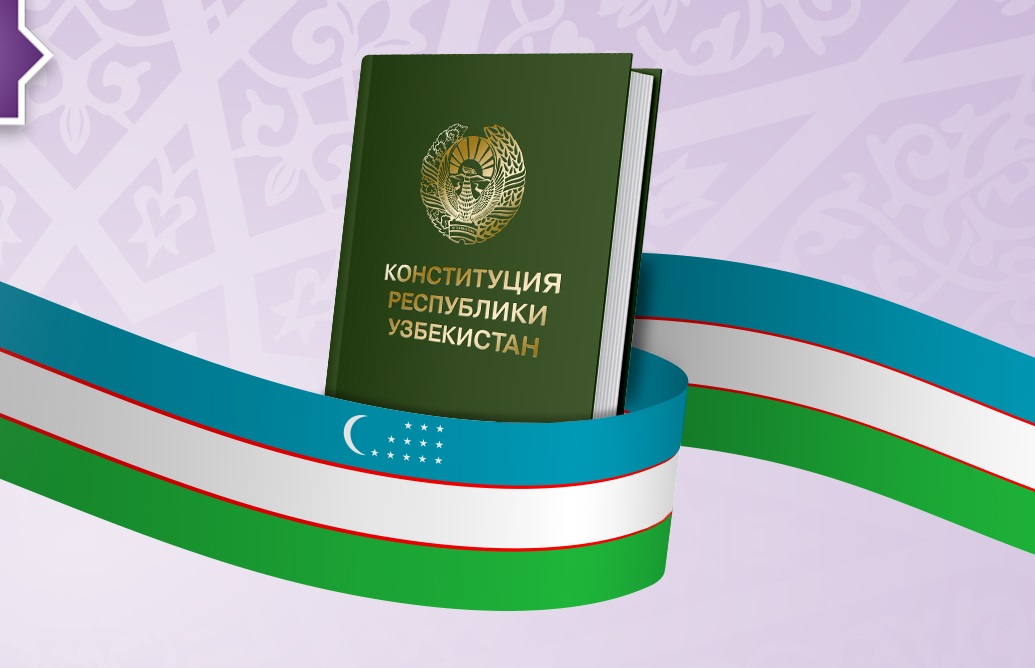
The Constitution of Uzbekistan: a foundation for modern statehood and human dignity
28.11.2025The 33rd anniversary of the adoption of the Constitution of the Republic of Uzbekistan is a momentous occasion for the nation. For the first time in our independent statehood, a Constitution adopted through the will of the people stands as a cornerstone of modern governance. It embodies the rich experience of national state-building, addresses pressing societal and administrative challenges, and presents a carefully considered strategy for the relationship between the individual, society, and the state amidst complex global geopolitical developments. In essence, the renewed Constitution reflects our irreversible commitment to democratic reforms in both state governance and human rights.
Our Basic Law defines the path of national development, ensures that reforms remain irreversible, and serves as the guiding framework for the country’s statehood model.
The anniversary is not only a celebration but also an opportunity to reflect on the Constitution’s role in daily life and its unmatched significance in safeguarding human dignity and justice. The President’s directive on celebrating Constitution Day at a high level reinforces this, highlighting the deep legal, moral, and strategic importance of the Constitution in modern society.
In today’s rapidly changing world, a country’s competitiveness, the effectiveness of governance, and the protection of human rights depend on constitutional norms and institutional mechanisms that meet contemporary needs. The revised Constitution embodies such modern legal approaches. It articulates principles such as human dignity, liberty, equality, social justice, popular sovereignty, and the rule of law, and establishes practical mechanisms for implementing these principles.
The Constitution’s impact extends to all sectors, uniting them under a single socio-legal system aimed at the overarching goal of ensuring human well-being. It serves as the foundation for consistent and sustainable reforms, from strengthening democracy and civil society to protecting entrepreneurship and expanding social protection. Positive changes in healthcare, education, science, culture, and sports all reflect the practical outcomes of these constitutional principles.
The core of these tasks is to convey the philosophy of the renewed Constitution, endorsed by the people, to every layer of society. It recognizes human dignity as the highest value, strengthens social solidarity, elevates legal culture, and unites the efforts of citizens to consciously and responsibly shape their future as a modern state founded on the rule of law – all under the noble ideal: “For the Motherland, for the Nation, for the People!”
The scholarly community and mentors in constitutional law play a crucial role in this process. Every academic study, legal insight, and educational initiative deepens public understanding of the spirit and essence of constitutional norms.
Practical mechanisms are also advancing these goals. For instance, “Law School” (“Huquq maktabi”) mobile application, developed under the President’s 24 May 2024 decree, enables citizens to acquire legal knowledge independently, conveniently, and in a modern format. With nearly 66,000 registered users, 32 educational courses, and over 33,000 users having completed courses and obtained certificates, the application is a clear sign of growing public interest in legal literacy. It is an effective, modern tool for strengthening legal culture, ensuring the rule of law, and enhancing citizens’ legal knowledge.
Tashkent State University of Law plays a vital role in educating the younger generation. Its faculty have developed “Foundations of State and Law” textbooks for students in grades 8–11, based on the revised Constitution, which help students understand its spirit and essence and develop practical skills to apply it in everyday life.
Ultimately, understanding the Constitution’s place in our lives and ensuring that its provisions are applied in all areas requires active civic engagement, a high level of legal culture, and steadfast commitment to the rule of law. The Constitution is more than a legal document; it is the moral benchmark of national development and the foundation that strengthens citizens’ trust in the state and society’s confidence in the future. Respecting it is not only a constitutional duty but also a civic responsibility in building the New Uzbekistan.
Ikhtiyor Bekov
Head of Constitutional Law Department,
Tashkent State University of Law
Professor of Law, DSc.
THE EDUCATIONAL POLICY OF NEW UZBEKISTAN IS OPENING NEW HORIZONS IN THE REGION
28.11.2025We are the luckiest children of our people. We are fortunate to see the days dreamed of by our Jadid ancestors and to build the future they desired. During the events of the seventh Consultative Meeting of the Heads of State of Central Asia, I was once again convinced of this.
In recent years, Central Asia has acquired a new image on the world political map. Today, it is recognized that the countries of the region are not competitors, but reliable partners moving together on the path of development and cooperation. Consequently, other regions and powerful states are seeking to engage with us, envisioning a future in harmony with the spirit of Central Asia. This is not without reason. Because in the international arena, various conflicts and the pursuit of solely material interests have intensified. In such a situation, thanks to the political will and wise decisions of our President, a completely new policy, inherent to our people—one of openness and magnanimity—has gained priority in our region. All Central Asians rejoice in this. Why? Because our peoples have lived as neighbors, in-laws, sharing joys and sorrows as one nation.
In awakening the spirit of Central Asia, our President first took the path of bringing our peoples closer together. We wisely used the power of literature and art to elevate relations to a new stage. In particular, various events and festivals were organized among cultural representatives of our countries. As part of state visits, performances by art and culture representatives and grand concerts have become commonplace.
Our President has turned the gifting of books to his colleagues into a tradition. At the time, we understood this only within the framework of cultural ties. Time itself shows that the path chosen by our President is the way to reach the hearts of the people!
After all, the peoples of Central Asia consider Khazrat Navoi their ancestor. Likewise, we also love Jami, Fuzuli, Makhtumkuli, and Abai just as we do Bobur or Alisher Navoi. We value the epic of Manas as if it were our own, and we read the works of Aitmatov more than anyone else. This alone indicates that our peoples have lived for centuries as close as flesh and nail. The leader of our state elevated such important aspects to the level of state policy. This opened a path to the hearts of our peoples. As a result, the seventh Consultative Meeting of the Heads of State of Central Asia was rich in historic events. Importantly, following its conclusion, very important decisions for the future of the region were adopted.
In particular, a concept for regional security and stability in Central Asia was adopted. In today's global world, security is of paramount importance. In such a situation, one cannot develop in isolation. Where there is peace, there is also stability. That is why the new Central Asia is seen on the international stage as a peaceful and stable zone. Our region has not only natural resources and economic potential but also a sufficient level of human capital. At a time when mutual conflicts and economic blockades are intensifying in various parts of the world, it is also true that Central Asia's ability to maintain stability is seen as a lifeboat for others.
Maintaining this stability and achieving economic growth by utilizing its opportunities is not easy. Anyone who closely observes the working regime of our President understands this correctly. Because the leader of our state works day and night to strengthen international ties. From the world podium, he is advancing not only national but also universal human interests. He calls for resolving any conflict and dispute through peaceful, diplomatic means.
It is these calls, aspirations, and initiatives that have awakened the spirit of Central Asia today. The entire region has unanimously decided to safeguard security and stability together. As our President put it, we have deeply understood that our strength is in unity, and our path to success is in friendship and cooperation.
In recent years, relations in the "Central Asia Plus" format have expanded. Our region is demonstrating a unified position on the international stage. At the same time, it is actively integrating into the world economy. Investment attractiveness is growing, export opportunities to third markets are expanding, and transit potential is increasing. For example, last year, the mutual trade volume between our countries reached 10.7 billion US dollars. The total volume of investments attracted to our region increased by 17 percent.
Further enhancing economic relations and correctly assessing the rapidly changing, unpredictable geopolitical processes is an urgent task. In this sense, it is gratifying that at the Consultative Meeting, a catalog of threats to Central Asian security and measures to prevent them for 2026-2028 were outlined.
The Consultative Meeting of the Heads of State of Central Asia was established on the initiative of our President. The leader of our state chaired its seventh meeting. During this period, our cooperation has been highly effective. To further enhance the potential of cooperation, over 20 major events were held. A forum for inter-regional cooperation at the level of deputy prime ministers was launched. Likewise, meetings of ministers were held for the first time. In particular, ministers of geology, industry, agriculture, ecology, and culture held meetings.
Due to such aspects, we are right to say that a new era of the Consultative Meeting has begun. Just one example: now, member states will engage in separate, individual cooperation in each sector within the Consultative Meeting. We were convinced of this once again at the ministerial meetings.
Within the framework of the international congress on "Central Asia: Common Spiritual and Educational Heritage – Common Future" at the Islamic Civilization Center, we held our first meeting with the culture ministers of Central Asia and Azerbaijan. Various issues of multilateral cooperation were discussed. We discussed issues of cooperation in various fields of culture and art. We exchanged views on the current state of regional cultural cooperation and future plans.
Our peoples have one thing in common. That is, people listen more to elders, to individuals respected by the community. They follow them. Precisely this aspect is considered our unique strength, unlike other regions. Therefore, for the future, vital issues were raised about expanding cultural exchange among cultural figures. As a result, we reached agreements on expanding regional cultural cooperation.
Mutual respect and magnanimity among peoples do not appear by themselves. It must be admitted that the human psyche has a strong tendency towards negative information. In today's global world, we see enough examples of this. Our President, deeply understanding this very aspect and analyzing it thoroughly, created the opportunity for cultural workers to strengthen such ties. I believe that cultural workers, and intellectuals in general, are responsible for further developing peace and mutual understanding in the region. It is precisely we who must prepare and present to our peoples the positive content that will lead to this. In this sense, we united around a common idea to hold joint events and festivals in the fields of art, literature, cinema, theater, and music. Such events remind us of ourselves once again. They sing the universal ideas, friendship, and magnanimity promoted by Navoi, Jami, Fuzuli and Makhtumkuli, Abai and Aitmatov, which are the cause for awakening the spirit of Central Asia today.
The gratifying aspect is that we will also expand joint projects for the study, restoration, and digitization of cultural heritage. Furthermore, we will develop exchange programs among young creators. We reached an agreement on organizing seminars, conferences, and summer schools. We also exchanged views on strengthening cooperation in training and advanced training in the field of culture and art. Importantly, positive opinions were expressed on developing a "Central Asian Cultural Brand."
Observing this process, the meetings and agreements at the level of state leaders, I felt that today Central Asia has truly become a single region, a unified force. Our peoples have gone through many trials to reach this day. We can see this in the example of our Jadid ancestors. Thankfully, the river that flows, flows on. Our ancestors always called the people of the world to enlightenment, friendship, and kindness. Today, we, as a single region, continue this eternal tradition. It is gratifying that the leader of our state is wisely using these values of ours not only for our country but also for the benefit of the whole world. This was clearly evident in the initiatives put forward by our President at the Consultative Meeting of the Heads of State of Central Asia.
In particular, an initiative was put forward to establish an Council of Elders, comprising respected public figures with life experience and authority, based on the values and traditions of people's diplomacy. At the same time, it was emphasized that further improving cooperation mechanisms and the contractual-legal basis is of fundamental importance. Especially, the initiative to transform the Consultative Meeting into the strategic format of a "Central Asian Community" became the words in all our hearts.
Because now Central Asia is not just a region, but is strengthening its place on the world political map as a single voice, a united force. That is why our President emphasized in his speech at the seventh Consultative Meeting of the Heads of State of Central Asia: "I am fully confident that today we are on the threshold of a period of historical awakening of our region as the New Central Asia."
Precisely for this reason, developed countries are eager to cooperate with us. This is a great opportunity for the countries of the region. Using it wisely depends on our ability to protect our unity, friendship, and interests in a coordinated manner. In New Uzbekistan, it is recognized as a people-oriented policy precisely because such important aspects are always the focus of attention. The scale of countries wishing to cooperate with us confirms how sincere these recognitions are. There are two important reasons for the strong aspiration of developed countries towards New Uzbekistan. First, New Uzbekistan has become known as a state promoting the ideas of peace and humanity.
Here, a vital truth must be stated. No matter how a person may appear in a hostile guise, they still strive to live for peace and friendship. Countries are the same. They may engage in various conflicts for their own interests. But deep down, they desire peace and prosperity. The foreign policy position of New Uzbekistan offers guarantees of this peace and friendship.
The second important point is that thanks to the people-centered foreign policy, Central Asia has achieved unity. Now it is not seen as a field for labor or natural resources. Rather, it is seen as a new force with broad economic power in the international arena. During the Consultative Meeting, the leaders of the countries were at the Islamic Civilization Center. Our President emphasized that this center is a unique platform for creating scientific knowledge and ideas, conducting research, and popularizing our common cultural-historical heritage. Therefore, it is natural for the center to become a haven for the scientific and spiritual elevation of youth.
We certainly have grounds for saying this with full confidence. At the Consultative Meeting, our President proposed to regularly organize the first International Congress dedicated to spiritual heritage and enlightenment ideas. According to it, the congress will be held annually in the country chairing the Consultative Meeting.
All this shows that the countries of Central Asia are uniting not only because of economic or security issues, but because they are familiar with enlightenment. We know well that relationships built solely on material interests are fragile. In our region, however, live peoples with a single history, a common past. This is the reason for a unity that surpasses any material interests. That is why, at the meetings of state leaders, issues of culture and enlightenment always find a place on the agenda. This evokes boundless pride and honor in our hearts. At the same time, it also imposes the responsibility of being a generation worthy of such honorable days. For, at a time when the educational policy of New Uzbekistan is opening new horizons in Central Asia, being worthy of it is the duty and debt of every child of this land

In recent years, Uzbekistan has adopted more than 3 thousand normative acts aimed at comprehensive support for business
22.06.2024Business rights are a priority of the New Uzbekistan
Since 2017, Uzbekistan has put forward cardinal, unexpected and favorable changes for entrepreneurs. The peculiarity of these changes is that they were aimed at reducing the control functions of the state and opening the way to the free conduct of business. All barriers that hindered entrepreneurs at that time were gradually eliminated.
Liberalization of punishment against entrepreneurs, elimination of possibilities of unjustified interference in their activities, strengthening of close diplomatic ties with foreign countries, simplification of export-import procedures - all this gave a powerful impetus to the development of business environment and motivated entrepreneurs to develop and actively expand their business without obstacles.
In particular, all types of unscheduled inspections and counter-inspections of the activities of business entities, including criminal cases, were canceled. A mechanism of putting forward a moratorium on inspections conducted in the activities of entrepreneurs was introduced, which is actively used to this day.
The measure of criminal punishment in the form of deprivation of the right to carry out entrepreneurial activities was abolished.
Since 2017, the Business Ombudsman, created on the initiative of the head of state himself, has been functioning effectively. Reporting to the President, it makes proposals to improve the business environment in the country and remove various obstacles to the development of entrepreneurship.
Uzbekistan is not resting on its laurels. The country has set itself big goals - to bring the share of the private sector in GDP to 80% and the share of the private sector in exports to 60% by 2027.
The president's dialog with entrepreneurs is the key to solving many problems
It is important for every entrepreneur to be listened to in case of difficulties or obstacles in his/her activity. This is especially important if the problem requires the intervention of government officials.
Obviously, in the conditions of economic development of the state there are problems that create difficulties for business. They require prompt intervention from the highest authorities in order to prevent stagnation in the development of this or that industry, as well as to give an impetus for further development.
Such a peculiar impetus was the dialog of entrepreneurs with the President, which is held annually, and entrepreneurs have the opportunity to communicate directly with the head of state.
The opportunity to be heard is given to every entrepreneur in every region of the country through meetings. After analysis and generalization, the most relevant and justified proposals are submitted to the head of state for appropriate decisions. In addition, the proposals and complaints of hundreds of entrepreneurs are listened to on a day of open dialog.
Over the past three years, more than 33 thousand appeals and proposals were received from entrepreneurs during the open dialogs. As a result of the dialogs, more than 150 initiatives were put forward to remove obstacles in the development of entrepreneurship, as well as its further development.
In particular, if we analyze the initiatives put forward after the 2021 Dialogue, the reforms were aimed at mitigating the effects of the pandemic, extending tax and customs exemptions and granting deferral of taxes and mandatory payments.
The 2022 Dialogue stood out for the support of business representatives on various fronts, starting with tax reforms such as reducing VAT percentages to 12 percent, shortening the VAT refund period to 7 days, and introducing a flat tax rate of 4 percent instead of the current sales tax ranging from 4 percent to 25 percent.
In addition, the mechanisms for ensuring the rights of entrepreneurs have been expanded by introducing a procedure for canceling the decision to allocate land plots or property only in court.
As a result of the dialog, another problem that worried entrepreneurs was eliminated, concerning the application of higher tax rates due to the non-use of an empty building or land plot. This mechanism was not only canceled, but also debts of entrepreneurs in the amount of 2 trillion soums formed as a result of payment of taxes at the increased rate were written off.
Last year, as a result of the dialog, the mechanisms of financing entrepreneurship were radically revised, the Business Development Bank was established, and tax reforms aimed at protecting the rights of entrepreneurs were introduced.
It has become a tradition for entrepreneurs to look forward to the date "August 20 - Entrepreneurs' Day" every year. It is on the eve of this day that new initiatives to support business are announced in the course of dialog.
Digitalization of business protection as a guarantee to ensure unjustified interference in the activities of entrepreneurs
One of the topics of most concern to entrepreneurs is the topic of inspections. In this area, it is important to ensure the protection of entrepreneurs.
Digital monitoring of inspections conducted in the activities of entrepreneurs by state bodies is carried out by the Business Ombudsman.
The information system "Unified State Control" allows registering inspections carried out in the activities of entrepreneurs, their results, as well as filing complaints in case of violations by the inspecting authorities.
State bodies are prohibited from conducting inspections without registering them in this system. Otherwise, this will serve as grounds for administrative liability.
In order to ensure the transparency of inspections and the rights of business entities, the new system "Unified State Control" provides full access for business entities as well.
Thus, in the new system "Unified State Control" a number of functions have been added, such as the Electronic Book of Registration of Inspections, which provides full oversight of inspections by the Authorized Body.
In order to combat corruption and illegal inspections in the system "Unified State Control" was made an electronic database of all officials with the right to conduct inspections This in turn eliminates the possibility of falsification of data of the certificate with the right to conduct inspections. Entrepreneurs can check the data of the special license of inspectors and in case of non-compliance with the system have the right not to allow them on their territory.
Moreover, registers of state control functions and mandatory requirements have been compiled for business entities, which provides an opportunity to familiarize with the control functions of state inspections and mandatory requirements in relation to them.
As a result of the introduction of the "Unified State Control" system, it has become much easier for the Authorized Body to identify facts of offenses in the state control.
Strategy "Uzbekistan - 2030" - prospects for business development in the future
Uzbekistan does not stop at what has been achieved. Rapid steps to further support the business sphere are also enshrined in the Strategy "Uzbekistan - 2030".
Efficient use of local raw material base and development of industry based on advanced technologies, consistent transfer of monopolistic spheres to market principles, increasing the share of private sector in the economy, creating the most favorable conditions for free activity of entrepreneurs are still a hot topic.
In addition, full digitalization and simplification of the tax system is planned, as well as the creation of equal opportunities for all entrepreneurs to make the official sector preferable and more profitable than illegal activities.
For this purpose, a simplified and compact legislative system will be created, convenient for the population and business entities.
Dilmurod Kasimov,
authorized to protect the rights and legitimate interests
business entities