Phone
Consular Issues
Phone
Madaniyat va Turizm sohasida hamkorlik
We recommend

VAT refund system for foreign tourists takes effect in Uzbekistan
📅 15.07.2026
Starting April 1, 2026, a value-added tax refund (Tax Free) system for foreign citizens has been launched at all international airports in Uzbekistan.
The new system allows tourists to receive VAT refunds on goods purchased within the country. Refunds can be issued either in cash or transferred to a bank card. If a cashless method is chosen, the funds are credited within up to 3 business days after the goods are exported.
The minimum purchase amount eligible for a refund is 300,000 UZS (including VAT). Foreign citizens are refunded 85% of the VAT amount, while the remaining 15% is allocated to cover the services of the Tax Free system operator.
The previously limited list of goods eligible for Tax Free (with the exception of food products) has been abolished.
It is expected that the introduction of Tax Free will increase the country’s attractiveness for foreign tourists, contribute to the growth of retail trade, and support further development of the tourism sector.
In the future, the system is planned to be expanded in stages — in addition to airports, it will be introduced at railway stations and border customs checkpoints, as well as extended to a wider range of retail outlets, including the broader retail sector.
Special attention is being paid to digitalization: to simplify refund procedures, active use of modern information technologies and mobile solutions is planned.
https://drive.google.com/drive/folders/17nMg1wYgHffU-lzB_rVNniVP1oKq1hE2?usp=sharing
Dunyo IA

Establishment of the Samarkand Campus of the International Tourism Academy
📅 14.12.2025
On 20 November of the current year, the President of the Republic of Uzbekistan adopted Resolution No. PQ-350 entitled “On the Establishment and Organization of the Activities of the Samarkand Campus of the International Tourism Academy under the Auspices of the World Tourism Organization (UN Tourism)”.
In accordance with the Resolution, the following key performance objectives have been defined for the activities of the Samarkand Campus of the International Tourism Academy (hereinafter referred to as the Academy), established under the auspices of the World Tourism Organization of the United Nations, including:
-
establishing cooperation with one of the world’s top-10 ranked educational institutions and launching the training of highly qualified specialists;
-
organizing professional development courses of up to one month and retraining programs of up to eight months.
The Academy shall operate within the structure of the “Silk Road” International University of Tourism and Cultural Heritage. Educational activities at the Academy shall be carried out in accordance with the education formats applicable in the Republic of Uzbekistan and shall be conducted in Uzbek, Russian, and English.
Starting from 1 December 2025:
-
specialists of tourism sector entities shall undergo retraining and professional development on a contractual basis;
-
annually, 100 talented specialists from member states of the World Tourism Organization shall be awarded special grants to pursue retraining and professional development programs at the Academy.
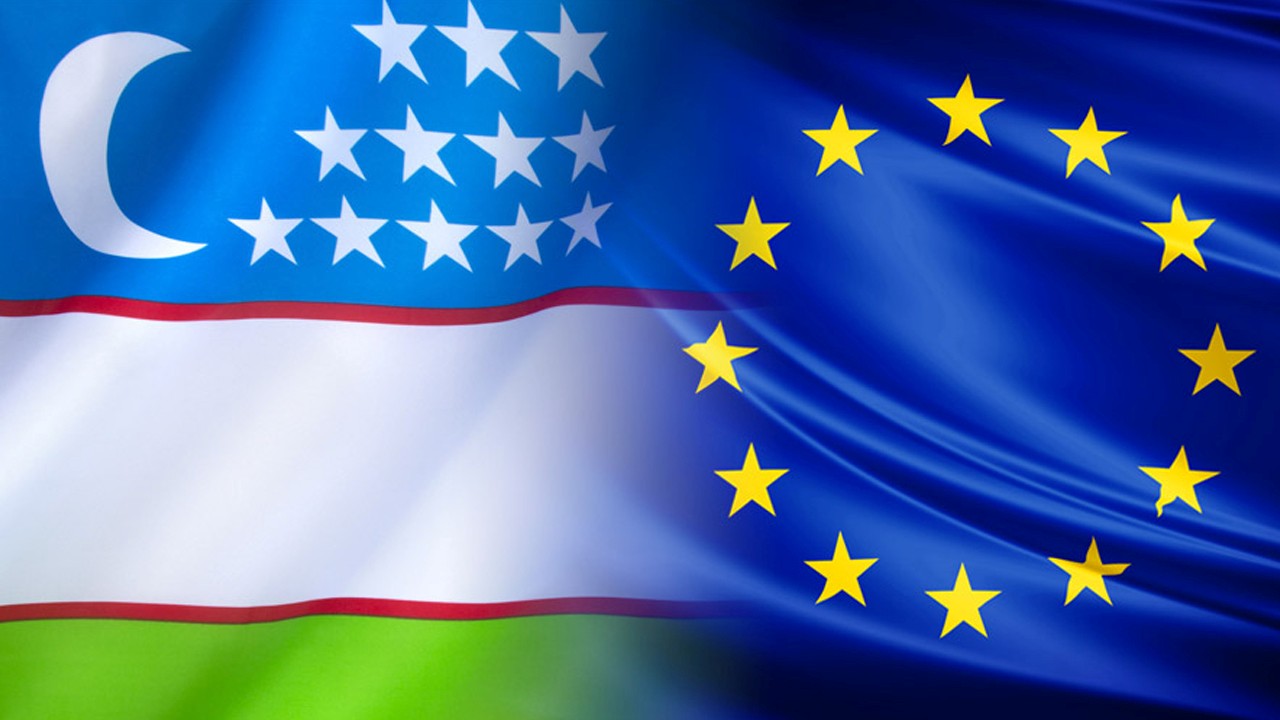
Tourism as a bridge for cooperation between Uzbekistan and the EU
📅 29.10.2025
In recent years, tourism has become one of the priority areas in Uzbekistan’s foreign economic strategy. As part of this policy, the country is actively strengthening its partnership with the European Union, turning the tourism sector into a powerful driver of economic growth, cultural exchange, and enhanced international reputation.
Collaboration with the EU encompasses a broad spectrum of initiatives — from joint infrastructure and digital projects to promoting tourism on the global stage. A significant milestone was the first “Central Asia – European Union” summit held in April 2025 in Samarkand. A declaration on strategic partnership was adopted at the summit, highlighting the importance of tourism development.
President of the Republic of Uzbekistan, Shavkat Mirziyoyev, put forward the “One Tour – The Whole Region” initiative, aimed at unifying Central Asian tourist routes in line with EU standards. The goal is to simplify visa procedures, promote cultural exchange, and make travel across the region more accessible and appealing to European tourists.
Cultural cooperation has become a key element of this partnership. One of the most notable events was the large-scale production of the ballet Lazgi, which symbolized the cultural dialogue between Uzbekistan and the countries of Europe. Uzbekistan is also participating in international programs such as Horizon Europe, which contribute to the development of scientific and educational potential, directly impacting the quality of tourism services.
The economic benefits are already noticeable. In 2025, Uzbekistan expects to welcome over 11 million foreign tourists, with industry revenues projected to reach $4 billion. To achieve these goals, the country is actively modernizing its infrastructure and implementing digital solutions in the tourism sector. For example, the CAREN program established high-speed connectivity between universities in Central Asia and Europe, promoting the exchange of knowledge and innovation in the field of tourism.
Special attention is given to promoting Uzbekistan’s tourism image on international platforms. Leading media outlets such as Euronews, BBC, CNN, and National Geographic present the country as a promising destination, which contributes to the growth of tourist inflow from Europe.
A significant contribution to the promotion was made by the roadshows organized in European capitals—Berlin, Paris, Madrid, Rome, Zagreb, and Warsaw. These events not only showcased Uzbekistan’s cultural heritage but also served as a platform for establishing business connections with tour operators and investors.
Moreover, sustainable tourism development is a key focus: projects aimed at preserving natural and cultural heritage are being implemented, environmental standards are being introduced in tourist areas, and green infrastructure is being developed.
The partnership between Uzbekistan and the European Union in tourism is more than just an exchange of experience—it is a strategic alliance that brings real economic, cultural, and social benefits. This collaboration creates new opportunities for the region, strengthens bonds between peoples, and makes Central Asia more open and appealing to the world.
Chairman of the Tourism Committee
U.Shadiev
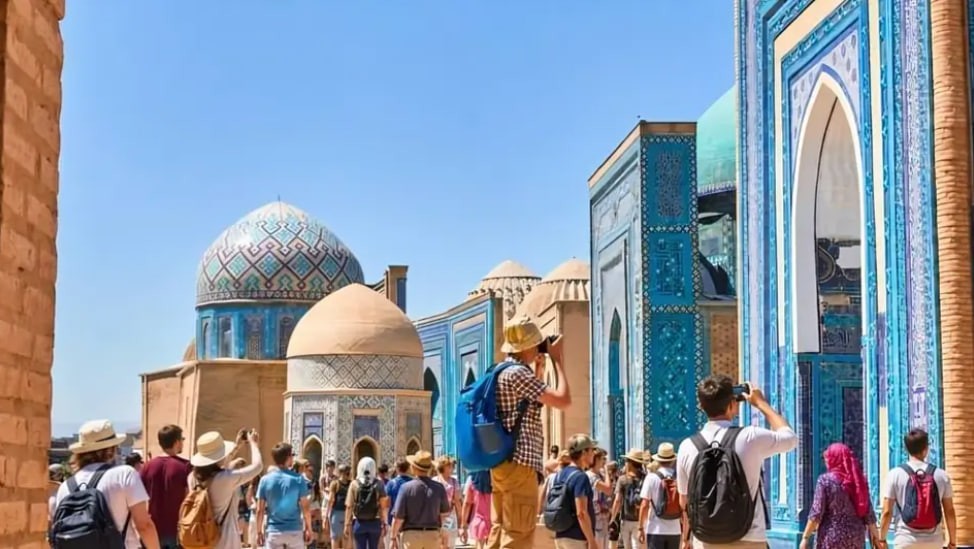
Uzbekistan welcomes more than 7.7 million foreign tourists in the first seven months of the year
📅 13.08.2026
Around 1.18 million foreign tourists arrived in the country in July alone
A total of 7,749,308 foreign nationals visited Uzbekistan for tourism purposes in January–July 2026.
Tourist flow increased by 1.4 million people, or 22.6 percent, compared with the same period last year.
The largest number of tourists arrived from neighbouring countries. In particular, 2,177,108 visitors came from the Kyrgyz Republic, 1,855,562 from Kazakhstan, and 1,728,978 from Tajikistan.
They were followed by Russia with 710,824 visitors, Afghanistan - 281,200, China - 269,735, Turkmenistan - 192,830, Türkiye - 111,908, India - 32,462, and the Republic of Korea - 26,512.
Thus, around 1.18 million foreign tourists visited Uzbekistan in July alone. At the same time, the growth in tourist flows has continued throughout the year.
It should be recalled that more than 6.5 million foreign nationals visited Uzbekistan in the first half of 2026, which was nearly 25 percent higher than the figure recorded during the same period last year.
The sustained positive dynamics demonstrate the continued expansion of tourist flows to Uzbekistan and the strengthening of the country’s position as one of the region’s sought-after tourist destinations.
Dunyo IA,
Tashkent

Center of Islamic Civilization in Uzbekistan enters Guinness World Records and becomes the world’s largest museum of Islamic Civilization
📅 14.04.2026
On April 13, 2026, Center of Islamic Civilization in Uzbekistan was officially recognized as the largest museum of Islamic civilization in the world, receiving the prestigious title from Guinness World Records.
The solemn award ceremony was attended by the official representative and Şeyda Subaşı Gemici, judge of Guinness World Records, who confirmed that the Center meets all international standards.
The event was also attended by the architects, planners, designers and builders who made a significant contribution to the project’s realization. The award was presented to the members of the Center's Scientific Council.
Şeyda Subaşı noted:
“As an official Guinness World Records adjudicator, I can state that every corner of the museum and every exhibit presented possesses its own uniqueness and cultural value. It is evident that years of large-scale, meticulous work stand behind the creation of this space.
Visiting the museum left a powerful impression on me - it is truly a profound and meaningful experience. Although it is impossible to cover absolutely everything during a single visit, the evaluation process strictly followed established procedures: I used an official logbook where every exhibit was recorded and verified by specialists in Islamic archaeology, art and science.
I am sincerely impressed by the level of work accomplished and would like to express my gratitude to everyone involved in the realization of this project. This is an outstanding achievement, the result of colossal effort and high professionalism. The contribution of every participant deserves individual respect. And, in the language of Guinness World Records, this is truly “Officially Amazing”.
Center of Islamic Civilization in Uzbekistan is a large-scale scientific, educational, and museum complex, implemented as an original mega-project by the President of the Republic of Uzbekistan, Shavkat Mirziyoyev. Initiated in 2017 and completed on March 17, 2026, it serves as a unique cultural and educational platform for “New Uzbekistan”, integrating scientific potential, cultural heritage and modern technology within a single space. The project embodies the head of state's strategic vision to strengthen national identity and establish Uzbekistan as a premier global hub of Islamic civilization.
Chief Architect of the project Abdukakhor Turdiev noted:
“The uniqueness of the Center lies in the fact that its architecture reflects the rich culture and heritage of Uzbekistan. Thanks to the ongoing reforms, the country is confidently opening up to the world, establishing itself not only as a hub of science and culture but also as a state actively participating in the global dialogue of civilizations.”
Today, Center has become one of the most visited cultural and scientific venues in the region, welcoming up to 5,000 visitors daily. This demonstrates the high level of interest from both the citizens of Uzbekistan and international guests.
The awarding of the Guinness World Records title is not only a recognition of the project's scale but also a high tribute to the labor of hundreds of specialists, scientists, and experts who participated in its realization.
Firdavs Abdukhalikov, Director of the Center of Islamic Civilization, noted:
“Undoubtedly, this award is a well-deserved honor and a rightful recognition of the original project of the esteemed President of Uzbekistan, Shavkat Mirziyoyev.
The esteemed President has created all the necessary conditions for our activities, and today our primary goal is to effectively utilize this potential for the realization of large-scale scientific and educational projects aimed at preserving and popularizing the rich cultural heritage of Uzbekistan, as well as promoting the humane ideas of our sacred religion of Islam as a religion of goodness, peace, enlightenment and tolerance.”
Obtaining the Guinness World Records status strengthens Uzbekistan's role as a key tourist and historical center of Islamic science, culture, and education. It also confirms the Center's significance as a modern platform for the dialogue of civilizations, based on the principles of mutual respect, tolerance and cultural diversity.
Source: Press Service of the Center of Islamic Civilization in Uzbekistan

CENTRAL ASIA AND AZERBAIJAN: NEW PROSPECTS FOR REGIONAL COOPERATION IN TOURISM
📅 23.07.2026
In recent years, the development of regional cooperation has become one of the key drivers of sustainable growth in the global tourism industry. An increasing number of travelers are choosing to explore entire regions rather than individual countries, attracted by their shared history, cultural heritage, and convenient transport connectivity. As a result, the development of cross-border tourism routes and the joint promotion of tourism products are now widely recognized as effective tools for enhancing international competitiveness.
Central Asia possesses unique advantages for creating such an integrated tourism space. The historic cities of the Great Silk Road, rich cultural heritage, diverse natural landscapes, and centuries-old traditions provide exceptional opportunities for developing virtually every modern form of tourism—from cultural and heritage tourism and pilgrimage tourism to gastronomic, ethnographic, ecotourism, adventure, and medical tourism.
One of the most significant initiatives in this area was proposed by the President of the Republic of Uzbekistan, Shavkat Mirziyoyev, who put forward the idea of establishing the "Central Asia Tourism Ring"—a unified tourism area bringing together the countries of the region. The initiative was presented in May 2026 during the Annual Meeting of the Board of Governors of the Asian Development Bank.
Presenting the initiative, the President emphasized that amid growing global uncertainty, millions of travelers are increasingly choosing safe destinations, while Central Asia possesses enormous potential for the development of diverse tourism segments. Owing to comprehensive reforms in tourism infrastructure, improvements in service quality, visa and transport policies, and enhanced traveler safety, the number of foreign visitors to Uzbekistan has increased sixfold over the past decade. In 2025 alone, the country welcomed 11.7 million international visitors.
The development of the Central Asia Tourism Ring extends cooperation beyond the boundaries of the region itself. On the contrary, it creates new opportunities for collaboration with countries historically connected to Central Asia through the routes of the Great Silk Road. One of the most successful examples of such cooperation is the tourism partnership between Uzbekistan and Azerbaijan.
Bilateral cooperation in tourism is built upon a solid foundation. An intergovernmental agreement on cooperation was signed as early as 1996. Over the years, the two countries have significantly expanded their legal and institutional framework for cooperation, including the adoption of the 2024–2026 Tourism Action Plan between the Tourism Committee of the Republic of Uzbekistan and the State Tourism Agency of the Republic of Azerbaijan.
A new impetus to bilateral cooperation was given on 4 April 2025, when the National PR Centre of the Republic of Uzbekistan and the Azerbaijan Tourism Board signed a Memorandum of Understanding in Samarkand. The document provides for the implementation of the Joint Silk Road Highlights Tour project, aimed at jointly promoting tourism routes along the Great Silk Road in international markets.
The concept of the project is based on combining the tourism potential of the two countries into a single travel experience. The itinerary includes the historic cities of Baku, Shamakhi, Sheki, Khiva, Bukhara, and Samarkand, enabling international visitors to discover the rich cultural heritage of several major centers of the Great Silk Road within a single journey. Particular emphasis is placed on the joint promotion of tourism routes through webinars, roadshows, B2B meetings, and presentations for representatives of the international tourism industry.
A practical embodiment of this initiative was the joint Highlights of the Silk Road roadshow held in October 2025. The promotional campaign covered Germany, Austria, Switzerland, Hungary, the Czech Republic, and Spain. During the roadshow, tourism companies from Uzbekistan and Azerbaijan presented their tourism offerings to European partners, conducted a series of B2B meetings, and discussed opportunities for developing combined tour packages and expanding bilateral cooperation. The business programme was complemented by cultural events showcasing the rich traditions and cultural heritage of both countries.
The effectiveness of these joint efforts is also reflected in tourism statistics. During the period from January to May 2026, the number of Azerbaijani citizens visiting Uzbekistan increased by more than 80 percent compared with the corresponding period of the previous year. This strong growth demonstrates the increasing interest in Uzbekistan's tourism potential and the effectiveness of the two countries' joint promotional efforts.
Alongside the implementation of major joint projects, practical cooperation between the respective tourism authorities continues to expand. Representatives of the tourism administrations of both countries regularly participate in international tourism exhibitions, industry forums, and meetings of international organizations. They also conduct reciprocal official visits, organize familiarization tours for media representatives and tourism professionals, and implement joint cultural and gastronomic initiatives. This format of cooperation facilitates the exchange of expertise, strengthens the promotion of national tourism brands, and contributes to the development of new competitive tourism products.
Looking ahead, the two countries intend to further develop joint Silk Road tourism routes, expand professional exchange programmes for tourism specialists, strengthen cooperation in tourism education and capacity building, and intensify the joint promotion of their tourism potential in third-country markets.
Today, Uzbekistan's tourism policy is guided by the principles of openness, partnership, and regional connectivity. The initiative of the President of the Republic of Uzbekistan to establish the Central Asia Tourism Ring creates new opportunities for developing modern multi-destination tourism routes, while the successful implementation of joint projects with Azerbaijan demonstrates the effectiveness of coordinated efforts to promote the shared heritage of the Great Silk Road. The consistent expansion of such cooperation contributes to enhancing Uzbekistan's tourism appeal, strengthening international partnerships, and creating new opportunities for the sustainable development of the tourism industry.
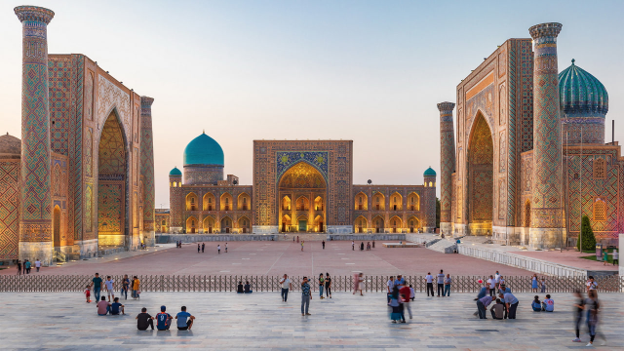
Uzbekistan ranks First in Central Asia by Tourism Development Growth Rate
📅 06.08.2026
According to the Travel & Tourism Economic Impact Research 2026 report published by the World Travel & Tourism Council (WTTC), Central Asia was the world's fastest-growing tourism region in 2025.
WTTC conducts its annual research by dividing the world into 13 major regions. Based on the 2025 results, Central Asia ranked first globally across several key tourism performance indicators. Uzbekistan emerged as the regional leader, recording the strongest performance among the Central Asian countries across all of these indicators.
According to the report, the total contribution of travel and tourism to Central Asia's gross domestic product (GDP) increased by 17.7% in 2025, while the sector's direct contribution to GDP grew by 19.6%. Visitor exports reached $9.9 billion, representing a 26.4% increase compared to the previous year. Central Asia ranked first in the world in terms of growth in visitor exports. Nearly half of the region's total visitor exports came from Uzbekistan, which generated $4.8 billion in tourism exports in 2025.
According to WTTC data for 2025, Uzbekistan was the most popular travel destination for residents of Central Asia.
Report notes that Uzbekistan's leading position is driven by its rich historical and cultural heritage and its strong appeal to travellers from across the region. “Overall, these figures confirm the regional nature of tourism: residents of Central Asia travel within their own region more frequently than anywhere else”, the report states.
In addition, WTTC highlights the significant potential for creating a unified tourism space across Central Asia. According to the organization's experts, simplifying border procedures, expanding air connectivity and transport infrastructure, developing joint tourism routes, and promoting Central Asia as a single tourism destination will help attract more international visitors from other regions of the world.
According to the report, 64.3% of all tourism spending in Central Asia in 2025 came from international visitors, while 35.7% was generated by domestic tourism within the region. Among international visitor spending, 84.5% was related to leisure travel and 15.5% to business travel.
WTTC forecasts that by 2036, the total contribution of the travel and tourism sector to Central Asia's economy will reach $29.7 billion.
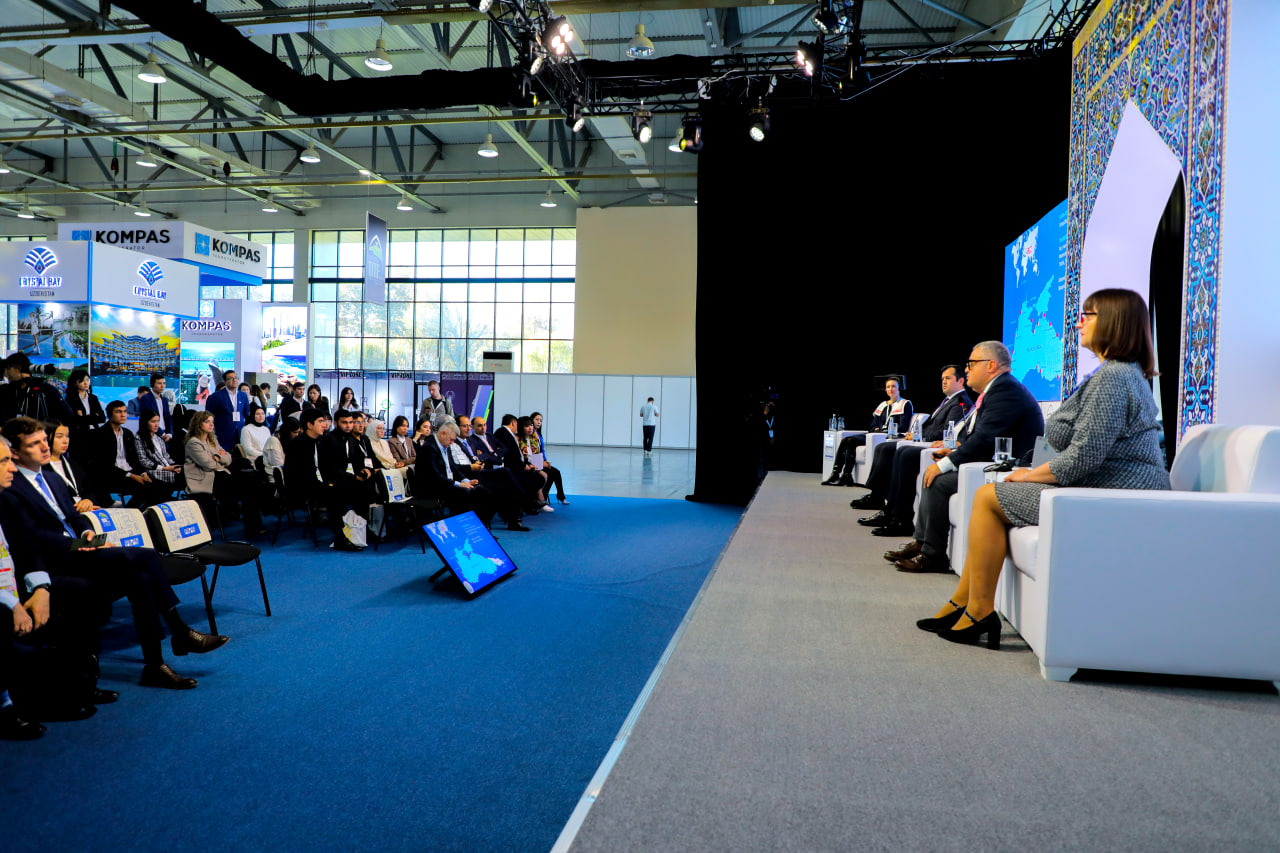
Tashkent International Tourism Fair 2024 (TITF 2024) "Tourism on the silk road" invites you to a world of limitless possibilities!
📅 03.07.2024
21-23 November, 2024 Tashkent, Uzbekistan – The Central Asian Expo International Exhibition Complex (CAEx) will become a center of attraction for travel enthusiasts and travel industry professionals from all over the world.
Tashkent International Tourism Fair (TITF) "Tourism on the silk road" – is a large scale event that gathers leading experts in the tourism sector from all over the world. It hosts presentations of tourism opportunities from dozens of countries, meetings and business negotiations of hundreds of professionals, as well as international conferences on key issues of tourism development.
Since 1995, TITF, supported by the United Nations World Tourism Organization (UNWTO), has become an important event in the world tourism calendar and takes place annually in the capital of Uzbekistan.
This year the fair will please the participants:
• Presentations of the tourism opportunities of dozens of countries: Discover new destinations, get acquainted with unique cultures and create unforgettable travel routes.
• Meetings and business negotiations: Establish useful contacts, find new partners and implement promising projects in the field of tourism.
• International conferences: Discuss current issues of industry development, promising trends and innovative solutions.
Last year's fair was marked by the signing of more than 8 thousand agreements and the holding of more than 20 thousand negotiations between representatives of the tourism industry. Impressive figures, indicating the importance of TITF as a catalyst for the development of tourism.
Participation in the Tashkent International Tourism Fair (TITF) "Tourism on the silk road" provides many advantages for both tourism industry professionals and travel enthusiasts:
• Conducting business transactions
• Search for new partners
• Support for industry development
• Popularization of tourism products
• Familiarization with new trends
• Conducting marketing research
Join the Tashkent International Tourism Fair (TITF) "Tourism on the silk road" and book stands to develop your brand in the world of tourism!
Additional information:
Website: www.titf.uz
Instagram: titf_uz
Contact: +998 55 515 05 66
E-mail: titf@nationalprcentre.com

Uzbekistan is strengthening its position as a safe and open tourist destination.
📅 23.03.2026
By the end of 2025, Uzbekistan is demonstrating strong and dynamic growth in its tourism sector. Nearly 12 million foreign tourists visited the country, marking a 16% increase compared to the previous year.
Tourism service exports exceeded USD 4.8 billion, confirming the growing international interest in Uzbekistan and strengthening its position as one of the most promising tourist destinations in the region.
These results have been achieved through consistent reforms in the tourism sector aimed at improving infrastructure, enhancing transport accessibility, digitalizing services, and creating favorable conditions for travelers. The country is actively implementing projects focused on developing tourism clusters, improving service quality, and expanding international cooperation.
The Republic has introduced simplified entry procedures for foreign citizens. Currently, visa-free entry is granted to citizens of 94 countries, an electronic visa system is available for 52 countries, and a five-day visa-free transit regime applies to 45 countries.
Against the backdrop of ongoing geopolitical instability in certain regions of the world, including mass protests and demonstrations in some countries, the importance of safety and comfort for tourists is becoming increasingly significant.
In this context, Uzbekistan maintains its status as a stable, safe, and hospitable country, open to all visitors regardless of nationality or religion. Traditions of respect, tolerance, and genuine hospitality are an integral part of Uzbek culture.
International rankings confirm the high level of safety in Uzbekistan. In recent years, the country has consistently ranked among the leading nations in global safety indices. In particular, according to the “International SOS Risk Map,” Uzbekistan is classified as a “Low Risk” destination, placing it alongside several European countries in terms of overall safety.
According to the “Numbeo Safety Index,” Uzbekistan ranks 25th out of 148 countries worldwide, demonstrating a consistently low level of crime. Furthermore, in the “Solo Female Travel Safety Index” and the “Safety Perceptions Index,” Uzbekistan ranks 1st globally, achieving one of the highest safety scores for solo female travelers. Additionally, in the “Gallup Global Law and Order Index,” the country has also been among the global leaders in terms of public safety and trust in law enforcement. Taken together, these assessments contribute to a strong international image of Uzbekistan as a safe, stable, and comfortable destination for tourists.
Today, Uzbekistan offers visitors not only the rich cultural and historical heritage of the Great Silk Road but also modern infrastructure, comfortable conditions, and an atmosphere of openness.

Cooperation between the Republic of Uzbekistan and the Republic of Kazakhstan in the field of tourism
📅 25.05.2026
Cooperation between the Republic of Uzbekistan and the Republic of Kazakhstan in tourism is an important direction of bilateral relations and holds a special place within the broader framework of cultural and humanitarian ties between the two neighboring countries. Geographic proximity, a shared historical and cultural foundation, and the rich heritage of the Great Silk Road create favorable conditions for developing tourism interaction and strengthening friendly relations between the peoples.
In recent years, there has been a steady increase in tourist travel between Uzbekistan and Kazakhstan. According to statistics, 2.29 million Kazakhstani citizens visited Uzbekistan in 2018, followed by 2.26 million in 2019. Despite a decline caused by the COVID-19 pandemic, the numbers began to rise again in subsequent years, reaching 2.67 million in 2025. This data indicates a consistently growing interest among Kazakhstanis in Uzbekistan's cultural and historical heritage.
Particular attention is being paid to promoting a unified tourist route along the Great Silk Road, connecting the historic cities of Samarkand, Bukhara, Turkestan, and Almaty. This project is considered one of the key tools for integrating the tourism markets of Central Asia.
A landmark event in this regard was the launch in November 2024 of the tourist train “Jibek Joly” on the route Almaty — Turkestan — Tashkent — Almaty. In October 2025, the tourist train “Jibek Joly-6.0” resumed its journey along the route Almaty – Turkestan – Otrar – Samarkand – Bukhara – Tashkent – Almaty. This train not only promotes the development of railway tourism but also symbolizes the strong ties between the two countries, connecting major cultural centers in Kazakhstan and Uzbekistan.
Regular contacts between tourism companies and media representatives of the two countries also play an important role in strengthening these ties. Kazakh representatives traditionally participate in the Tashkent International Tourism Fair (TITF), while the Uzbek side participates in the Kazakhstan International Exhibition *Tourism & Travel* (KITF). Such events facilitate the exchange of experience, establishment of partnerships, and promotion of joint projects.
In recent years, informational and promotional activities have also intensified: familiarization tours, filming of movies and TV programs about Uzbekistan’s attractions, and visits by bloggers and journalists have been organized.
Between 2023 and 2025, several important high-level visits took place, during which investment cooperation, promotion of cultural brands, and strengthening the region’s image as a unified tourist space were discussed. In September 2025, the parties developed a draft Joint Action Plan for Tourism for 2025–2026, which is expected to be signed during the visit of Kazakh leadership to Uzbekistan.
Thus, tourism cooperation between the Republic of Uzbekistan and the Republic of Kazakhstan is developing on a solid legal and contractual basis and demonstrates a stable positive dynamic. The parties are actively expanding forms of interaction — from exchanging experience and participating jointly in international forums to implementing large-scale investment projects. Considering the rich historical and cultural heritage, favorable geographic location, and strategic partnership, it can be confidently stated that Uzbekistan-Kazakhstan cooperation in tourism has significant potential for further growth and for strengthening mutual understanding between the two fraternal nations.

UZBEKISTAN AND KYRGYZSTAN STRENGTHEN TOURISM COOPERATION, MOVING FROM GROWING TOURIST EXCHANGES TO JOINT INITIATIVES
📅 23.07.2026
Central Asia continues to strengthen its position as one of the world's most promising tourism destinations, attracting an increasing number of travelers thanks to its rich historical and cultural heritage, unique natural landscapes, and expanding regional cooperation. Uzbekistan plays a key role in this process by consistently implementing large-scale tourism reforms, improving tourism infrastructure, and actively promoting the country's tourism potential on the international stage. During the first half of 2026, Uzbekistan welcomed more than 6.5 million foreign visitors for tourism purposes, nearly 25% more than during the same period last year. In May and June alone, the country received over 2.5 million international tourists, confirming the steady growth of global interest in Uzbekistan's tourism offerings.
Kyrgyzstan remains one of Uzbekistan's key regional partners. During the first six months of 2026, tourist arrivals from Kyrgyzstan continued to grow steadily, reflecting the strong tourism ties between the two countries and the progressive development of bilateral cooperation.
The growth in mutual tourist exchanges is the result of systematic efforts to expand cooperation in the tourism sector. Uzbekistan and Kyrgyzstan continue to strengthen their partnership through intergovernmental agreements and joint programs. Their cooperation covers a broad range of areas, including the promotion of joint tourism routes, participation in international tourism events, the organization of familiarization tours, the exchange of expertise, and the implementation of joint tourism development initiatives.
New opportunities for expanding bilateral cooperation have emerged following the proposal by the President of the Republic of Uzbekistan, Shavkat Mirziyoyev, to establish the Central Asia Tourism Ring. The initiative was announced in May 2026 during the Annual Meeting of the Board of Governors of the Asian Development Bank. It aims to create an integrated tourism space across Central Asia and provide additional opportunities for promoting multi-country travel routes, making the region even more attractive to visitors from third countries.
Today, cooperation between Uzbekistan and Kyrgyzstan extends well beyond the traditional exchange of tourists. Both countries are focusing on developing integrated tourism products primarily designed for travelers from third countries. Their shared historical and cultural heritage provides a strong foundation for creating itineraries that combine Silk Road landmarks, cultural attractions, and natural destinations across both Uzbekistan and Kyrgyzstan. The two countries are already jointly promoting such routes as "Journey Along the Silk Road" and "Journey Through the Natural Attractions of Uzbekistan and Kyrgyzstan," while also developing other collaborative tourism initiatives.
International tourism exhibitions, forums, and industry events remain important platforms for strengthening bilateral cooperation. Kyrgyzstan is one of the regular participants in the Tashkent International Tourism Fair "Tourism on the Silk Road," while representatives of the tourism authorities of both countries regularly meet during events organized under the framework of the Shanghai Cooperation Organisation. These meetings focus on increasing tourist flows, improving transport connectivity, promoting joint tourism routes, and expanding cooperation between tourism organizations.
In recent years, the two countries have organized reciprocal familiarization trips for tour operators, media tours, presentations showcasing the tourism potential of their regions, and joint educational programs. These initiatives facilitate the exchange of professional expertise, strengthen direct contacts between tourism industry representatives, and create new opportunities for promoting the tourism potential of both countries.
Among the most promising areas for future cooperation are the development of cross-border tourism, further improvement of border-crossing procedures, the promotion of new joint tourism routes, and closer collaboration within the concept of Central Asia as a single tourism destination. The implementation of these initiatives will create additional opportunities to increase mutual tourist flows and attract more international visitors from third-country markets.
The continued expansion of cooperation between Uzbekistan and Kyrgyzstan demonstrates the strong potential of their tourism partnership. Growing tourist exchanges, the development of joint projects, and the implementation of new regional initiatives are laying a solid foundation for further strengthening tourism ties, enhancing Central Asia's competitiveness in the global tourism market, and promoting the region as an attractive destination for international travelers.

Safety as a Driver of Tourism Appeal: What an International Study Reveals
📅 09.07.2026
Personal safety is increasingly becoming one of the key factors influencing travelers' choice of destination. This aspect is reflected in the Safety Perceptions Index 2023, an international study published by the Institute for Economics & Peace (Vision of Humanity).
According to the study, Uzbekistan ranked first among 121 countries in terms of perceived personal safety. Unlike conventional rankings based on crime statistics, the Index measures how safe people feel in their daily lives, drawing on data from the global World Risk Poll.
In recent years, safety has become an increasingly important consideration for the global tourism industry. Alongside transport accessibility, service quality and tourism infrastructure, the perception of personal security plays a significant role in shaping confidence in a destination and influencing travel decisions.
In this context, the findings of the Safety Perceptions Index offer an additional perspective on Uzbekistan's tourism potential. Alongside its rich historical and cultural heritage, diverse travel experiences and continuously developing tourism infrastructure, the country's high level of perceived safety contributes to its international image as a welcoming destination.
The combination of cultural heritage, renowned hospitality, ongoing tourism reforms and a comfortable public environment creates favorable conditions for visitors. As Uzbekistan continues to expand its international tourism profile, findings from independent global studies provide valuable insight into how the country is perceived by people around the world.
Link to the analytical report:
https://www.visionofhumanity.org/wp-content/uploads/2023/02/SPI-2023-2.pdf

-
 Ministry of Foreign Affairs of the Republic of Uzbekistan
 -
 Diplomatic Service of the Ministry of Foreign Affairs
 -
 State Committee for Tourism Development
 -
Ministry of Investments and Foreign Trade of the Republic of Uzbekistan
-
 invest.gov.uz
 -
-

-

-

-
-

-

of Uzbekistan in the Republic
of Latvia
When using the information, a link to www.uzembassy.lv
must be provided.
All rights reserved
Address
Address: Riga c., LV-1010. 11-11 Elizabetes Str., Latvia
Phone: 37167322424
Fax: 37167322306
Email: embassy@uzbekistan.lv
Useful links
HomeIssuance of biometric passport for departure abroad
Certificate to return to Uzbekistan
Withdrawal of citizenship
Loss of citizenship