Phone
Consular Issues
Phone
Embassy messages
THE CONSTITUTION OF NEW UZBEKISTAN: FROM STATE INDEPENDENCE TO THE ERA OF HUMAN DIGNITY
On the 34th Anniversary of the Adoption of the Constitution of the Republic of Uzbekistan
On 8 December 2026, the Republic of Uzbekistan marks the 34th anniversary of the adoption of its Constitution - the Fundamental Law that has provided the legal foundation for national independence, sovereign statehood and the country’s independent development.
While at the initial stage the Constitution’s primary purpose was to consolidate independence and establish the institutions of national statehood, today the focus of constitutional development has shifted to the individual - his or her rights, freedoms, honour and dignity.
A qualitatively new stage began in 2017 with large-scale reforms initiated and led by President Shavkat Mirziyoyev. Their political and legal philosophy was expressed in the principle: “It is not the people who should serve state bodies, but state bodies that should serve the people.” The establishment of the President’s People’s Reception Offices, the development of citizens’ appeal mechanisms, public services and the “one-stop shop” system, the digitalisation of administrative procedures, the abolition of exit visa stickers, liberalisation of the foreign exchange market, reform of the residence registration system, and expansion of economic freedoms have fundamentally transformed relations between the State and the individual.
This philosophy was further developed in the formula “human being–society- State”, placing the individual and his or her interests at the centre of public policy.
A logical continuation of these reforms was the adoption of the revised Constitution of the Republic of Uzbekistan at a nationwide referendum on 30 April 2023. It was supported by 90.21 per cent of those who voted, with a turnout of 84.51 per cent. The number of constitutional articles increased from 128 to 155. Yet the true significance of the reform lies not in the quantitative expansion of the Constitution, but in the qualitative transformation of relations between the individual, society and the State.
Article 1 defines Uzbekistan as a sovereign, democratic, law-based, social and secular State. The Constitution has direct effect, while human rights and freedoms directly determine the substance of legislation and the activities of public authorities. Of particular importance is the principle that contradictions and ambiguities in legislation arising in relations between individuals and state bodies must be interpreted in favour of the individual. The principle of proportionality of state measures affecting human rights has also been constitutionally established.
Guarantees of personal liberty and fair justice have been substantially strengthened. The Constitution prohibits the death penalty, torture and degrading treatment; reinforces judicial control over restrictions of liberty; establishes the right to remain silent and not to testify against oneself or close relatives; and strengthens the presumption of innocence. A confession alone may not serve as sufficient evidence for a finding of guilt. Guarantees of judicial protection, qualified legal assistance, the inviolability of the home and private life, and the protection of personal data have also been reinforced.
One of the fundamental outcomes of the reform was the constitutional recognition of Uzbekistan as a social State. Guarantees concerning decent work, social security, health care, education and housing have been strengthened, together with enhanced protection for children, women, older persons, persons with disabilities and other citizens requiring social support.
The social orientation of the Constitution is supported by tangible results. Poverty reduction has for the first time become an independent strategic priority of state policy. The poverty rate declined from 17 per cent in 2021 to 5.8 per cent in 2025 and, according to the results of the first eight months of 2026, to 3.9 per cent. Of particular significance is the constitutional recognition of teachers’ work as a foundation for the development of society and the State, as well as stronger guarantees for scientific and artistic creativity, education and culture. These provisions are directly connected with the idea of laying the foundations for a Third Renaissance.
Constitutional reforms have also strengthened the legal foundations of economic freedom and property rights. The inviolability of private property, freedom of entrepreneurship, equal legal protection of different forms of ownership and protection of housing against unlawful expropriation are now constitutionally guaranteed. These principles create a stable legal basis for the development of a market economy and greater investor confidence.
A particularly significant achievement of the reforms has been the elimination of systematic forced and child labour in the cotton sector. In 2022, the international Cotton Campaign coalition lifted its boycott of Uzbek cotton, while the prohibition of forced labour was enshrined at the constitutional level.
Major changes have also taken place in the organisation of public authority. The constitutional reform strengthened the principles of separation of powers and parliamentary oversight. Of historic importance was the separation of the positions of regional and local governors - hokims - from those of the chairs of the respective Councils of People’s Deputies. This reform created the institutional conditions for strengthening local representative government and implementing the principle of a “Strong Council, accountable and proactive hokim”.
At the same time, the mahalla continues to develop as an autonomous form of citizens’ self-government, while mechanisms of public oversight, citizens’ participation in decision-making and participatory budgeting are being expanded. These developments demonstrate a gradual transition from predominantly administrative methods of governance to more open mechanisms of interaction between the State and society.
The revised Constitution also establishes everyone’s right to a favourable environment and reliable information about its condition, provides for public participation in discussions of urban planning decisions, and defines the State’s responsibilities for environmental protection, including the ecological system of the Aral Sea region. Environmental protection and responsibility towards future generations have thus become important elements of constitutional policy.
The new stage of constitutional development has coincided with a fundamental transformation of Uzbekistan’s foreign policy. Since 2017, the country has pursued an open, pragmatic and good-neighbourly policy, particularly in Central Asia. The peaceful settlement of border issues, expansion of regional cooperation and promotion of international initiatives have strengthened Uzbekistan’s role as a factor of stability and mutually beneficial cooperation. The constitutional recognition of international treaties as an integral part of the national legal system also contributes to the further alignment of domestic law with generally recognised international standards.
Today, the key challenge is to move from constitutional provisions to effective guarantees. Citizens must be able to defend their rights effectively before independent courts; entrepreneurs must have confidence in the inviolability of their property; workers must enjoy guarantees of decent labour; and every individual must experience respect for his or her dignity in relations with the State.
Accordingly, the principal priorities for further constitutional development include improving the quality of legislation, strengthening judicial independence, enhancing parliamentary and public oversight, developing political pluralism, protecting freedom of expression and expanding genuine citizen participation in public affairs.
The principal historical significance of the constitutional transformation of New Uzbekistan lies in the establishment of a new philosophy of statehood: the individual does not exist for the State; rather, the State exists for the individual- for his or her freedom, dignity and well-being.
It is this humanistic choice that unites the values of national independence with the universal ideals of freedom, justice and human dignity, making the Constitution the legal foundation of New Uzbekistan and a reliable guide for its future.
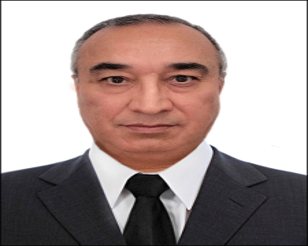
Alimjan R. Akilov,Chief Research Fellow at the Institute of Legislation and Legal Policy under the President of the Republic of Uzbekistan, Doctor of Law, Professor
📅 25.11.2026
Embassy messages
How is global climate change reshaping Uzbekistan’s riverside ecosystems?
The Ministry of Foreign Affairs of the Republic of Uzbekistan has launched the “Consular Services” mobile application
Consular Services Reception Procedure at the Embassy of Uzbekistan in Latvia
Узбекистан и страны Балтии объединяют усилия в борьбе с коррупцией
Uzbek specialists study Latvia’s best practices in veterinary and livestock sectors
Uzbekistan and Finland discussed prospects for cooperation in the field of entrepreneurship support
A holiday of unity: Navruz celebration connects nations in Riga
Trade union delegation of Uzbekistan discusses in Latvia issues of protecting the rights of compatriots – labor migrants
Ambassador of Uzbekistan presented his credentials to the President of Lithuania
Uzbekistan and Finland are preparing for the next meeting of the intergovernmental commission and a business forum within its framework
Discussions on potential areas of cooperation with the Association of European Chambers of Commerce and Industry were held in Riga
Uzbekistan and Latvia agreed to prepare a bilateral agreement on cooperation in the field of labor migration
Uzbekistan and Latvia ready for permanent dialogue in the field of labor migration
Торговый дом Узбекистана в Латвии провел онлайн-тренинг для хокимов и экспортеров Сырдарьинской области
Uzbek delegation studied Finland's experience in preventing violence against children
A festive evening for compatriots was organized in Estonia
Latvia widely celebrated the anniversary of the adoption of the Basic Law of Uzbekistan
Возможности медицинского туризма в Узбекистане презентованы в Риге
New contracts worth over $4 million signed as part of Uzbek exporters' business mission to Latvia
A roundtable discussion on the topic "Mirzo Ulugbek: a great encyclopedist and a famous statesman" was held in Riga
СМИ Латвии: Явка на выборах в Узбекистане составила 74,72%
Досрочное голосование по выборам в Законодательную палату Олий Мажлиса Узбекистана проходит в Латвии
В Латвии и Литве обсуждаются ключевые аспекты предстоящих парламентских выборов в Узбекистане
Issues related to the development of cooperation between Uzbekistan and Latvia in the field of combating crime discussed in Riga
A round table was held in Latvia on the upcoming elections in Uzbekistan to the Legislative Chamber of the Oliy Majlis and Kengashes of People's Deputies
Uzbek exporters familiarized with requirements for import of Uzbek products to Latvian and European markets
Export of agricultural products from Uzbekistan to the Latvian market increases
ЭЪЛОН!
Uzbek ambassador meets Latvian Saeima speaker to discuss prospects for boosting inter-parliamentary cooperation
Diplomats of Uzbekistan held a visiting reception of fellow citizens living in Estonia and Finland

-
 Ministry of Foreign Affairs of the Republic of Uzbekistan
-
 Diplomatic Service of the Ministry of Foreign Affairs
-
 State Committee for Tourism Development
-
Ministry of Investments and Foreign Trade of the Republic of Uzbekistan
-
 invest.gov.uz
-

-

-

-

-

-

-


of Uzbekistan in the Republic
of Latvia
When using the information, a link to www.uzembassy.lv
must be provided.
All rights reserved
Address
Address: Riga c., LV-1010. 11-11 Elizabetes Str., Latvia
Phone: 37167322424
Fax: 37167322306
Email: embassy@uzbekistan.lv
Useful links
HomeIssuance of biometric passport for departure abroad
Certificate to return to Uzbekistan
Withdrawal of citizenship
Loss of citizenship