Phone
Consular Issues
Phone
Embassy messages
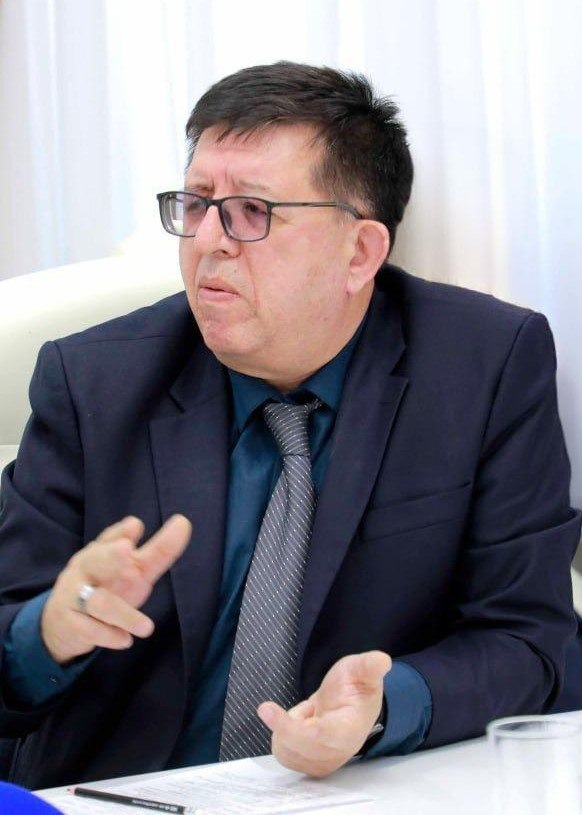
THE CONSTITUTION AS A STRATEGIC GUIDELINE FOR THE FOREIGN POLICY OF NEW UZBEKISTAN
The modern world is undergoing a period of profound transformation: centers of power are shifting, and geopolitical contradictions are intensifying. In these conditions, the fundamental guideline for Uzbekistan has become the new edition of the Constitution, adopted by referendum on April 30, 2023. The updated Basic Law has consolidated internal democratic transformations and elevated the country’s foreign policy doctrine to a qualitatively new level, turning the course of openness and pragmatism into a constitutional norm.
As a result of a proactive foreign policy, Uzbekistan has established diplomatic relations with 168 countries. Tashkent hosts 47 embassies, 3 general consulates, 13 honorary consuls, and dozens of representative offices of international organizations. Abroad, 60 diplomatic and consular missions of the Republic are operating. The country is a member of more than 100 international organizations, including the UN, OSCE, SCO, CIS, and the Organization of Turkic States.
The Constitution has enshrined the foundations of a peace-loving foreign policy and good-neighborliness, confirming Uzbekistan’s commitment to the universally recognized principles of international law. It does not replace strategy, but defines its solid foundation: which goals remain unchanged amid any shifts in the international environment.
Peacefulness — Not a Declaration, but a Key Principle of Foreign Policy
Article 18 of the Constitution establishes that the Republic of Uzbekistan pursues a peace-loving foreign policy aimed at developing bilateral and multilateral relations. Article 17 enshrines the principles of sovereign equality of states, inviolability of borders, territorial integrity, non-use of force, and non-interference in internal affairs.
Today, Uzbekistan’s relations of strategic partnership with foreign countries are carried out on the basis of treaties (Kazakhstan, Tajikistan, Turkmenistan, Russia, Azerbaijan), agreements (Mongolia, Qatar, Oman), joint declarations (USA, Kyrgyzstan, Russia, Azerbaijan, Italy, Hungary, Slovakia, UAE, Korea, India, Pakistan, Belarus, Serbia), or joint statements (Turkey, China, Korea) providing for the deepening of political cooperation, cooperation in defense and security matters, strengthening of economic cooperation and trade development, development of people-to-people exchanges, and more.
The main success of the past decade has been regional policy based on dialogue instead of confrontation. Uzbekistan relies on equal partnership and the strengthening of the regional order in Central Asia, while maintaining a balance among the leading global players.
The basic principles of the 2012 Concept (non-participation in military blocs and peacekeeping operations abroad, refusal to host foreign bases) remain relevant. However, if previously sovereignty was protected through a certain degree of distancing, today it requires protection through engagement. Peacefulness does not mean passivity: it defines the way of advancing national interests through negotiations, law, and multilateral interaction.
Formation of a New Generation of Diplomacy — A Demand of the Time
Modern foreign policy is impossible outside the technological dimension. Competition among states is shifting to the spheres of artificial intelligence, big data, digital infrastructure, and cybersecurity. Uzbekistan gains opportunities for the development of digital diplomacy, participation in shaping international norms for the regulation of AI, promotion of fintech and govtech solutions, digital visas, and cross-border services.
Special attention is required for “soft power.” The historical heritage, traditions of intercultural dialogue, religious tolerance, and interethnic harmony remain a competitive advantage. The development of the creative economy is becoming an important foundation.
The new edition of the Concept of Foreign Policy Activity is intended to consolidate the transition from an adaptive model to a proactive model of strategic positioning of the country in the world. It is about forming Uzbekistan as a responsible regional leader, a production and logistics center of a larger region, and an active participant in multilateral diplomacy.
Good-Neighborliness as a Strategic Priority for the Long Term
One of the main achievements of recent years has been the radical improvement of the atmosphere in Central Asia. The updated Constitution has enshrined this course as a long-term strategic priority. The aspiration to strengthen and develop friendly, good-neighborly relations with neighboring states on the basis of mutual respect and consideration of each other’s interests has acquired the highest legal force.
Such an approach makes it possible to jointly address issues of water-energy balance, ecology, transport connectivity, trade, and security. The constitutional enshrinement of good-neighborliness guarantees partners the predictability and consistency of Tashkent’s policy, free from opportunistic fluctuations. In the long term, this contributes to closer cooperation among the countries of the region and the strengthening of their independent voice in international affairs.
Protection of the Rights of Every Citizen — The Practical Meaning of Diplomacy
The most important novelty of the updated Basic Law has been the strengthening of human rights guarantees, including beyond the country’s borders. The state guarantees protection and patronage to its citizens both on the territory of Uzbekistan and abroad. For the Ministry of Foreign Affairs and diplomatic missions, this means a transition to a service-oriented model of work, where the protection of the rights and legitimate interests of every compatriot is an unconditional priority.
Among people of Uzbek origin abroad, communities of entrepreneurs, engineers, scientists, and IT specialists have already formed. This is a natural global network of influence whose potential is still far from being fully utilized. Systematic work with the diaspora is regarded as one of the key directions of the new generation of foreign policy: not only as a labor resource, but also as the intellectual, scientific, and business capital of the state.
Positioning Uzbekistan as a Responsible “Middle Power”
“Middle powers” are states that do not claim the status of global centers of power, but are capable of acting as sources of regional stability and platforms for dialogue. New approaches consolidate Uzbekistan’s aspiration to the role of a responsible middle power in Central Asia — not through ambitions of leadership, but through ensuring predictability, maintaining an atmosphere of trust, and promoting multilateral mechanisms of cooperation.
Of particular importance are the “C5+” platforms. Uzbekistan’s upcoming chairmanship in the Non-Aligned Movement is important not only as a diplomatic status, but also as an opportunity to consolidate the country’s foreign policy model — multi-vector, non-bloc, and oriented toward maintaining dialogue in conditions of global fragmentation.
From the Legal Foundation to New Instruments of Modern Diplomacy
The Constitution defines principles, but changing conditions require the renewal of the instruments for their implementation. Today it is necessary to take into account not only traditional political and military risks, but also cyber threats, logistics disruptions, sanctions restrictions, water scarcity, climate change, and technological dependence.
For Uzbekistan, the link between foreign policy and economic and technological development is especially important: expanding participation in international production chains, developing high-tech industries, and strengthening investment ties. Digital diplomacy and water (environmental) diplomacy are acquiring a new dimension.
The Constitution sets the principles — peace, cooperation, respect for law, and protection of the individual. Specific priorities, mechanisms, and instruments should be formed in strategic documents and adapted to international realities.
Consistency of Initiatives in a Changing World
The updated Constitution connects the stability of principles with the flexibility of diplomacy. It sets the framework within which Uzbekistan conducts multi-vector dialogue, strengthens regional ties, and expands international cooperation while preserving independence.
The foreign policy of New Uzbekistan will be successful if constitutional norms are embodied in practical results: peaceful and predictable relations with neighbors, new economic opportunities, reliable protection of citizens, and the country’s participation in solving common problems. This is precisely the role of the updated Constitution — to be not only a legal foundation, but also a strategic guideline for the country’s foreign policy.
Bakhodir ISMAILOV
Head of the Sector of the Institute of Legislation and Legal Policy under the President of Uzbekistan,
Doctor of Law, Professor
📅 20.11.2026
Embassy messages
How is global climate change reshaping Uzbekistan’s riverside ecosystems?
The Ministry of Foreign Affairs of the Republic of Uzbekistan has launched the “Consular Services” mobile application
Consular Services Reception Procedure at the Embassy of Uzbekistan in Latvia
Узбекистан и страны Балтии объединяют усилия в борьбе с коррупцией
Uzbek specialists study Latvia’s best practices in veterinary and livestock sectors
Uzbekistan and Finland discussed prospects for cooperation in the field of entrepreneurship support
A holiday of unity: Navruz celebration connects nations in Riga
Trade union delegation of Uzbekistan discusses in Latvia issues of protecting the rights of compatriots – labor migrants
Ambassador of Uzbekistan presented his credentials to the President of Lithuania
Uzbekistan and Finland are preparing for the next meeting of the intergovernmental commission and a business forum within its framework
Discussions on potential areas of cooperation with the Association of European Chambers of Commerce and Industry were held in Riga
Uzbekistan and Latvia agreed to prepare a bilateral agreement on cooperation in the field of labor migration
Uzbekistan and Latvia ready for permanent dialogue in the field of labor migration
Торговый дом Узбекистана в Латвии провел онлайн-тренинг для хокимов и экспортеров Сырдарьинской области
Uzbek delegation studied Finland's experience in preventing violence against children
A festive evening for compatriots was organized in Estonia
Latvia widely celebrated the anniversary of the adoption of the Basic Law of Uzbekistan
Возможности медицинского туризма в Узбекистане презентованы в Риге
New contracts worth over $4 million signed as part of Uzbek exporters' business mission to Latvia
A roundtable discussion on the topic "Mirzo Ulugbek: a great encyclopedist and a famous statesman" was held in Riga
СМИ Латвии: Явка на выборах в Узбекистане составила 74,72%
Досрочное голосование по выборам в Законодательную палату Олий Мажлиса Узбекистана проходит в Латвии
В Латвии и Литве обсуждаются ключевые аспекты предстоящих парламентских выборов в Узбекистане
Issues related to the development of cooperation between Uzbekistan and Latvia in the field of combating crime discussed in Riga
A round table was held in Latvia on the upcoming elections in Uzbekistan to the Legislative Chamber of the Oliy Majlis and Kengashes of People's Deputies
Uzbek exporters familiarized with requirements for import of Uzbek products to Latvian and European markets
Export of agricultural products from Uzbekistan to the Latvian market increases
ЭЪЛОН!
Uzbek ambassador meets Latvian Saeima speaker to discuss prospects for boosting inter-parliamentary cooperation
Diplomats of Uzbekistan held a visiting reception of fellow citizens living in Estonia and Finland

-
 Ministry of Foreign Affairs of the Republic of Uzbekistan
-
 Diplomatic Service of the Ministry of Foreign Affairs
-
 State Committee for Tourism Development
-
Ministry of Investments and Foreign Trade of the Republic of Uzbekistan
-
 invest.gov.uz
-
-

-

-

-

-

-


of Uzbekistan in the Republic
of Latvia
When using the information, a link to www.uzembassy.lv
must be provided.
All rights reserved
Address
Address: Riga c., LV-1010. 11-11 Elizabetes Str., Latvia
Phone: 37167322424
Fax: 37167322306
Email: embassy@uzbekistan.lv
Useful links
HomeIssuance of biometric passport for departure abroad
Certificate to return to Uzbekistan
Withdrawal of citizenship
Loss of citizenship