Phone
Consular Issues
Phone
Embassy messages
Political mutual trust in the Central Asian region is transforming into economic capital
The changes taking place in Central Asia in recent years can hardly be described as simplediplomatic rapprochement. This process is also transforming the economic landscape of the region.
Several years ago, issues related to borders, transport, water and energy were largely viewed as sources of disagreement. Today, these very areas are becoming some of the greatest opportunities for cooperation. This is because the countries have come to understand that the individual market and opportunities of each country are limited, while an interconnected region creates a much larger economic space.
The political foundation of this change is linked to a new regional approach that began in 2017. The policy of openness, good-neighborliness and pragmatism promoted by President of Uzbekistan Shavkat Mirziyoyev has strengthened dialogue among the Central Asian states.
While the first Consultative Meeting of the Heads of State of Central Asia was held in Astana in 2018, by 2025 such meetings had become a regular tradition. Most importantly, the economic results of this dialogue have become increasingly visible.
For example, in 2023, mutual trade among the countries of the region increased by more than 2.5 times compared with previous years, while mutual investment grew almost sixfold. At the 2025 Tashkent meeting, it was noted that intra-regional trade in Central Asia had reached $10.7 billion.
There is an important logic behind these figures: as trust increases, risks decrease; as risks decrease, trade and investment increase.
The Seventh Consultative Meeting in Tashkent: A New Geoeconomic Architecture
The seventh Consultative Meeting, held in Tashkent in November 2025, marked a new stage in regional cooperation. Azerbaijan’s accession to the format as a full-fledged participant expanded the economic geography of Central Asia.
Why is this important? One of the major challenges facing Central Asia is its limited direct access to seaports. Azerbaijan, through the Caspian Sea, connects the region with the markets of the Caucasus, Türkiye and Europe.
In this regard, the Port of Baku, the Trans-Caspian International Transport Route and railway networks may open new export opportunities for Central Asia.
This is not simply about transporting goods. Logistics centers, warehouses, insurance and financial services, and processing enterprises will emerge around the new corridors. In other words, a single transport corridor can create new businesses across several sectors.
Therefore, Central Asia is gradually beginning to emerge not simply as a “landlocked region,” but as an economic hub where Eurasian transport corridors intersect.
Integration Is Driven by Business, Not Summits
The real outcome of regional cooperation is measured not by the number of documents signed at summits, but by changes in the lives of enterprises and entrepreneurs. In this regard, bilateral relations are particularly important. For example, trade turnover between Uzbekistan and Kazakhstan is planned to increase to $10 billion.
Thousands of joint enterprises have been established in the two countries in recent years.
Trade with Turkmenistan has also approached $1 billion. The growth of cross-border trade and cargo transportation shows that economic ties between the two countries are developing not only at the level of capitals, but also at the regional level.
With Kyrgyzstan, transport and energy cooperation is of particular importance, especially the China–Kyrgyzstan–Uzbekistan railway project. If implemented, it will further strengthen Central Asia’s transport connectivity along east-west routes.
Relations with Tajikistan are also increasingly viewing trade, industrial cooperation, transport, water and energy issues from the perspective of economic cooperation.
All these processes are connected by one trend: neighboring countries are beginning to see each other not only as markets, but also as partners in production and investment.
Uzbekistan–Azerbaijan: Towards Lasting Friendship and Joint Markets
Uzbekistan–Azerbaijan relations hold a special place in cooperation between Central Asia and the South Caucasus.
Joint projects between the two countries are expanding in trade, energy, logistics, construction, geology, textiles and tourism.
Bilateral trade increased in 2025, and high growth rates have continued in 2026.
Most importantly, relations are moving beyond ordinary trade toward investment and joint production. A target has also been set to bring bilateral trade turnover to $1 billion by 2030.
Another important aspect of this cooperation is the possibility of combining Uzbekistan’s production capabilities with Azerbaijan’s logistics opportunities in the Caspian and Caucasus regions.
For example, products manufactured in Uzbekistan can reach Azerbaijan via the Caspian Sea and then access the markets of Türkiye and Europe. If customs procedures, railway transportation, port operations and electronic document systems are coordinated along this route, the time and cost required to bring products to market can be reduced.
Therefore, Azerbaijan’s accession to the regional cooperation format is not merely a symbolic diplomatic event. It is a practical step that expands Central Asia’s economic map westward through the Caspian Sea.
From Cholpon-Ata to Avaza: Ahead of the Eighth Consultative Meeting
On October 8–9, 2026, the eighth Consultative Meeting of the Heads of State of Central Asia is scheduled to take place in the Avaza National Tourist Zone of Turkmenistan.
The importance of this meeting can also be seen in its agenda. Along with transport and energy, issues related to water, climate, ecology, the Aral Sea, education and human capital are expected to be discussed.
This is not accidental. The economic future of the region can no longer be divided into separate sectors.
For example, water is directly connected with agriculture and energy; energy is connected with industry; transport is connected with exports; and education is connected with high technologies.
Therefore, at the next stage, it is not enough to understand integration simply as “more trade.” The key issue is to create more value together.
Regional Value Chains
One of the most important issues for Central Asian countries in the future is not simply increasing the volume of trade, but determining how much added value is created within that trade.
For example, if automotive components are produced in one country, a vehicle is assembled in another, spare parts are manufactured in a third, and the finished product reaches external markets through a fourth country — this represents genuine regional economic integration.
Such a model can be applied in textiles, electrical engineering, automotive manufacturing, food production, chemicals, pharmaceuticals and construction materials.
For this, a business-friendly environment is needed: digitalization of customs procedures, mutual recognition of certificates, shorter border-crossing times, and compatibility of electronic payments and documents.
Simply put, the greatest result of integration should not be a new declaration, but the ability of an entrepreneur to cross the border faster and at lower cost.
Water and Energy: From a Challenge to a Common Interest
One of the most complex issues of integration in Central Asia is water and energy.
Water resources and energy potential are not distributed evenly among the countries. Therefore, if a state acts solely on the basis of its own interests, this may lead to unfavorable consequences for the region as a whole.
Conversely, coordinating reservoirs, hydropower, agriculture and electricity grids increases overall efficiency.
Climate change is making this issue even more urgent. Droughts, shrinking glaciers and growing demand for water will require countries to cooperate even more closely in the future.
Therefore, digital water accounting, data exchange, joint forecasting and the development of cross-border energy projects will become important components of integration.
“Central Asia Plus”: The Region Is Moving in Harmony with the Outside World
Another important outcome of regional rapprochement is the growing perception of Central Asia as a common economic actor in negotiations with external partners.
Through “Central Asia Plus” formats, dialogue is being conducted with the European Union, China, Russia, the United States, South Korea and other partners.
The important point here is that external partners now have an opportunity to view the region not only as five separate markets, but as a larger interconnected economic space.
At the first “Central Asia–European Union” summit, held in Samarkand in 2025, transport, green energy, investment and digitalization were discussed. Trade and transport links with China are also expanding. The first “Central Asia–Republic of Korea” summit, held in Seoul in 2026, demonstrates the growing importance of technology and human capital.
Thus, the region is simultaneously strengthening internal integration and diversifying its external economic relations.
Seven Priority Economic Areas for New Development
Political trust has been established in Central Asia. The next task is to turn it into economic results. Several areas are crucial for achieving this.
First, customs and trade processes need to be digitalized.
Second, the number of joint industrial enterprises and regional value chains should be increased.
Third, the China–Kyrgyzstan–Uzbekistan railway, the Trans-Caspian Corridor and other routes should be developed as a single interconnected logistics system.
Fourth, investment funds, export credit, insurance and public-private partnership mechanisms need to be expanded.
Fifth, data exchange and long-term planning in water and energy should be coordinated.
Sixth, common standards for digital payments and e-commerce are important.
Finally, investment in human capital is essential. The integration of the future will be driven not only by railways, but also by engineers, programmers, scientists, entrepreneurs and specialists of the new generation.
The most important feature of current developments in Central Asia is that countries are increasingly beginning to see one another not as competitors, but as partners.
The goal of increasing trade with Kazakhstan to $10 billion, the growth of cross-border trade and transport links with Turkmenistan, railway and energy projects with Kyrgyzstan, water and energy dialogue with Tajikistan, and the opening of new transport and investment opportunities through the Caspian Sea with Azerbaijan are all different manifestations of the same process.
This process is not yet complete. On the contrary, its most important stage is only beginning.
Because turning political agreements into economic results is not always easy. An agreement signed at a summit must become a new product at an enterprise, a transport agreement must lead to cheaper logistics, and an investment agreement must create a new job.
If this chain works, the geographical constraints of Central Asia can become an economic advantage.
If the ports on the Caspian Sea, railways coming from the east, common energy systems, regional industrial chains and a large consumer market become interconnected, Central Asia will become not simply a geographical region, but an important economic space in Eurasia.
Today, the region faces a historic opportunity: to turn geographical constraints into economic advantages, common problems into joint projects, and national markets into a large interconnected space for development.
To achieve this, the agreements reached at summits must be transformed into tangible results that enterprises, investors, farmers, transport operators, scientists and ordinary citizens can feel in their daily lives.
Only then will cooperation in Central Asia become not a political slogan, but a real economic force creating prosperity.
The New Uzbekistan’s open and pragmatic regional policy will remain one of the important initiators and driving forces behind this common path of development.
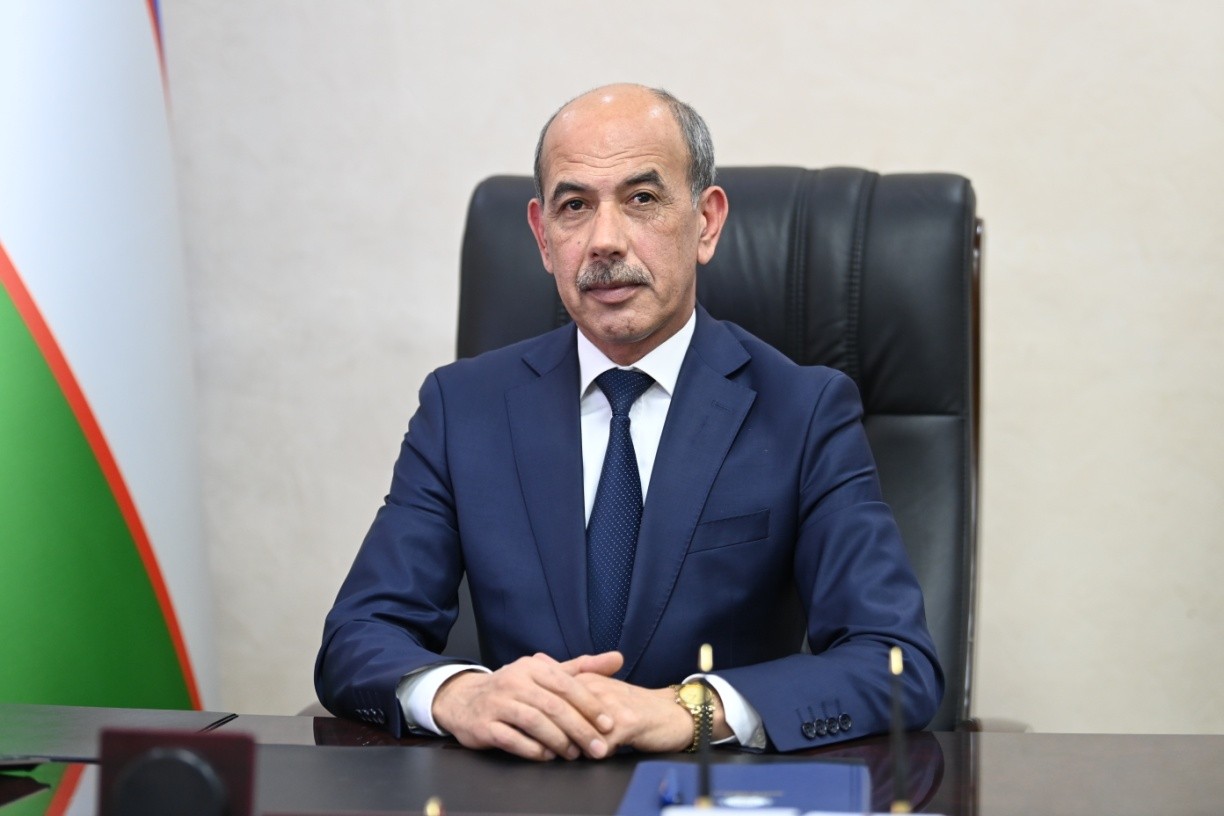
Tulkin Teshabaev,
Rector of Tashkent State University of Economics
Doctor of Economics, Professor
📅 09.10.2026
Embassy messages
The Ministry of Foreign Affairs of the Republic of Uzbekistan has launched the “Consular Services” mobile application
Consular Services Reception Procedure at the Embassy of Uzbekistan in Latvia
Узбекистан и страны Балтии объединяют усилия в борьбе с коррупцией
Uzbek specialists study Latvia’s best practices in veterinary and livestock sectors
Uzbekistan and Finland discussed prospects for cooperation in the field of entrepreneurship support
A holiday of unity: Navruz celebration connects nations in Riga
Trade union delegation of Uzbekistan discusses in Latvia issues of protecting the rights of compatriots – labor migrants
Ambassador of Uzbekistan presented his credentials to the President of Lithuania
Uzbekistan and Finland are preparing for the next meeting of the intergovernmental commission and a business forum within its framework
Discussions on potential areas of cooperation with the Association of European Chambers of Commerce and Industry were held in Riga
Uzbekistan and Latvia agreed to prepare a bilateral agreement on cooperation in the field of labor migration
Uzbekistan and Latvia ready for permanent dialogue in the field of labor migration
Торговый дом Узбекистана в Латвии провел онлайн-тренинг для хокимов и экспортеров Сырдарьинской области
Uzbek delegation studied Finland's experience in preventing violence against children
A festive evening for compatriots was organized in Estonia
Latvia widely celebrated the anniversary of the adoption of the Basic Law of Uzbekistan
Возможности медицинского туризма в Узбекистане презентованы в Риге
New contracts worth over $4 million signed as part of Uzbek exporters' business mission to Latvia
A roundtable discussion on the topic "Mirzo Ulugbek: a great encyclopedist and a famous statesman" was held in Riga
СМИ Латвии: Явка на выборах в Узбекистане составила 74,72%
Досрочное голосование по выборам в Законодательную палату Олий Мажлиса Узбекистана проходит в Латвии
В Латвии и Литве обсуждаются ключевые аспекты предстоящих парламентских выборов в Узбекистане
Issues related to the development of cooperation between Uzbekistan and Latvia in the field of combating crime discussed in Riga
A round table was held in Latvia on the upcoming elections in Uzbekistan to the Legislative Chamber of the Oliy Majlis and Kengashes of People's Deputies
Uzbek exporters familiarized with requirements for import of Uzbek products to Latvian and European markets
Export of agricultural products from Uzbekistan to the Latvian market increases
ЭЪЛОН!
Uzbek ambassador meets Latvian Saeima speaker to discuss prospects for boosting inter-parliamentary cooperation
Diplomats of Uzbekistan held a visiting reception of fellow citizens living in Estonia and Finland
Ambassador of Uzbekistan presents credentials to President of Latvia

-
 Ministry of Foreign Affairs of the Republic of Uzbekistan
 -
 Diplomatic Service of the Ministry of Foreign Affairs
 -
 State Committee for Tourism Development
 -
Ministry of Investments and Foreign Trade of the Republic of Uzbekistan
-
 invest.gov.uz
 -

-

-

-

-

-

-


of Uzbekistan in the Republic
of Latvia
When using the information, a link to www.uzembassy.lv
must be provided.
All rights reserved
Address
Address: Riga c., LV-1010. 11-11 Elizabetes Str., Latvia
Phone: 37167322424
Fax: 37167322306
Email: embassy@uzbekistan.lv
Useful links
HomeIssuance of biometric passport for departure abroad
Certificate to return to Uzbekistan
Withdrawal of citizenship
Loss of citizenship