Phone
Consular Issues
Phone
Embassy messages
Uzbekistan and Kyrgyzstan: Strategic Partnership, Institutionalization, and Mechanisms of Cooperation
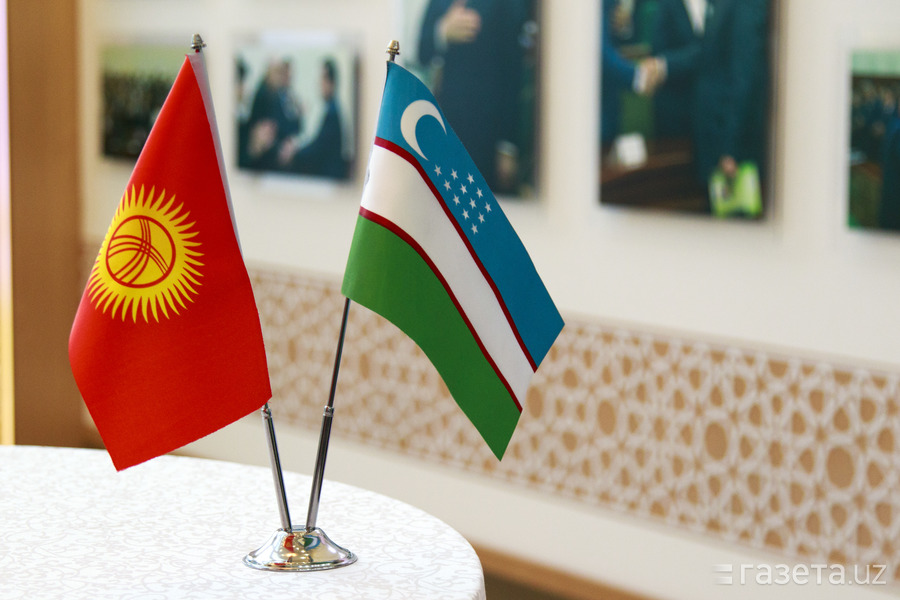
The forthcoming state visit of President of the Republic of Uzbekistan Shavkat Mirziyoyev to Kyrgyzstan on 30–31 July will mark a new milestone in the development of Uzbek–Kyrgyz relations, which have undergone a profound transformation in recent years—from overcoming accumulated disagreements to building a comprehensive model of strategic cooperation.
Today, relations between the two countries are experiencing one of the most substantive periods in their history. Only a few years ago, a significant part of the bilateral agenda concerned issues relating to the state border, the operation of border checkpoints, and the restoration of mutual trust. However, consistent political dialogue has made it possible to resolve the outstanding issues and create space for a new level of cooperation in industry, investment, energy, transport, cross-border development, and the humanitarian sphere.
At the heart of these changes lies the political will of the leaders of the two states. Reciprocal visits and a shared readiness to seek mutually acceptable solutions have created a new atmosphere of trust that now defines the nature of bilateral cooperation. The regular and trust-based dialogue between President of the Republic of Uzbekistan Shavkat Mirziyoyev and President of the Kyrgyz Republic Sadyr Japarov has brought bilateral relations to a fundamentally new level. The signing of the Declaration on Comprehensive Strategic Partnership in 2023 was a logical continuation of this course. The document became both a political symbol of rapprochement and an institutional foundation for long-term cooperation, formalizing the transition of relations to a qualitatively new stage.
The main achievement of recent years is that the border between Uzbekistan and Kyrgyzstan is no longer perceived solely as a dividing line. It is gradually becoming a space for economic growth, people-to-people contacts, and shared opportunities. This transformation has been one of the most significant accomplishments of the new era of Uzbek–Kyrgyz relations. The final settlement of state border issues was of particular historical importance.
The signing in Khujand on 31 March 2025 of the Treaty on the Junction Point of the State Borders of Uzbekistan, Kyrgyzstan, and Tajikistan demonstrated the ability of the region’s states to resolve the most complex issues independently, on the basis of mutual respect and due consideration of one another’s interests.
It is symbolic that the successful completion of the process of resolving border issues in Central Asia has also received international recognition. Adopted on 20 May 2026 at the initiative of the Kyrgyz Republic, the United Nations General Assembly resolution entitled “Peaceful Settlement of Border Disputes” established at the global level the principles of resolving territorial issues peacefully through dialogue, mutual trust, and consideration of the interests of all parties. For Central Asia, where historic progress has been achieved in recent years in the delimitation of state borders, the document represented important confirmation of the relevance of the region’s accumulated experience and recognition of the contribution made by Central Asian countries to international security.
The political and legal foundation that has been established is now undergoing further institutional development. The leaders’ declarations and agreements are supported by a comprehensive set of mechanisms, including the Supreme Interstate Council, the Intergovernmental Commission, the Interparliamentary Commission, the Business Council, and formats for interregional cooperation. Significantly, the twelfth meeting of the Joint Intergovernmental Commission was held in Cholpon-Ata in June this year, during which the parties agreed on further measures to expand trade, industrial cooperation, and transport and energy interaction.
The intensive political dialogue is naturally reflected in the economy, which today serves as one of the clearest indicators of the changes that have taken place. Over the past ten years, bilateral trade has increased more than sevenfold, from USD 167.5 million to USD 1.2 billion. Last year alone, growth of 40 percent was recorded.
At the same time, Uzbekistan has become one of Kyrgyzstan’s largest trading partners, accounting for approximately 7 percent of its foreign trade turnover. It is noteworthy that mutual trade has become considerably more diversified in recent years.
Whereas bilateral trade was previously based mainly on the exchange of agricultural products, it is now increasingly dominated by higher value-added goods and products from processing industries. In particular, more than 90 percent of Uzbek exports consist of processed products (40 percent), finished goods (45 percent), and services (6 percent).
A clear example of this progress is the growing number of enterprises involving capital from the two countries. More than 300 enterprises with Kyrgyz investment currently operate in Uzbekistan, while around 70 enterprises involving Uzbek businesses operate in Kyrgyzstan. This indicates that the business communities of the two countries increasingly regard each other not only as markets for their products, but also as partners in joint production and the development of long-term industrial ties.
The Uzbekistan–Kyrgyzstan Development Fund has become an important instrument in supporting this trend. The decision to increase its authorized capital to USD 200 million significantly expands opportunities to finance projects in industry, agriculture, logistics, energy, construction, tourism, and services. This is helping to create a more sustainable economic foundation for bilateral cooperation. In the future, joint ventures could become the core of cross-border production chains targeting third-country markets by combining Uzbekistan’s industrial capacity, Kyrgyzstan’s natural resource and energy potential, and the advantageous geographical position of both countries.
The dynamic growth of trade and industrial cooperation has naturally increased the importance of transport connectivity, which is becoming one of the key areas of the new stage of Uzbek–Kyrgyz cooperation. In recent years, cooperation has moved beyond the modernization of roads and border checkpoints toward the implementation of regional-scale infrastructure projects. Chief among them is the China–Kyrgyzstan–Uzbekistan railway, which opens a new chapter in the transport integration of Central Asia.
After almost three decades of discussion, the project has entered the implementation stage. With a total length of 538 kilometres, the railway will connect China’s western regions with Central Asia and provide the shortest overland route toward the Middle East and Europe.
The new railway is expected to shorten the freight route between China and Europe by approximately 900 kilometres, reduce delivery times by seven to eight days—almost one-third—and carry up to 15 million tonnes of cargo annually.
For Kyrgyzstan, the project means transforming from a landlocked country into an important Eurasian transit link. For Uzbekistan, it means diversifying export routes, strengthening ties with China, and improving the resilience of foreign trade. At the same time, the project’s significance extends far beyond the construction of a railway. Logistics centres, industrial zones, and new production facilities will emerge along the route. Combined with the development of the Trans-Afghan Transport Corridor, this will create the conditions for Central Asia to become one of Eurasia’s key transport and logistics hubs.
Energy cooperation occupies a special place in the Uzbek–Kyrgyz partnership. For many years, water and energy issues remained among the most sensitive aspects of relations between the countries of the region. Today, however, a fundamental shift is taking place: rather than focusing on differences, the parties are increasingly concentrating on joint solutions.
The most ambitious example of this approach is the construction of the Kambarata-1 Hydropower Plant, which Kyrgyzstan is implementing jointly with Uzbekistan and Kazakhstan. The project, valued at approximately USD 4 billion, envisages the construction of a hydropower facility with a capacity of 1,860 MW and annual electricity generation of 5.6 billion kWh, making it one of the largest energy facilities in Central Asia.
The project’s importance goes far beyond the energy sector. For the first time in the region’s history, three states are jointly implementing an infrastructure project of this scale, sharing investment, risks, and future benefits. Its implementation will strengthen regional energy security, enhance the sustainability of the water and energy balance, and expand opportunities for mutual electricity supplies.
At the same time, the sustainability of the strategic partnership is determined not only by large-scale infrastructure projects. The humanitarian dimension of cooperation, rooted in the historical closeness of the two peoples and intensive interpersonal contacts, plays an equally important role.
More than 300,000 ethnic Kyrgyz currently live in Uzbekistan, where six Kyrgyz cultural centres and more than 50 schools offering instruction in the Kyrgyz language operate. Kyrgyzstan, in turn, is home to a large Uzbek community that forms an integral part of the country’s social and cultural fabric. These humanitarian ties have become one of the most important sources of trust between the two states.
The most vivid practical manifestation of the level of trust achieved can be seen in the Fergana Valley, a region where the most complex issues of cross-border interaction had been concentrated for decades. In many ways, the valley serves as a reflection of the processes taking place across Central Asia. Today, it is gradually being transformed from an area of potential disagreement into a territory of cooperation, dialogue, and joint development.
An important symbol of this transformation was the first Fergana Peace Forum, held in the city of Fergana in October 2025 under the slogan “Fergana Valley: Joining Efforts for Peace and Progress.” For the first time, the Fergana Valley became a platform for developing joint solutions. Discussions focused on strengthening trust, advancing cross-border cooperation, unlocking the region’s economic potential, promoting cultural engagement, and enhancing the role of young people in ensuring sustainable peace.
A notable feature of the Fergana Forum was the holding of Yntymak Day, or “Day of Unity,” under its auspices. Since 2023, the event has been held in Kyrgyzstan as a platform for strengthening dialogue among government bodies, civil society institutions, and international organizations in support of peace and harmony in the region. In 2025, it was held in Uzbekistan for the first time.
The emerging atmosphere of cooperation is reflected not only in political initiatives but also in the growth of humanitarian contacts between the citizens of the two countries. Cooperation in tourism expanded considerably in 2025. Kyrgyzstan is among the largest sources of tourists visiting Uzbekistan. While approximately 652,000 Kyrgyz citizens visited the country in 2021, the figure reached 3.3 million in 2025. The growth in mutual travel demonstrates that open borders and improved transport links are already having a direct impact on everyday contacts between the people of the two countries.
Cultural exchange is also expanding. Days of Culture, joint festivals, educational programmes, and events dedicated to the legacy of prominent figures from both nations are strengthening Central Asia’s shared humanitarian space. The legacy of Chinghiz Aitmatov, whose works form part of the region’s common cultural heritage, carries particular symbolic importance.
Joint events marking anniversaries associated with his life and work demonstrate that culture is becoming an important means of strengthening mutual understanding between the two peoples.
Kyrgyzstan’s election as a non-permanent member of the United Nations Security Council for 2027–2028 adds an international dimension to the Uzbek–Kyrgyz partnership. This historic achievement not only reflects the high degree of confidence that the international community places in Kyrgyzstan’s foreign policy, but also opens new opportunities to promote Central Asian interests on the global stage.
For Uzbekistan, Kyrgyzstan’s membership of the Security Council offers an additional opportunity for closer coordination on regional security, sustainable development, the water and climate agenda, transport connectivity, and the strengthening of multilateral cooperation. It will enable the countries to advance Central Asia’s shared interests more consistently, building on the high level of trust and strategic partnership established between the two states.
Kyrgyzstan’s election can also be regarded as a shared achievement for the region, reflecting Central Asia’s growing international standing and recognition of the policy of good-neighbourliness and constructive cooperation pursued by the region’s states.
Against this background, the issue of further deepening the Uzbek–Kyrgyz strategic partnership is taking on particular significance. Whereas the previous stage of bilateral relations focused on restoring trust, resolving accumulated disagreements, and creating a solid political and legal foundation for cooperation, the success of the current stage will largely depend on the ability of the two states to make joint use of emerging opportunities and translate the level of political trust achieved into sustainable institutional mechanisms for long-term development.
This is especially relevant in the context of implementing major projects designed for decades to come, including the China–Kyrgyzstan–Uzbekistan railway, the Kambarata-1 Hydropower Plant, the expansion of industrial cooperation, and the formation of new transport, logistics, and production chains. Their effectiveness will depend not only on the volume of investment but also on the parties’ ability to ensure predictable conditions for cooperation, coordinated decision-making, and the long-term stability of the mechanisms they establish.
The development of cross-border cooperation remains one of the most promising areas. The final settlement of state border issues has created opportunities to transform border regions into spaces of shared economic growth. Further improvement of cooperation mechanisms between border regions, the implementation of joint infrastructure projects, and stronger interregional ties could make these areas one of the key drivers of bilateral cooperation.
At the same time, construction of the China–Kyrgyzstan–Uzbekistan railway is creating the conditions for the establishment of joint logistics and industrial zones along the route, the development of modern multimodal terminals, and the digitalization of customs and border procedures. This will make it possible to transform the new railway from merely a transport route into a fully fledged economic corridor that stimulates industrial development and attracts international investment.
The development of industrial cooperation offers equally important prospects. The next stage could involve the establishment of sustainable cross-border production chains, expanded cooperation between small and medium-sized enterprises, joint access to third-country markets, and the further removal of remaining administrative barriers to mutual trade and investment.
The strong complementarity of the two economies creates opportunities for deeper sectoral specialization, particularly in the agro-industrial sector. The establishment of joint clusters for the advanced processing of agricultural products would significantly increase added value, improve the competitiveness of producers, and expand export potential.
At the same time, climate change and the growing risks posed by transboundary natural hazards are objectively broadening the strategic partnership agenda. In these circumstances, strengthening mechanisms for the joint prevention of and response to emergencies, developing information-sharing and early-warning systems, and coordinating efforts to ensure the environmental security of border areas are becoming increasingly important.
The further development of water and energy cooperation remains another major priority. The Kambarata-1 Hydropower Plant project already demonstrates a transition toward a new model of regional cooperation based on joint investment, shared infrastructure management, and the distribution of benefits. In the future, the principles of mutual consideration of interests, equitable benefit-sharing, and collective responsibility for the rational use of water resources could form the basis of a modern system of regional water and energy partnership.
Thus, the further development of the Uzbek–Kyrgyz strategic partnership will be determined not only by maintaining a high level of political dialogue but also by consistently strengthening the institutional foundations of cooperation. This approach will ensure the sustainability of the progress achieved and create a solid basis for implementing joint projects in the interests of both states and Central Asia as a whole.
In conclusion, Uzbek–Kyrgyz relations are currently experiencing perhaps the most dynamic stage in the independent history of the two countries. The strategic partnership between Tashkent and Bishkek extends far beyond bilateral cooperation and is becoming an important factor in shaping a new architecture of interaction in Central Asia.
The joint settlement of border issues, implementation of major infrastructure projects, advancement of regional initiatives at the United Nations, and expansion of opportunities for coordinating international efforts demonstrate that Uzbekistan and Kyrgyzstan are moving from resolving accumulated problems to jointly shaping the future. This model of partnership is becoming one of the key sources of stability, connectivity, and international agency for Central Asia as a whole.
Azamat Sulimanov
Head of Department, Institute for Strategic and Regional Studies under the President of the Republic of Uzbekistan (ISRS)
Shakhlo Khamrakhodjaeva
Leading Research Fellow, Institute for Strategic and Regional Studies under the President of the Republic of Uzbekistan (ISRS)
📅 26.07.2026
Embassy messages
The Ministry of Foreign Affairs of the Republic of Uzbekistan has launched the “Consular Services” mobile application
Consular Services Reception Procedure at the Embassy of Uzbekistan in Latvia
Узбекистан и страны Балтии объединяют усилия в борьбе с коррупцией
Uzbek specialists study Latvia’s best practices in veterinary and livestock sectors
Uzbekistan and Finland discussed prospects for cooperation in the field of entrepreneurship support
A holiday of unity: Navruz celebration connects nations in Riga
Trade union delegation of Uzbekistan discusses in Latvia issues of protecting the rights of compatriots – labor migrants
Ambassador of Uzbekistan presented his credentials to the President of Lithuania
Uzbekistan and Finland are preparing for the next meeting of the intergovernmental commission and a business forum within its framework
Discussions on potential areas of cooperation with the Association of European Chambers of Commerce and Industry were held in Riga
Uzbekistan and Latvia agreed to prepare a bilateral agreement on cooperation in the field of labor migration
Uzbekistan and Latvia ready for permanent dialogue in the field of labor migration
Торговый дом Узбекистана в Латвии провел онлайн-тренинг для хокимов и экспортеров Сырдарьинской области
Uzbek delegation studied Finland's experience in preventing violence against children
A festive evening for compatriots was organized in Estonia
Latvia widely celebrated the anniversary of the adoption of the Basic Law of Uzbekistan
Возможности медицинского туризма в Узбекистане презентованы в Риге
New contracts worth over $4 million signed as part of Uzbek exporters' business mission to Latvia
A roundtable discussion on the topic "Mirzo Ulugbek: a great encyclopedist and a famous statesman" was held in Riga
СМИ Латвии: Явка на выборах в Узбекистане составила 74,72%
Досрочное голосование по выборам в Законодательную палату Олий Мажлиса Узбекистана проходит в Латвии
В Латвии и Литве обсуждаются ключевые аспекты предстоящих парламентских выборов в Узбекистане
Issues related to the development of cooperation between Uzbekistan and Latvia in the field of combating crime discussed in Riga
A round table was held in Latvia on the upcoming elections in Uzbekistan to the Legislative Chamber of the Oliy Majlis and Kengashes of People's Deputies
Uzbek exporters familiarized with requirements for import of Uzbek products to Latvian and European markets
Export of agricultural products from Uzbekistan to the Latvian market increases
ЭЪЛОН!
Uzbek ambassador meets Latvian Saeima speaker to discuss prospects for boosting inter-parliamentary cooperation
Diplomats of Uzbekistan held a visiting reception of fellow citizens living in Estonia and Finland
Ambassador of Uzbekistan presents credentials to President of Latvia

-
 Ministry of Foreign Affairs of the Republic of Uzbekistan
 -
 Diplomatic Service of the Ministry of Foreign Affairs
 -
 State Committee for Tourism Development
 -
Ministry of Investments and Foreign Trade of the Republic of Uzbekistan
-
 invest.gov.uz
 -

-

-

-

-

-

-

of Uzbekistan in the Republic
of Latvia
When using the information, a link to www.uzembassy.lv
must be provided.
All rights reserved
Address
Address: Riga c., LV-1010. 11-11 Elizabetes Str., Latvia
Phone: 37167322424
Fax: 37167322306
Email: embassy@uzbekistan.lv
Useful links
HomeIssuance of biometric passport for departure abroad
Certificate to return to Uzbekistan
Withdrawal of citizenship
Loss of citizenship