Phone
Consular Issues
Phone
Embassy messages
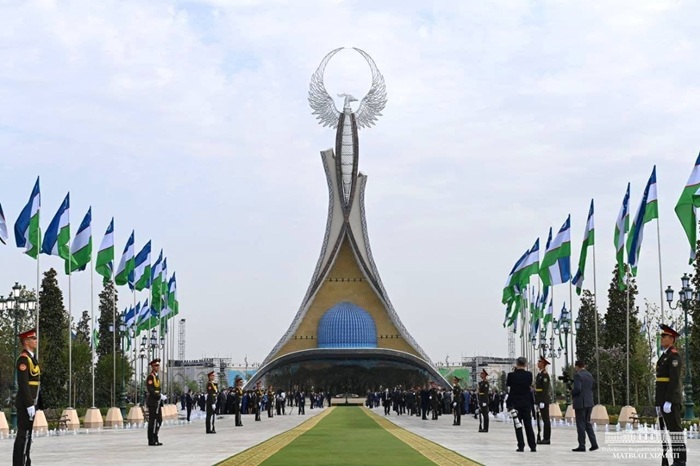
The Termez Dialogue: From Connectivity to Shared Climate Resilience
Central and South Asia are increasingly facing the same reality: climate risks are no longer a distant forecast. Droughts, water scarcity, heatwaves, land degradation, dust storms, floods, and pressure on water, food and energy security are already affecting economies, public health, infrastructure, and the resilience of entire regions.
This is why the second meeting of the Termez Dialogue on Connectivity between Central and South Asia is of particular significance. The second meeting is organized by the Institute for Strategic and Regional Studies under the President of the Republic of Uzbekistan and the Ministry of Foreign Affairs of the Republic of Uzbekistan, in partnership with the Conference on Interaction and Confidence Building Measures in Asia. This format reflects Uzbekistan’s consistent foreign policy direction aimed at strengthening trust, open dialogue, and sustainable connectivity between the regions.
While the first meeting introduced the Termez Dialogue as a platform for bringing the two regions closer together, the new agenda takes the next step: moving from a discussion of connectivity to practical mechanisms for joint climate adaptation and stronger environmental resilience. Its task is to move from conceptual discussions to concrete priorities and practical mechanisms, with joint adaptation to climate change identified among the key areas of cooperation.
Climate as a New Test of Connectivity
Climate change shows how closely water, food, energy, transport, health, and ecosystems are linked. When water availability declines, the impact is not limited to agriculture. It also affects hydropower, food prices, migration, employment, soil conditions, and even regional stability. As extreme heat becomes more frequent, cities, transport systems, healthcare systems, and labour productivity all come under pressure.
The Synthesis Report of the Intergovernmental Panel on Climate Change (IPCC), prepared as part of the Sixth Assessment Cycle, emphasizes that adaptation is already taking place in all regions of the world, but the gap between what is needed and what is being done remains and will continue to grow at the current pace of action. The IPCC also underlines that the most effective responses are not isolated measures, but integrated solutions that connect water management, agriculture, infrastructure, social protection, ecosystems, and population needs.
This is particularly important for Central and South Asia. Both regions depend on mountain watersheds, irrigated agriculture, the resilience of rural areas, as well as stable and secure energy supply and the cross-border movement of goods and people. Climate adaptation, therefore, cannot remain solely a matter of national policy. It must become part of interregional cooperation.
Uzbekistan: The Data Confirm the Urgency of Action
Uzbekistan’s Fourth National Communication under the UNFCCC identifies the country as among the most vulnerable to the impacts of climate change in Central Asia and Eurasia. This vulnerability is linked to accelerated temperature rise, growing water scarcity, glacier retreat, and the increasing frequency of extreme hydrometeorological events.
Water remains an especially sensitive factor. Uzbekistan’s water resources belong to the Aral Sea basin, while the main surface runoff of the Amu Darya and Syr Darya rivers is formed outside the country. This means that Uzbekistan’s climate resilience is directly linked to the quality of regional and interregional cooperation. Water, data, forecasts, infrastructure, and trust become part of one security system.
Cities as a New Frontline of Climate Adaptation
The climate agenda is also becoming increasingly connected with the future of cities. Speaking at the Leaders’ Summit of the 13th session of the World Urban Forum in Baku, President of Uzbekistan Shavkat Mirziyoyev noted that, over the next 15 years, the country’s population is expected to grow from 38 to 50 million people, while the urbanization rate is projected to rise from 51% to 65%.
For Uzbekistan, this is not only a demographic trend but also a climate challenge. Urban growth increases pressure on water, energy, transport, housing, air quality, and green spaces. Therefore, plans for sustainable urbanization — including the development of “green”, “smart”, “safe”, and “15-minute” cities, the expansion of urban greenery, and the introduction of green city principles — are directly linked to climate adaptation.
In this context, the Termez Dialogue can become a platform for exchanging experience not only on water and agriculture, but also on climate-resilient urban development: from reducing the urban heat island effect and saving water to clean transport, digital air quality monitoring, and designing new districts with climate risks in mind.
A New Emphasis: Adaptation as a Practical Development Agenda
The Termez Dialogue can offer an important new approach: to view adaptation not as a response to crises, but as an investment in sustainable development. This changes the very language of climate policy.
Adaptation is not only about building protective infrastructure or responding to emergencies. It is about more accurate forecasting of droughts and floods and data exchange between countries. It is about water-saving agriculture, the modernization of canals, pumping stations, and urban infrastructure. It is about restoring degraded lands and ecosystems. It is about preparing farmers, engineers, hydrologists, energy specialists, and local authorities to operate under new climate conditions.
This is why the Concept of the second meeting of the Termez Dialogue emphasizes the consolidation of efforts by states and partners to develop coordinated and mutually reinforcing approaches to climate adaptation and to reducing the socio-economic consequences of climate and environmental risks.
Why Central and South Asia Must Adapt Together
Climate risks do not recognize borders. Drought in one part of the region can affect food markets in another. Glacier retreat changes river regimes far beyond mountain areas. Dust storms, heatwaves, and extreme rainfall can affect several countries at once. Joint adaptation is therefore a practical necessity.
The IPCC stresses that around 3.3 to 3.6 billion people worldwide live in conditions of high vulnerability to climate change. It also emphasizes that the vulnerability of people and ecosystems is interconnected: the degradation of ecosystems increases risks for people, while social vulnerability reduces societies’ ability to adapt.
For Central and South Asia, this means that resilience must be built across several dimensions at once: water, food, energy, environment, and society. Food and environmental security cannot be strengthened without water. Infrastructure cannot be modernized without climate forecasts. Risks cannot be reduced without trust and information exchange.
Termez as a Place for Climate Partnership
The choice of Termez has both historical and practical significance. Termez is Uzbekistan’s southern gateway and a natural bridge between Central and South Asia. In today’s conditions, this role acquires new meaning: the city is becoming a symbol not only of transport and trade connectivity, but also of climate partnership.
Afghanistan has a particularly important role. The idea of the Termez Dialogue implies the need for the gradual integration of Afghanistan into regional economic, transport, humanitarian, and climate processes with the support of the international community. In the climate agenda, this is especially meaningful: without Afghanistan’s participation, it is impossible to build genuinely sustainable connectivity between Central and South Asia.
What the Termez Dialogue Can Deliver
The Termez Dialogue can become a platform for launching several practical areas of cooperation.
First, the exchange of climate and hydrological data, including forecasts of droughts, floods, glacier changes, and dust storms.
Second, the joint promotion of early warning systems, so that countries can prepare in advance for extreme weather events.
Third, the development of climate-resilient agriculture: water-saving technologies, drought-resistant crops, digital services for farmers, and the restoration of pastures and soils.
Fourth, ecosystem-based adaptation — the restoration of forests, wetlands, mountain and desert ecosystems that themselves serve as natural protection against climate risks.
Fifth, climate-resilient infrastructure — from transport corridors and logistics centres to energy facilities and rapidly growing cities.
From a Common Challenge to Shared Resilience
The main value of the Termez Dialogue is that it allows the climate agenda to be discussed not in the language of alarm, but in the language of joint solutions. Central and South Asia can not only exchange risk assessments, but also create common adaptation mechanisms: from scientific networks and pilot projects to investment programmes and regional standards for resilient infrastructure.
The new climate agenda of the Termez Dialogue is part of the larger idea of connectivity. Genuine connectivity is not only about roads, trade, and energy corridors. It is also about the capacity of countries to jointly protect ecosystems, human health, and the future of coming generations. The Termez Dialogue can become the space where Central and South Asia move from recognizing their shared vulnerability to building shared resilience.
D.R. Ziganshina, SIC ICWC | 20 May 2026
📅 21.05.2026
Embassy messages
The Ministry of Foreign Affairs of the Republic of Uzbekistan has launched the “Consular Services” mobile application
Consular Services Reception Procedure at the Embassy of Uzbekistan in Latvia
Узбекистан и страны Балтии объединяют усилия в борьбе с коррупцией
Uzbek specialists study Latvia’s best practices in veterinary and livestock sectors
Uzbekistan and Finland discussed prospects for cooperation in the field of entrepreneurship support
A holiday of unity: Navruz celebration connects nations in Riga
Trade union delegation of Uzbekistan discusses in Latvia issues of protecting the rights of compatriots – labor migrants
Ambassador of Uzbekistan presented his credentials to the President of Lithuania
Uzbekistan and Finland are preparing for the next meeting of the intergovernmental commission and a business forum within its framework
Discussions on potential areas of cooperation with the Association of European Chambers of Commerce and Industry were held in Riga
Uzbekistan and Latvia agreed to prepare a bilateral agreement on cooperation in the field of labor migration
Uzbekistan and Latvia ready for permanent dialogue in the field of labor migration
Торговый дом Узбекистана в Латвии провел онлайн-тренинг для хокимов и экспортеров Сырдарьинской области
Uzbek delegation studied Finland's experience in preventing violence against children
A festive evening for compatriots was organized in Estonia
Latvia widely celebrated the anniversary of the adoption of the Basic Law of Uzbekistan
Возможности медицинского туризма в Узбекистане презентованы в Риге
New contracts worth over $4 million signed as part of Uzbek exporters' business mission to Latvia
A roundtable discussion on the topic "Mirzo Ulugbek: a great encyclopedist and a famous statesman" was held in Riga
СМИ Латвии: Явка на выборах в Узбекистане составила 74,72%
Досрочное голосование по выборам в Законодательную палату Олий Мажлиса Узбекистана проходит в Латвии
В Латвии и Литве обсуждаются ключевые аспекты предстоящих парламентских выборов в Узбекистане
Issues related to the development of cooperation between Uzbekistan and Latvia in the field of combating crime discussed in Riga
A round table was held in Latvia on the upcoming elections in Uzbekistan to the Legislative Chamber of the Oliy Majlis and Kengashes of People's Deputies
Uzbek exporters familiarized with requirements for import of Uzbek products to Latvian and European markets
Export of agricultural products from Uzbekistan to the Latvian market increases
ЭЪЛОН!
Uzbek ambassador meets Latvian Saeima speaker to discuss prospects for boosting inter-parliamentary cooperation
Diplomats of Uzbekistan held a visiting reception of fellow citizens living in Estonia and Finland
Ambassador of Uzbekistan presents credentials to President of Latvia

-
 Ministry of Foreign Affairs of the Republic of Uzbekistan
 -
 Diplomatic Service of the Ministry of Foreign Affairs
 -
 State Committee for Tourism Development
 -
Ministry of Investments and Foreign Trade of the Republic of Uzbekistan
-
 invest.gov.uz
 -

-

-

-

-

-

-


of Uzbekistan in the Republic
of Latvia
When using the information, a link to www.uzembassy.lv
must be provided.
All rights reserved
Address
Address: Riga c., LV-1010. 11-11 Elizabetes Str., Latvia
Phone: 37167322424
Fax: 37167322306
Email: embassy@uzbekistan.lv
Useful links
HomeIssuance of biometric passport for departure abroad
Certificate to return to Uzbekistan
Withdrawal of citizenship
Loss of citizenship