Phone
Consular Issues
Phone
Embassy messages
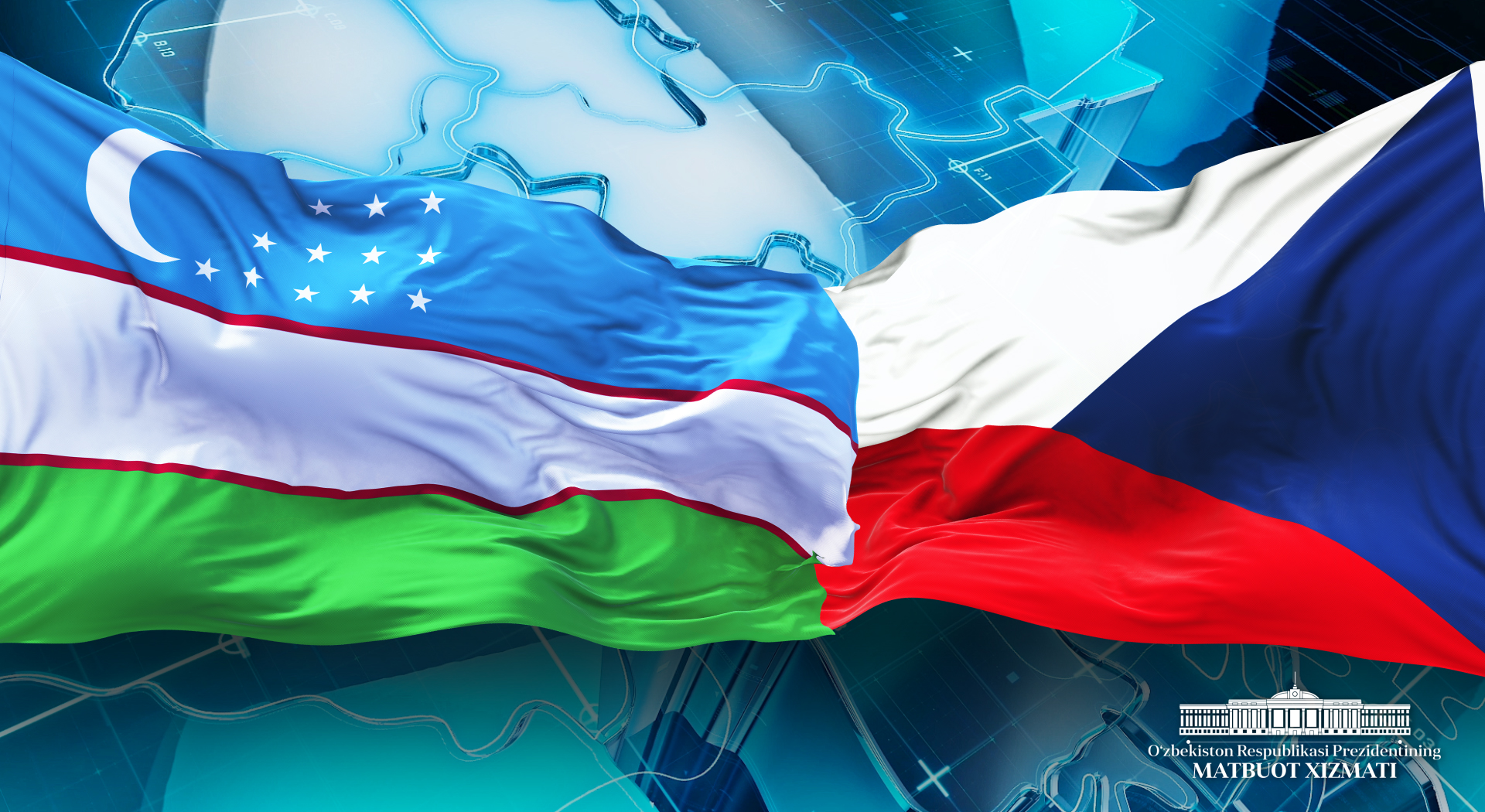
Uzbekistan and the Czech Republic: A Visit That Gave the Relationship New Practical Substance
On 30 April, the official visit of Czech Prime Minister Andrej Babiš to Uzbekistan came to a close. The visit took place at the invitation of President Shavkat Mirziyoyev. Talks were held at the Kuksaroy residence in both restricted and plenary formats. As a result, the two sides signed a Joint Declaration on the Promotion of Expanded Cooperation along with a package of bilateral agreements covering economic, industrial, and scientific-technological cooperation, as well as the training of diplomatic personnel, collaboration in the fields of geology and metrology, and the supply of electric trains.
It is worth noting that this was already the second visit by a Czech prime minister to Uzbekistan. In April 2023, Petr Fiala visited Tashkent, and in October of the same year Prime Minister Abdulla Aripov made a reciprocal visit to Prague, where he met with Czech President Petr Pavel and signed an Interstate Declaration on Enhanced Cooperation. In September 2025, on the sidelines of the 80th anniversary session of the United Nations General Assembly, Presidents Mirziyoyev and Pavel held a bilateral meeting and discussed specific projects in the areas of investment, innovation, transport, and agriculture. Such intensity of contacts at the highest level is a rare phenomenon in international diplomacy. It testifies to the fact that both sides regard their relationship not as a matter of protocol formality, but as a genuine political priority.
The agenda of the current Uzbek-Czech talks was exceptionally substantive, covering several key areas, each of which merits separate consideration.
First — the expansion of trade, economic, and industrial cooperation. Over recent years, bilateral trade turnover has doubled, which is in itself a significant achievement. Nonetheless, both sides acknowledge that the figures attained merely reflect the existing potential without coming close to exhausting it.
Against this backdrop, the parties set a target of raising the volume of mutual trade to one billion US dollars, including through an expansion of the range of goods supplied. Uzbekistan already hosts 37 joint ventures with Czech capital participation, providing a solid productive foundation for the further development of the partnership.
The principal mechanism governing this process and opening up new avenues for interaction is the The Joint Intergovernmental Commission on Economic, Industrial, and Scientific-Technological Cooperation. Over the years of its operation, the Commission has held ten sessions, the most recent of which took place in Prague in March 2025.
To further stimulate trade, the first Uzbek certification branch in the Czech Republic is being established, while work is simultaneously under way on the construction of a Euro 6 vehicle certification laboratory and a quantum measurement standard — infrastructure facilities without which Uzbek products would face significant barriers to full access to European markets.
In parallel, an agreement has been reached with leading Czech companies on the development of a Technology Cooperation Programme encompassing mechanical engineering, green energy, geology and critical raw materials, as well as chemicals and pharmaceuticals. Furthermore, the Czech Export Credit Insurance Corporation (EGAP) and the Czech Export Bank confirmed their intentions to provide financial support for joint projects. To coordinate the entire economic agenda, it was decided to establish a Business Council, and the next session of the Intergovernmental Commission is scheduled to take place in Tashkent in August of the current year.
The Uzbek-Czech business forum, held on the eve of the visit with the participation of the heads of government of both countries, served as a practical platform for giving the bilateral agenda concrete substance. More than 200 participants discussed prospects for deepening economic cooperation. Particular emphasis was placed on the fact that Uzbekistan's GDP exceeded 145 billion US dollars in 2025 — a figure that is fundamentally transforming international investors' perception of the country.
As a result, Czech companies are increasingly viewing Uzbekistan as a strategic springboard for access to Central Asian markets. The unique combination of dynamic growth, a young population, and a favourable geographical location makes the country one of the most attractive hubs on the Eurasian continent.
Following the forum, a package of cooperation agreements was signed covering mechanical engineering, infrastructure modernisation, and education, while mechanisms for engagement with the Czech Export Bank and EGAP were formalised, providing for preferential lending and risk insurance for high-technology projects.
Second — high-technology cooperation in the transport sector, the symbolic centrepiece of which was the signing of a contract for the supply and maintenance of the first ten Škoda Group electric trains. It should be stressed that the prospects of this project extend well beyond a simple equipment transaction. The plans include the establishment of a joint venture for local assembly and lifetime technical maintenance of rolling stock, as well as the creation of a Škoda Academy for the training of Uzbek specialists.
In this context, Škoda Group CEO Petr Novotný regards Uzbekistan as his company's "number one target" outside Europe, believing that the results achieved there will open the door to markets across Central Asia. For Uzbekistan in turn, this is not merely a technical upgrade, but an opportunity to integrate into European production chains and build domestic technological competences.
Third — cooperation in the fields of education, science, and cultural and humanitarian ties. In this domain, Uzbek-Czech partnership has its deepest roots and the most enduring future. The number of Uzbek students enrolled at Czech universities has grown from approximately 350 in 2020 to between 600 and 700 today, predominantly in technical, economic, agricultural, and IT disciplines. The Czech government's annual award of scholarships for citizens of Uzbekistan provides an additional incentive.
Of particular note is the fact that direct contacts have been established at the inter-university level. The National University of Uzbekistan cooperates with Charles University and the Czech University of Life Sciences Prague; the Tashkent Medical Academy maintains ties with the First Faculty of Medicine at Charles University; and a number of other leading institutions collaborate with Mendel University in Brno. The talks confirmed mutual interest in further expanding academic exchanges, including joint degree programmes, which will open fundamentally new career horizons for students of both countries.
Worthy of mention in this context is also the scientific and archaeological dimension of bilateral ties. Since 2003, Termez State University has been conducting a joint expedition with Charles University of Prague in the Surkhandarya region. Over the past two decades, nine previously unknown Bronze Age sites and fourteen Early Iron Age monuments have been discovered, and maps and inventories of heritage sites across several districts have been compiled. This cooperation has continued regardless of changes in government and shifting political circumstances.
An equally significant aspect is the ongoing exploration of the possibility of resuming direct air services between Tashkent and Prague — a matter that at first glance may appear to be purely logistical, but which in practice opens up new opportunities for tourist, business, and academic contacts alike.
Coming to the fore as well are the prospects for systematic cooperation in the field of labour migration, reflecting the profound qualitative shifts taking place in the labour markets of both Uzbekistan and the Czech Republic.
In sum, assessing the outcomes of the visit, one can state with confidence that Uzbek-Czech relations are entering a qualitatively new phase of development. The intensive high-level dialogue, underpinned by concrete economic initiatives, technological agreements, and institutional mechanisms, lays a solid foundation for a long-term strategic partnership.
The implementation of the agreements reached opens broad prospects for the modernisation of the Uzbek economy, the development of high-technology industries, and the strengthening of human capital. For the Czech Republic, meanwhile, Uzbekistan is becoming not merely a trading partner, but a reliable gateway to one of the most dynamically developing regions of Eurasia.
Bakhtiyor Mustafayev
Deputy Director, Institute for Strategic and Regional Studies under the President of the Republic of Uzbekistan
📅 02.05.2026
Embassy messages
The Ministry of Foreign Affairs of the Republic of Uzbekistan has launched the “Consular Services” mobile application
Consular Services Reception Procedure at the Embassy of Uzbekistan in Latvia
Узбекистан и страны Балтии объединяют усилия в борьбе с коррупцией
Uzbek specialists study Latvia’s best practices in veterinary and livestock sectors
Uzbekistan and Finland discussed prospects for cooperation in the field of entrepreneurship support
A holiday of unity: Navruz celebration connects nations in Riga
Trade union delegation of Uzbekistan discusses in Latvia issues of protecting the rights of compatriots – labor migrants
Ambassador of Uzbekistan presented his credentials to the President of Lithuania
Uzbekistan and Finland are preparing for the next meeting of the intergovernmental commission and a business forum within its framework
Discussions on potential areas of cooperation with the Association of European Chambers of Commerce and Industry were held in Riga
Uzbekistan and Latvia agreed to prepare a bilateral agreement on cooperation in the field of labor migration
Uzbekistan and Latvia ready for permanent dialogue in the field of labor migration
Торговый дом Узбекистана в Латвии провел онлайн-тренинг для хокимов и экспортеров Сырдарьинской области
Uzbek delegation studied Finland's experience in preventing violence against children
A festive evening for compatriots was organized in Estonia
Latvia widely celebrated the anniversary of the adoption of the Basic Law of Uzbekistan
Возможности медицинского туризма в Узбекистане презентованы в Риге
New contracts worth over $4 million signed as part of Uzbek exporters' business mission to Latvia
A roundtable discussion on the topic "Mirzo Ulugbek: a great encyclopedist and a famous statesman" was held in Riga
СМИ Латвии: Явка на выборах в Узбекистане составила 74,72%
Досрочное голосование по выборам в Законодательную палату Олий Мажлиса Узбекистана проходит в Латвии
В Латвии и Литве обсуждаются ключевые аспекты предстоящих парламентских выборов в Узбекистане
Issues related to the development of cooperation between Uzbekistan and Latvia in the field of combating crime discussed in Riga
A round table was held in Latvia on the upcoming elections in Uzbekistan to the Legislative Chamber of the Oliy Majlis and Kengashes of People's Deputies
Uzbek exporters familiarized with requirements for import of Uzbek products to Latvian and European markets
Export of agricultural products from Uzbekistan to the Latvian market increases
ЭЪЛОН!
Uzbek ambassador meets Latvian Saeima speaker to discuss prospects for boosting inter-parliamentary cooperation
Diplomats of Uzbekistan held a visiting reception of fellow citizens living in Estonia and Finland
Ambassador of Uzbekistan presents credentials to President of Latvia

-
 Ministry of Foreign Affairs of the Republic of Uzbekistan
 -
 Diplomatic Service of the Ministry of Foreign Affairs
 -
 State Committee for Tourism Development
 -
Ministry of Investments and Foreign Trade of the Republic of Uzbekistan
-
 invest.gov.uz
 -
-

-

-

-
-

-

of Uzbekistan in the Republic
of Latvia
When using the information, a link to www.uzembassy.lv
must be provided.
All rights reserved
Address
Address: Riga c., LV-1010. 11-11 Elizabetes Str., Latvia
Phone: 37167322424
Fax: 37167322306
Email: embassy@uzbekistan.lv
Useful links
HomeIssuance of biometric passport for departure abroad
Certificate to return to Uzbekistan
Withdrawal of citizenship
Loss of citizenship