Phone
Consular Issues
Phone
Embassy messages
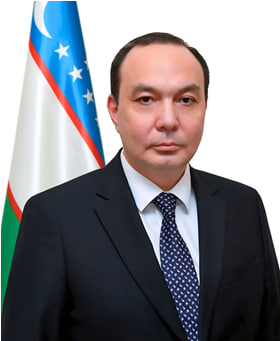
Eldor Aripov: Address of the President of Uzbekistan – stratetic vector of the country’s future development
The Director of the Institute for Strategic and Regional Studies under the President of Uzbekistan (ISRS) Eldor Aripov, commented to Dunyo IA on President Shavkat Mirziyoyev’s Address to the Oliy Majlis and the people of Uzbekistan:
- The Address of President Shavkat Mirziyoyev to the Oliy Majlis and the people of Uzbekistan goes far beyond the scope of a routine annual political speech in its significance. It constitutes a strategic policy document that marks the country’s transition to a qualitatively new stage of development — the institutional consolidation of reforms and the formation of a sustainable growth model oriented toward the long term.
Over the past decade, Uzbekistan’s economy has undergone an accelerated process of qualitative and systemic transformation. While in the mid-2010s the country’s nominal gross domestic product stood at approximately USD 60–65 billion, it has now reached USD 145 billion, as noted in the President’s Address. In practical terms, this represents more than a twofold expansion of the nation’s economic scale over an unprecedentedly short historical period.
In recent years, average annual economic growth has consistently remained at around six percent. This reflects not only the preservation of positive momentum, but also the economy’s capacity for sustained growth amid external shocks — including the pandemic, disruptions to raw material supplies and logistics chains, and global inflationary pressures.
Sectoral indicators corroborate this assessment. Over the past decade, industrial output has more than doubled, whereas in the early 2010s industry played a largely auxiliary role relative to the commodity-based and agricultural sectors. Today, mechanical engineering, the electrical equipment industry, and the chemical sector make a stable contribution to the economy, while the share of processing and manufacturing activities in the GDP structure has already exceeded 80 percent.
The dynamics of the agricultural sector are equally indicative. Whereas ten years ago production volumes remained the primary benchmark, today — as emphasized in the President’s Address — the priority has shifted toward processing and the export of finished products. The expansion of fruit and vegetable processing and the growth of food exports are shaping a more resilient development model, reducing the economy’s dependence on fluctuations in harvest yields and prices.
Investment dynamics also reflect qualitative change. In recent years, investment in fixed capital has been growing at a rapid pace and has reached levels well above historical averages, whereas in the early 2010s this indicator was significantly lower. At the same time, the composition of investment has shifted: while previously it was concentrated primarily in infrastructure and state-led projects, a substantial share is now being directed toward industry, energy, transport, and digital solutions. As a result, investment is beginning to support not only current growth, but also the formation of the country’s future productive base.
External trade dynamics further reinforce this picture. Over the past decade, Uzbekistan’s export revenues have more than doubled: whereas in the mid-2010s exports of goods and services stood at approximately USD 12–13 billion, in recent years they have consistently exceeded USD 24–25 billion. Crucially, this growth has been driven not only by favorable price conditions, but also by changes in the structure of export supplies.
This transformation is most clearly visible in the manufacturing and processing industries. Over the past decade, exports of textile products have increased more than threefold — from less than $1 billion to around $3 billion and above — reflecting a shift from raw-material exports to finished goods. A similar trajectory can be observed in the electrical engineering, chemical, and food industries, where export volumes have risen several times over as a result of expanded production chains and access to new markets.
Macroeconomic balance warrants particular attention. Economic and investment growth has been accompanied by the maintenance of a controlled level of public debt and overall financial stability. This is especially significant, as recent experience shows that rapid growth without adequate balance often leads to the accumulation of constraints on future development. The Address underscores that Uzbekistan has deliberately chosen a more cautious, yet strategically advantageous, development trajectory.
A comparison of developments over the past decade leads to a key strategic conclusion: the republic has reached a stage at which further progress is determined less by the sheer size of the economy than by its quality. This is why the President’s Address places central emphasis on boosting labor productivity, advancing technological modernization, and deepening industrialization. The achievements to date are viewed as the foundation upon which the economy of the coming decade is to be built.
Compared with the starting point a decade ago, the country’s economy has become larger, more diversified, and more resilient. These changes provide a long-term strategic foundation for improving citizens’ well-being and strengthening Uzbekistan’s position in both regional and global markets.
Another notable aspect of the President’s Address is its clear illustration of the feedback loop between the state and its citizens, particularly in terms of aligning ongoing reforms with the everyday needs of the population.
An analysis of the Address indicates that its priorities fully align with the issues consistently highlighted in public opinion surveys and citizen appeals over recent years. At the center of attention are employment, income levels, access to social services, the quality of education and healthcare, as well as fairness and efficiency in public governance.
Whereas in 2017–2018 poverty in Uzbekistan was measured in double digits (around 35 percent), by 2024 it had fallen to 8.9 percent.
The projected reduction to 5.8 percent in 2025 demonstrates that the country is not only approaching the previously set target — reducing poverty to six percent by the end of the year — but is actually surpassing it.
Moreover, the Address highlights a strategic goal of eradicating extreme poverty by 2030, making the fight against poverty a central pillar of the country’s long-term policy framework. This achievement has been made possible through the effective implementation of a series of social programs and reforms aimed at sustainably increasing household incomes, creating employment opportunities, and strengthening social protection.
For a significant portion of the population, particularly young people and residents of regional areas, access to stable employment and reliable sources of income is the key determinant of social well-being. Support for small and medium-sized enterprises, as well as the development of industry and infrastructure highlighted in the Address, directly responds to these expectations. International organizations, including UNDP and the Asian Development Bank, note in their studies that such a focus on employment is among the most effective tools for social stabilization.
Equally important as an indicator that the state listens to its citizens is its focus on the quality of basic services. In the Address, education, healthcare, and workforce development are presented as strategic priorities rather than secondary concerns. This aligns with the public’s expressed demand for improvements in human capital and social mobility.
The section on public governance also warrants special attention. In recent years, one of the most frequent requests from citizens has been the reduction of bureaucracy and the enhancement of transparency and accountability among officials.
Taken together, the content of the Address suggests that the state demonstrates the ability to listen to its citizens and translate public expectations into elements of strategic policy.
President Shavkat Mirziyoyev plays a particularly important role in this process as the key architect of these reforms. International financial and analytical institutions have repeatedly emphasized that political leadership is a decisive factor in the successful implementation of comprehensive reforms in countries with transitioning economies.
In Uzbekistan’s case, consistency, political will, and a focus on long-term results have made it possible to synchronize macroeconomic stabilization, social policy, and institutional reforms within a single strategic framework. The President’s Address serves both as a concentrated expression of this strategy and as a tool for its further deepening.
Taken together, the President’s Address to the Oliy Majlis and the people of Uzbekistan constitutes not merely an agenda for the next stage of reforms, but a strategic framework for the country’s future development. Supported by empirical data and assessments from leading international organizations, it strengthens domestic consensus and enhances the confidence of the international community. Its key significance lies precisely in its role as a document that defines the sustainability of reforms and the country’s long-term competitiveness.
Dunyo IA
📅 05.01.2026
Embassy messages
The Ministry of Foreign Affairs of the Republic of Uzbekistan has launched the “Consular Services” mobile application
Consular Services Reception Procedure at the Embassy of Uzbekistan in Latvia
Узбекистан и страны Балтии объединяют усилия в борьбе с коррупцией
Uzbek specialists study Latvia’s best practices in veterinary and livestock sectors
Uzbekistan and Finland discussed prospects for cooperation in the field of entrepreneurship support
A holiday of unity: Navruz celebration connects nations in Riga
Trade union delegation of Uzbekistan discusses in Latvia issues of protecting the rights of compatriots – labor migrants
Ambassador of Uzbekistan presented his credentials to the President of Lithuania
Uzbekistan and Finland are preparing for the next meeting of the intergovernmental commission and a business forum within its framework
Discussions on potential areas of cooperation with the Association of European Chambers of Commerce and Industry were held in Riga
Uzbekistan and Latvia agreed to prepare a bilateral agreement on cooperation in the field of labor migration
Uzbekistan and Latvia ready for permanent dialogue in the field of labor migration
Торговый дом Узбекистана в Латвии провел онлайн-тренинг для хокимов и экспортеров Сырдарьинской области
Uzbek delegation studied Finland's experience in preventing violence against children
A festive evening for compatriots was organized in Estonia
Latvia widely celebrated the anniversary of the adoption of the Basic Law of Uzbekistan
Возможности медицинского туризма в Узбекистане презентованы в Риге
New contracts worth over $4 million signed as part of Uzbek exporters' business mission to Latvia
A roundtable discussion on the topic "Mirzo Ulugbek: a great encyclopedist and a famous statesman" was held in Riga
СМИ Латвии: Явка на выборах в Узбекистане составила 74,72%
Досрочное голосование по выборам в Законодательную палату Олий Мажлиса Узбекистана проходит в Латвии
В Латвии и Литве обсуждаются ключевые аспекты предстоящих парламентских выборов в Узбекистане
Issues related to the development of cooperation between Uzbekistan and Latvia in the field of combating crime discussed in Riga
A round table was held in Latvia on the upcoming elections in Uzbekistan to the Legislative Chamber of the Oliy Majlis and Kengashes of People's Deputies
Uzbek exporters familiarized with requirements for import of Uzbek products to Latvian and European markets
Export of agricultural products from Uzbekistan to the Latvian market increases
ЭЪЛОН!
Uzbek ambassador meets Latvian Saeima speaker to discuss prospects for boosting inter-parliamentary cooperation
Diplomats of Uzbekistan held a visiting reception of fellow citizens living in Estonia and Finland
Ambassador of Uzbekistan presents credentials to President of Latvia

-
 Ministry of Foreign Affairs of the Republic of Uzbekistan
 -
 Diplomatic Service of the Ministry of Foreign Affairs
 -
 State Committee for Tourism Development
 -
Ministry of Investments and Foreign Trade of the Republic of Uzbekistan
-
 invest.gov.uz
 -
-

-

-
-

-

-

of Uzbekistan in the Republic
of Latvia
When using the information, a link to www.uzembassy.lv
must be provided.
All rights reserved
Address
Address: Riga c., LV-1010. 11-11 Elizabetes Str., Latvia
Phone: 37167322424
Fax: 37167322306
Email: embassy@uzbekistan.lv
Useful links
HomeIssuance of biometric passport for departure abroad
Certificate to return to Uzbekistan
Withdrawal of citizenship
Loss of citizenship