Phone
Consular Issues
Phone
Embassy messages
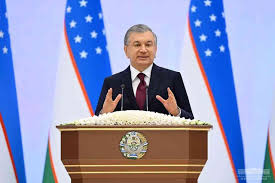
Linguistic Analysis of the President of the Republic of Uzbekistan’s 2026 State of the Nation Address
The analysis covers the key thematic and semantic emphases of the President’s speech, the structure of core concepts and their interrelations, priority directions of state policy, as well as the strategic benchmarks for the country’s socio-economic development in 2026.
On 26 December 2025, President Shavkat Mirziyoyev delivered his Address to the Oliy Majlis and the people of Uzbekistan. Experts of the Center for Economic Research and Reforms (CERR) conducted a linguistic content analysis of the President’s speech.
The analysis was carried out using modern linguistic methods and is aimed at identifying semantic priorities, key concepts and their connections. A word cloud and diagrams were also prepared to visually demonstrate the priority directions of state policy.
Analysis (from the original language)
In total, the President used 9,135 words in his Address. The creation of a word cloud made it possible to visualize the most significant themes and gain a deeper understanding of the priorities and directions of the country’s socio-economic development.
Figure 1. Most frequently used words in the President’s Address (26.12.2025)
The linguistic analysis showed that the most frequently used key words included “mahalla” – 49 times, “aholi” (population) – 35 times, “iqtisodiyot” (economy) – 28 times, “bozor” (market) – 26 times, “loyiha” (project) – 25 times, and “technology” – 22 times (Fig. 1).
Words such as “ta’lim” (education), “natija” (result) and “daromad” (income) were each used 20 times; “tadbirkor” (entrepreneur) and “sanoat” (industry) – 19 times each; “suv” (water) – 18 times; “elektr” (electricity) and “hudud” (territory) – 17 times each; “yoshlar” (youth), “infratuzilma” (infrastructure) and “qurilish” (construction) – 16 times each.
The analysis of two-word expressions showed that the phrase “Markaziy Osiyo” (Central Asia) was used eight times; “aholi daromadi” (household income), “qishloq xo‘jaligi” (agriculture) and “yangi bosqich” (new stage) – seven times; “yangi texnologiyalar” (new technologies) and “Toshkent shahri” (city of Tashkent) – six times each. Expressions such as “Davlat xizmatlari” (public services), “xorijiy investitsiya” (foreign investment) and “yangi tizim” (new system) were used five times, while “dual ta’lim” (dual education), “ish o‘rni” (jobs), “viloyat markazlari” (regional centers) and “tuman byudjeti” (district budgets) were used four times each.
Among three-word combinations, the most frequent expressions included “the next five years” – nine times; “based on dual education” – four times; and “water-saving technologies” and “water, electricity” – three times each.
Thus, the analysis shows that at the core of state policy are the mahalla, public welfare, and the transition to a new stage of development based on economic and technological transformation, with clearly defined strategic objectives for the next five years.
Thematic structure of the speech
The diagram below shows the distribution of the speech’s vocabulary by key directions, where the content is grouped into nine main thematic blocks.
The diagram clearly demonstrates that technological development and human interests, implemented at the level of the mahalla, are at the center of state policy. The ultimate goal of all reforms is to ensure public welfare through sustainable economic growth (Fig. 2).
Figure 2. Distribution of words by thematic areas in the structure of the speech
Interconnection of development directions
The analysis highlights key words that demonstrate the interconnection between various directions of Uzbekistan’s state policy in the coming years.
The transition of the economy to a technological and innovation-based growth model is a central element of state policy and implies a shift away from a raw-materials model toward high-tech industry. This direction is closely linked with such concepts as “investment,” “technology,” “market,” and “product.”
The block on economic growth and welfare reflects the key outcomes of reforms, including the increase of the economy to $145 bn and a twofold reduction in poverty over the past three years. It is directly associated with the concepts of “population,” “economy,” “mahalla,” and “services.”
The social foundation of reforms is built through the development of the mahalla and social solidarity. This direction is associated with “mahalla,” “youth,” “society,” and “values.”
Structuring vocabulary by thematic areas shows that the core of the President’s speech is technological modernization of the economy and a human-centered governance model based on the “mahallabay” system.
It emphasizes the interconnection between economic growth, improvement of public welfare and the development of local infrastructure, as well as priorities such as strengthening human capital, expanding employment and increasing the efficiency of public administration.
Figure 3. Interconnection of development directions
Among the highlighted semantic blocks are also tasks related to stimulating domestic demand, developing the housing and tourism sectors, modernizing the transport system, increasing productivity in agriculture and introducing water-saving technologies.
Special emphasis is placed on the “green” agenda, including the development of renewable energy, expansion of the “Yashil Makon” (“Green Space”) initiative, and strengthening resilience to climate risks.
In the foreign policy dimension, the analysis highlights Uzbekistan’s openness, strengthening of good-neighborly relations, and integration into the global economic system.
The linguistic analysis confirms that the idea at the core of the President’s speech is built around the triad “inson qadri – mahalla – farovonlik” (human dignity – mahalla – welfare), where the goal of reforms is sustainable growth, improved quality of life, and the further strengthening of Uzbekistan’s position.
Ilyos Rabbimov, CERR
CERR Public Relations Service
For inquiries, please contact:
(78) 150 02 02 (417)
📅 02.01.2026
Embassy messages
The Ministry of Foreign Affairs of the Republic of Uzbekistan has launched the “Consular Services” mobile application
Consular Services Reception Procedure at the Embassy of Uzbekistan in Latvia
Узбекистан и страны Балтии объединяют усилия в борьбе с коррупцией
Uzbek specialists study Latvia’s best practices in veterinary and livestock sectors
Uzbekistan and Finland discussed prospects for cooperation in the field of entrepreneurship support
A holiday of unity: Navruz celebration connects nations in Riga
Trade union delegation of Uzbekistan discusses in Latvia issues of protecting the rights of compatriots – labor migrants
Ambassador of Uzbekistan presented his credentials to the President of Lithuania
Uzbekistan and Finland are preparing for the next meeting of the intergovernmental commission and a business forum within its framework
Discussions on potential areas of cooperation with the Association of European Chambers of Commerce and Industry were held in Riga
Uzbekistan and Latvia agreed to prepare a bilateral agreement on cooperation in the field of labor migration
Uzbekistan and Latvia ready for permanent dialogue in the field of labor migration
Торговый дом Узбекистана в Латвии провел онлайн-тренинг для хокимов и экспортеров Сырдарьинской области
Uzbek delegation studied Finland's experience in preventing violence against children
A festive evening for compatriots was organized in Estonia
Latvia widely celebrated the anniversary of the adoption of the Basic Law of Uzbekistan
Возможности медицинского туризма в Узбекистане презентованы в Риге
New contracts worth over $4 million signed as part of Uzbek exporters' business mission to Latvia
A roundtable discussion on the topic "Mirzo Ulugbek: a great encyclopedist and a famous statesman" was held in Riga
СМИ Латвии: Явка на выборах в Узбекистане составила 74,72%
Досрочное голосование по выборам в Законодательную палату Олий Мажлиса Узбекистана проходит в Латвии
В Латвии и Литве обсуждаются ключевые аспекты предстоящих парламентских выборов в Узбекистане
Issues related to the development of cooperation between Uzbekistan and Latvia in the field of combating crime discussed in Riga
A round table was held in Latvia on the upcoming elections in Uzbekistan to the Legislative Chamber of the Oliy Majlis and Kengashes of People's Deputies
Uzbek exporters familiarized with requirements for import of Uzbek products to Latvian and European markets
Export of agricultural products from Uzbekistan to the Latvian market increases
ЭЪЛОН!
Uzbek ambassador meets Latvian Saeima speaker to discuss prospects for boosting inter-parliamentary cooperation
Diplomats of Uzbekistan held a visiting reception of fellow citizens living in Estonia and Finland
Ambassador of Uzbekistan presents credentials to President of Latvia

-
 Ministry of Foreign Affairs of the Republic of Uzbekistan
 -
 Diplomatic Service of the Ministry of Foreign Affairs
 -
 State Committee for Tourism Development
 -
Ministry of Investments and Foreign Trade of the Republic of Uzbekistan
-
 invest.gov.uz
 -
-

-

-

-
-

-

of Uzbekistan in the Republic
of Latvia
When using the information, a link to www.uzembassy.lv
must be provided.
All rights reserved
Address
Address: Riga c., LV-1010. 11-11 Elizabetes Str., Latvia
Phone: 37167322424
Fax: 37167322306
Email: embassy@uzbekistan.lv
Useful links
HomeIssuance of biometric passport for departure abroad
Certificate to return to Uzbekistan
Withdrawal of citizenship
Loss of citizenship