Phone
Consular Issues
Phone
Embassy messages
A New Chapter in Uzbekistan–EU Relations: Why the EPCA Matters
On 24 October 2025, Uzbekistan and the European Union signed the Enhanced Partnership and Cooperation Agreement (EPCA) — a comprehensive framework that culminates negotiations launched in February 2019 and initialled in July 2022. More than a ceremonial milestone, the EPCA codifies a strategic upgrade in our relationship with the EU. It is broad in scope — nine titles, 356 articles, and 14 annexes — and practical in ambition: to align our cooperation with the realities of a rapidly changing world economy while reinforcing the rule-of-law foundations of sustainable development at home.
The agreement’s timing is revealing. Uzbekistan’s recent balanced, multi-vector foreign policy and people-centred reforms — strengthening the rule of law, expanding public administration openness, and advancing market reforms — have laid the necessary groundwork. These steps in human rights and governance have increased international confidence, enabling a rules-based partnership with Europe. The EPCA is both a vote of confidence in Uzbekistan’s reform trajectory and a tangible roadmap to deliver measurable outcomes.
Economically, the EPCA offers a clear pathway for integration and growth. It promotes approximation to EU norms on technical regulations, product safety, and sanitary and phytosanitary measures. The agreement is designed to reduce non-tariff barriers, simplify border procedures, and make our exporters more competitive in the EU market. It encourages joint ventures and industrial clustering, extends agro-processing and manufacturing value chains, and supports energy efficiency and industrial modernisation. In short: more trade, more investment, and more quality jobs at home.
Human capital is an equally central pillar. The EPCA expands cooperation across education, science, skills development, and public health. It encourages joint university programmes, faculty and student exchanges, and research grants — mechanisms that accelerate knowledge transfer and help align our skills base with the demands of a digital and green economy. The spillovers are immediate and tangible: better public services, higher productivity, and new career pathways for our young people.
The rule-of-law dimension is another strategic gain. Deeper cooperation on judicial reform, anti-corruption, data protection, and cybersecurity increases predictability for investors and protections for citizens. The agreement’s chapter on foreign and security policy expands dialogue on conflict prevention, crisis management, non-proliferation, and export controls. This cooperation supports regional stability, which is essential for long-term growth.
Connectivity is the backbone that makes these ambitions feasible. Through synergies with the EU’s Global Gateway initiative and the Trans-Caspian Transport Corridor, the EPCA supports logistics hubs, border modernisation, and greener infrastructure. Better connectivity means lower trade costs, faster delivery times, and diversified export routes — practical levers for competitiveness. It also enables cooperation on water management, climate adaptation, and resilient energy systems — strategic priorities for a land-linked Central Asian economy.
Critically, the EPCA opens structured avenues for collaboration on critical raw materials needed for the green and digital transitions. This builds on the EU-Uzbekistan memorandum of understanding signed in 2024. It creates opportunities to upgrade domestic standards, attract responsible investment, and join higher segments of global value chains, while maintaining environmental and social safeguards.
Beyond the text, the joint statement issued at the signing underscores a shared commitment to the UN Charter and to the principles of independence, sovereignty, and territorial integrity — principles that guide our positions in international fora. It also welcomes the outcomes of the EU–Central Asia Summit, including plans for a Central Asia–EU Economic Forum and a Trans-Caspian Connectivity Investors Forum in Tashkent in 2025. In short, the EPCA is embedded in a wider, forward-looking regional agenda.
In practical terms, success requires implementation of three clear priorities: coordinated institution building, enhanced business support, and transparent, data-driven tracking. These will ensure commitments translate to outcomes.
First, institutional coordination. Translating commitments into outcomes requires a whole-of-government mechanism with clear mandates, timelines, and dashboards. A national EPCA coordination council, supported by technical working groups, should steer approximation to EU standards, monitor progress, and troubleshoot bottlenecks.
Second, business enablement. Firms need guidance to navigate new standards and opportunities. An 'EU Helpdesk' for exporters and investors would offer practical advice on certification, rules of origin, and compliance. This would turn legal text into business practice. Expanding the capacity of testing, inspection, and certification bodies will further reduce transaction costs and speed market entry.
Third, open, data-driven delivery. Customs and trade facilitation should be fully digitised through single-window systems and interoperable data exchange. Regular public reporting on milestones — such as education partnerships, financed projects, and adopted standards — will sustain credibility and invite feedback from business and civil society.
The EPCA also aligns with Uzbekistan’s WTO accession path by encouraging market-based reforms and transparent, rules-based trade. As reforms deepen, our economy will see more diversified exports, stronger investor protections, and a more competitive domestic market. These outcomes raise household incomes and expand opportunity.
This agreement is ambitious by design. Ambition alone is empty; execution alone is stagnant. The EPCA combines both — setting a high bar and supplying the means to reach it. By acting decisively, we turn this framework into a catalyst for inclusive growth, institutional maturity, and global credibility.
Ultimately, the EPCA is more than a diplomatic success; it is the engine for Uzbekistan’s reform agenda. By linking citizen welfare, business competitiveness, and international engagement, the EPCA puts us on a path to fundamental transformation. The critical task ahead is to deliver on this promise and make the Uzbekistan-EU partnership impactful and enduring.
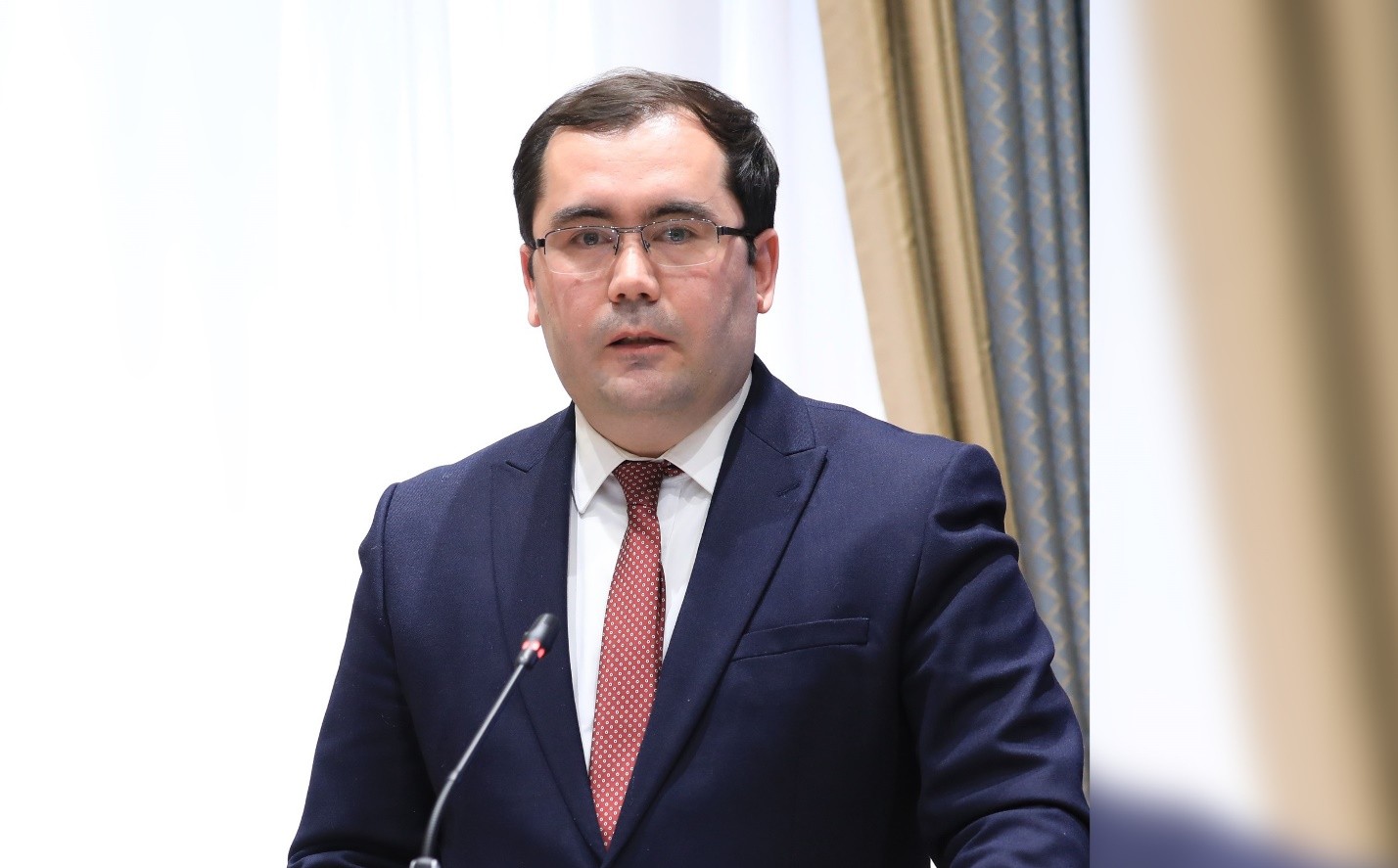
By Eldor Tulyakov,
Executive Director, Development Strategy Centre, Uzbekistan
📅 06.11.2025
Embassy messages
The Ministry of Foreign Affairs of the Republic of Uzbekistan has launched the “Consular Services” mobile application
Consular Services Reception Procedure at the Embassy of Uzbekistan in Latvia
Узбекистан и страны Балтии объединяют усилия в борьбе с коррупцией
Uzbek specialists study Latvia’s best practices in veterinary and livestock sectors
Uzbekistan and Finland discussed prospects for cooperation in the field of entrepreneurship support
A holiday of unity: Navruz celebration connects nations in Riga
Trade union delegation of Uzbekistan discusses in Latvia issues of protecting the rights of compatriots – labor migrants
Ambassador of Uzbekistan presented his credentials to the President of Lithuania
Uzbekistan and Finland are preparing for the next meeting of the intergovernmental commission and a business forum within its framework
Discussions on potential areas of cooperation with the Association of European Chambers of Commerce and Industry were held in Riga
Uzbekistan and Latvia agreed to prepare a bilateral agreement on cooperation in the field of labor migration
Uzbekistan and Latvia ready for permanent dialogue in the field of labor migration
Торговый дом Узбекистана в Латвии провел онлайн-тренинг для хокимов и экспортеров Сырдарьинской области
Uzbek delegation studied Finland's experience in preventing violence against children
A festive evening for compatriots was organized in Estonia
Latvia widely celebrated the anniversary of the adoption of the Basic Law of Uzbekistan
Возможности медицинского туризма в Узбекистане презентованы в Риге
New contracts worth over $4 million signed as part of Uzbek exporters' business mission to Latvia
A roundtable discussion on the topic "Mirzo Ulugbek: a great encyclopedist and a famous statesman" was held in Riga
СМИ Латвии: Явка на выборах в Узбекистане составила 74,72%
Досрочное голосование по выборам в Законодательную палату Олий Мажлиса Узбекистана проходит в Латвии
В Латвии и Литве обсуждаются ключевые аспекты предстоящих парламентских выборов в Узбекистане
Issues related to the development of cooperation between Uzbekistan and Latvia in the field of combating crime discussed in Riga
A round table was held in Latvia on the upcoming elections in Uzbekistan to the Legislative Chamber of the Oliy Majlis and Kengashes of People's Deputies
Uzbek exporters familiarized with requirements for import of Uzbek products to Latvian and European markets
Export of agricultural products from Uzbekistan to the Latvian market increases
ЭЪЛОН!
Uzbek ambassador meets Latvian Saeima speaker to discuss prospects for boosting inter-parliamentary cooperation
Diplomats of Uzbekistan held a visiting reception of fellow citizens living in Estonia and Finland
Ambassador of Uzbekistan presents credentials to President of Latvia

-
 Ministry of Foreign Affairs of the Republic of Uzbekistan
 -
 Diplomatic Service of the Ministry of Foreign Affairs
 -
 State Committee for Tourism Development
 -
Ministry of Investments and Foreign Trade of the Republic of Uzbekistan
-
 invest.gov.uz
 -

-

-

-

-

-

-


of Uzbekistan in the Republic
of Latvia
When using the information, a link to www.uzembassy.lv
must be provided.
All rights reserved
Address
Address: Riga c., LV-1010. 11-11 Elizabetes Str., Latvia
Phone: 37167322424
Fax: 37167322306
Email: embassy@uzbekistan.lv
Useful links
HomeIssuance of biometric passport for departure abroad
Certificate to return to Uzbekistan
Withdrawal of citizenship
Loss of citizenship