Phone
Consular Issues
Phone
Uzbekistan news
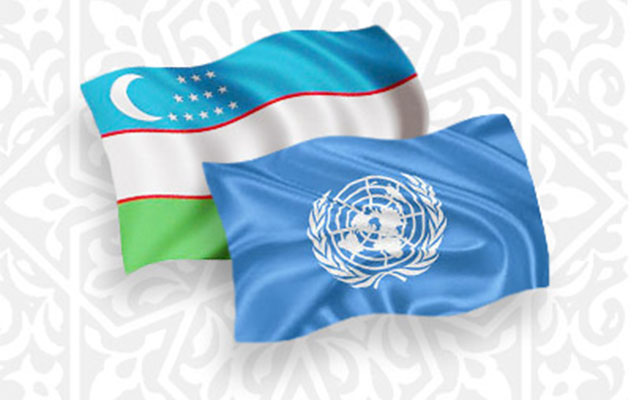
UZBEKISTAN AND THE UN: FROM NATIONAL INITIATIVES TO THE GLOBAL AGENDA
The 81st session of the United Nations General Assembly marked a new stage in Uzbekistan’s foreign policy. The ideas and initiatives advanced in New York demonstrated an increasingly strong connection between the country’s domestic reforms, the new environment of cooperation emerging in Central Asia, and the search for solutions to global challenges. Most importantly, Uzbekistan is no longer limiting itself to responding to the international agenda; it is putting forward proposals aimed at helping shape its future direction.
The international system is undergoing serious tests. Armed conflicts persist, geopolitical tensions are intensifying, and trust between states is weakening. Climate change, demographic shifts, water and food security, technological inequality and the rapid development of artificial intelligence have become challenges that no country can address alone.
Against this backdrop, Uzbekistan placed human dignity, peace and cooperation at the heart of the position it presented at the 81st session of the UN General Assembly.
On 23 September, Head of the Presidential Administration Saida Mirziyoyeva addressed the General Debate of the General Assembly on behalf of Uzbekistan. In her official statement, the path chosen by the country was defined by three principles: openness, good-neighbourly relations and dialogue with the world.
This reflects, above all, the growing coherence between Uzbekistan’s domestic and foreign policies. Just as human dignity has become a central benchmark for reforms at home, peace, development and human dignity are increasingly treated as inseparable objectives in the country’s international engagement.
Human dignity as a measure of strength
One of the fundamental positions articulated by Uzbekistan from the UN rostrum concerned the very meaning of state strength.
It was emphasised that the true strength of a state should not be measured solely by its military or economic capabilities, but first and foremost by its ability to protect human dignity, rights and interests.
This approach also carries important implications for international relations. Economic growth or security alone is not sufficient when addressing global challenges. The impact of every decision on people’s lives and futures should be a central criterion.
From this perspective, Uzbekistan also set out its vision for the role of the United Nations: the world needs an organisation capable not merely of discussing conflicts after they erupt, but of preventing them; not merely of adopting decisions, but of ensuring their implementation; and an organisation in which the voice of every state can be heard.
Uzbekistan expressed support for the UN Secretary-General’s UN80 initiative, aimed at adapting the Organisation to contemporary realities. It also supported expanding the composition of the UN Security Council to better reflect today’s world.
These ideas are consistent with the broader discussions taking place within the United Nations itself. As the global balance of power evolves, questions of representation, effectiveness and implementation capacity within multilateral institutions are becoming increasingly urgent.
A new level of diplomatic responsibility
Two further positions announced in New York are particularly significant for the next stage of Uzbekistan’s foreign policy.
In 2027, Uzbekistan will chair the Non-Aligned Movement. The official statement described this role as a responsibility to create new platforms for dialogue at a time of growing international divisions.
Uzbekistan also announced its candidacy for a non-permanent seat on the UN Security Council for 2035–2036.
These initiatives indicate that the scope of Uzbekistan’s foreign-policy responsibilities is expanding. The objective is no longer limited to advancing national interests internationally. Uzbekistan is also signalling its readiness to help shape platforms for dialogue and assume greater responsibility within multilateral institutions.
Central Asia: a model of cooperation
Uzbekistan’s current position at the United Nations cannot be separated from the changes that have taken place in Central Asia in recent years.
Not long ago, the region was frequently associated with unresolved border issues, disagreements over water resources and other tensions. Speaking at the United Nations, Saida Mirziyoyeva noted that the initiatives of President Shavkat Mirziyoyev and the political will of Central Asian leaders had fundamentally changed the atmosphere in the region.
The most important shift has been the emergence of a principle under which neighbouring states are viewed not as sources of threat but as partners.
In this sense, Central Asia’s experience also matters as a practical model that Uzbekistan can bring to the wider global dialogue. Rebuilding trust, resolving complex issues through negotiations and placing shared interests above disagreements are approaches that are already producing results in the region.
Afghanistan: engagement rather than isolation
The issue of Afghanistan follows the same logic.
Uzbekistan stressed that viewing Afghanistan solely as a source of threats will not solve the problem. Nor is leaving the multinational Afghan people alone with their difficulties a viable solution. They need hope and confidence in the possibility of a peaceful future.
This approach is consistent with Uzbekistan’s longstanding position that Afghanistan should be integrated into regional economic processes and that transport and energy projects can help create an economic foundation for long-term stability.
Domestic reforms as the foundation of foreign policy
The General Assembly address also highlighted the transformation Uzbekistan has undergone over the past decade.
According to the official statement, the country’s economy has grown from $50 billion to $147 billion, more than $150 billion in foreign investment has been attracted, and exports have almost tripled. The poverty rate has fallen to 4 per cent, with nearly 10 million people lifted out of poverty.
Preschool enrolment has risen from 27 to 78 per cent, while higher-education coverage has increased from 9 per cent to almost 50 per cent. Average life expectancy has risen from 66 to more than 75 years, while maternal and infant mortality has fallen fourfold.
The significance of these figures goes beyond the statistics themselves. They illustrate the domestic foundation of the ideas Uzbekistan is advancing internationally. Human capital, education, healthcare, poverty reduction and social protection are integral both to national development and to the global Sustainable Development Goals.
Demographic resilience: an emerging global agenda
One of the most important new themes advanced by Uzbekistan during the 81st session was demographic resilience.
In her General Assembly address, Saida Mirziyoyeva emphasised that a child represents the greatest responsibility of the state. Healthy births and quality education, she noted, determine not only an individual’s future but the future of society as a whole.
On 24 September, this idea received a practical follow-up in New York.
The Government of Uzbekistan, together with the United Nations Population Fund (UNFPA), convened the high-level event “Demographic Resilience and Human Capital: Investing in People-Centred Reforms for a Sustainable Future.”
The conceptual significance of the dialogue lies in the proposed shift from “demographic anxiety” to “demographic resilience.”
Changes in population size, age structure and geographic distribution have direct implications for economic growth, social protection, healthcare, labour markets, infrastructure and public finances. Integrating reliable demographic data into long-term planning is therefore becoming an essential element of effective public policy.
Another fundamental principle is that human rights and individual choice must remain at the centre of population policies. Concerns over population decline or ageing should not lead to coercive measures or policies focused exclusively on numerical targets.
Reducing gender inequalities, expanding opportunities to combine family responsibilities with employment, and improving access to childcare are also important components of demographic resilience.
The event provided a platform for exchanging policy solutions on adapting to demographic change and strengthening financial cooperation and partnerships among governments, international financial institutions and the United Nations system.
For Uzbekistan, this is also a strategic issue. A young and growing population represents a major opportunity, but it does not automatically translate into an economic advantage. Quality education, modern skills, healthcare, decent employment, gender equality and an effective social protection system are required to realise that potential.
Bringing demographic resilience to the UN agenda therefore represents another way in which Uzbekistan is connecting its national development priorities with an emerging global discussion.
The Aral Sea region: from a symbol of tragedy to a testing ground for solutions
Uzbekistan also proposed a new way of looking at the Aral Sea challenge.
It was emphasised that the Aral Sea did not disappear because of a natural disaster, but as a result of decades of misguided decisions and irresponsible treatment of nature.
Today, green areas are being created on the dried seabed and modern water-saving technologies are being introduced. Uzbekistan aims to increase the share of renewable energy to 54 per cent by 2030.
Yet the most significant conceptual proposal made from the UN rostrum was that the Aral Sea should no longer remain merely a symbol of environmental tragedy, but should become a testing ground for environmental solutions.
At Uzbekistan’s initiative, the UN General Assembly proclaimed 2027–2036 the United Nations Decade of Afforestation and Reforestation. The next task is to translate this international decision into tangible results.
This reflects an important trend in Uzbekistan’s diplomacy: rather than merely internationalising a national or regional problem, the country seeks to transform it into a platform for testing global solutions and sharing experience.
Artificial intelligence and human dignity
Uzbekistan also used the General Assembly platform to address another major issue of technological development — artificial intelligence.
The fundamental question was framed clearly: will technology serve people, or will people be forced to adapt to technology?
Uzbekistan’s position is that people and their future must remain at the centre of technological progress. Artificial intelligence cannot be separated from the principles of human rights, security, equal opportunity and accountability.
Uzbekistan therefore called for stronger international dialogue in this area.
AI governance today extends far beyond technology itself. It directly affects human rights, education, labour markets, security and global equality. This field may therefore become an important area for Uzbekistan’s future initiatives within the United Nations.
Rule of law and equal opportunities
The address also placed particular emphasis on the rule of law, public trust in the judiciary, and the empowerment of women.
It noted that Uzbekistan has eliminated child labour and systemic forced labour, strengthened accountability for domestic violence, and established a dedicated system to support women’s entrepreneurship. Women now account for 39 per cent of members of parliament.
Economic development, the rule of law and human rights were thus presented as mutually reinforcing and inseparable processes.
Enlightenment and tolerance
Modern information technologies bring societies closer together, but they can also spread hatred and stereotypes at unprecedented speed.
Against this background, the Center of Islamic Civilization established in Tashkent at the initiative of President Shavkat Mirziyoyev was presented not merely as a place for displaying historical heritage, but as a centre of knowledge, thought and enlightenment.
Uzbekistan expressed its intention to continue international cooperation aimed at strengthening intercultural and interfaith dialogue, enlightenment and tolerance.
This approach also reflects an expanding understanding of security. In the modern world, security is ensured not only through military means but also through education, culture, mutual respect and societies’ resilience to destructive ideas.
Uzbekistan and the UN: from dialogue to systemic partnership
The meetings held by the Uzbek delegation on the margins of the 81st session of the General Assembly provided a practical continuation of the country’s multilateral engagement.
Head of the Presidential Administration Saida Mirziyoyeva met with UN Secretary-General António Guterres. The sides discussed key areas of cooperation being jointly developed by Uzbekistan and the United Nations.
The significance of such dialogue is that Uzbekistan–UN relations are no longer confined to individual resolutions or events. Sustainable development, human capital, the environment, human rights, regional security and technological progress are increasingly being brought together within a single framework of cooperation.
The meetings in New York, the initiatives announced from the General Assembly rostrum, and the 24 September high-level dialogue on demographic resilience should therefore not be viewed as separate events. They are elements of a coherent approach taking shape in Uzbekistan’s multilateral diplomacy.
From initiative to impact
The central task now is not simply to increase the number of international initiatives, but to translate them into practical results.
Political dialogue in Central Asia should lead to deeper cooperation in trade, transport, water and energy. Decisions concerning the Aral Sea region should be reflected in improved quality of life and greater environmental resilience. New approaches to demographic resilience should contribute to long-term planning in education, healthcare, employment and social protection.
The principles advanced on artificial intelligence should, in turn, evolve into practical mechanisms capable of maintaining a balance between technological progress and human rights.
It is precisely at this point that the formula “from national initiatives to the global agenda” acquires its full meaning.
National experience should evolve into international initiatives; initiatives into multilateral decisions; and decisions into practical outcomes that improve people’s lives.
This is the essence of the position Uzbekistan presented at the 81st session of the United Nations General Assembly.
Today, no country can find effective solutions to global challenges on its own. Multilateral cooperation is therefore becoming for Uzbekistan not simply one dimension of foreign policy, but a mechanism connecting national development, regional stability and global responsibility.
Uzbekistan’s chosen path is one of openness, good-neighbourliness and dialogue.
At the heart of that path is human dignity.
Jakhongir ISAEV,
Head of Department, NGO “Center for Sustainable Development”
📅 25.09.2026
Uzbekistan news
UZBEKISTAN AND THE UN: FROM NATIONAL INITIATIVES TO THE GLOBAL AGENDA
The 5th Samarkand Forum on Human Rights to take place on September 28–29th
Uzbekistan's key trading partners participate in CICA
Speech by President Shavkat Mirziyoyev at the solemn ceremony dedicated to the thirty-fifth anniversary of the independence of the Republic of Uzbekistan
Uzbekistan Firmly Establishes Itself as a Stable and Predictable Partner for Long-Term International Business
Changing economic priorities of Uzbekistan reshape its engagement with the CIS
Inaugural Central Asia – Republic of Korea Summit at the highest level opens in Seoul
Uzbekistan and Korea: Advancing Green Energy and New Technologies
Uzbekistan and the Republic of Korea in the Emerging Framework for Cooperation with Central Asia
Tashkent brings together leaders and key deals in Polymer Market of Central Asia
The 1st Republic of Korea–Central Asia Summit: Why This Moment Matters
Uzbekistan – Serbia: A New Geography of Industrial Cooperation
The President of Uzbekistan’s Visit to Serbia: A New Stage in Economic Partnership Between Central Asia and the Balkans
Uzbekistan and the Republic of Korea: From Investment Partnership to Technological Cooperation
Regional Approaches to SDG Delivery: What Can Central Asia Offer?
Uzbekistan Opens a Balkan Gateway to Europe
The SCO Bishkek Summit: The Economic Agenda of a New Stage of Cooperation
Tourism: A new dimension of Uzbekistan-Kyrgyzstan partnership
Uzbekistan’s Role in the SCO: Economy, Security and Regional Cooperation
Economic Cooperation of Uzbekistan within the SCO at a New Stage of Development
Uzbekistan and Serbia: From Labour Mobility to a Strategic Partnership in Human Capital
Prospects for Uzbekistan–Serbia Cooperation in the ICT Sector
Prospects for Cooperation between the Republic of Uzbekistan and the Republic of Korea within the Framework of the Central Asia–Republic of Korea Cooperation Forum
THE SCO’S NEW FINANCIAL ARCHITECTURE: FROM COORDINATION TO PRACTICAL DEVELOPMENT MECHANISMS
INFORMATION NOTE ON COOPERATION WITH SERBIA
On September 8–10th, Tashkent to gather International Textile Industry Professionals
The Seoul Summit: Uzbekistan in the New Industrial Architecture of C5+1
New Opportunities to Expand Cooperation Between Uzbekistan and Serbia
Uzbekistan and Azerbaijan: Turning Political Alignment into Economic Growth
BRIGHT PROSPECTS FOR MUTUALLY BENEFICIAL PARTNERSHIP

-
 Ministry of Foreign Affairs of the Republic of Uzbekistan
 -
 Diplomatic Service of the Ministry of Foreign Affairs
 -
 State Committee for Tourism Development
 -
Ministry of Investments and Foreign Trade of the Republic of Uzbekistan
-
 invest.gov.uz
 -
-

-

-

-

-

-

of Uzbekistan in the Republic
of Latvia
When using the information, a link to www.uzembassy.lv
must be provided.
All rights reserved
Address
Address: Riga c., LV-1010. 11-11 Elizabetes Str., Latvia
Phone: 37167322424
Fax: 37167322306
Email: embassy@uzbekistan.lv
Useful links
HomeIssuance of biometric passport for departure abroad
Certificate to return to Uzbekistan
Withdrawal of citizenship
Loss of citizenship