Phone
Consular Issues
Phone
Uzbekistan news
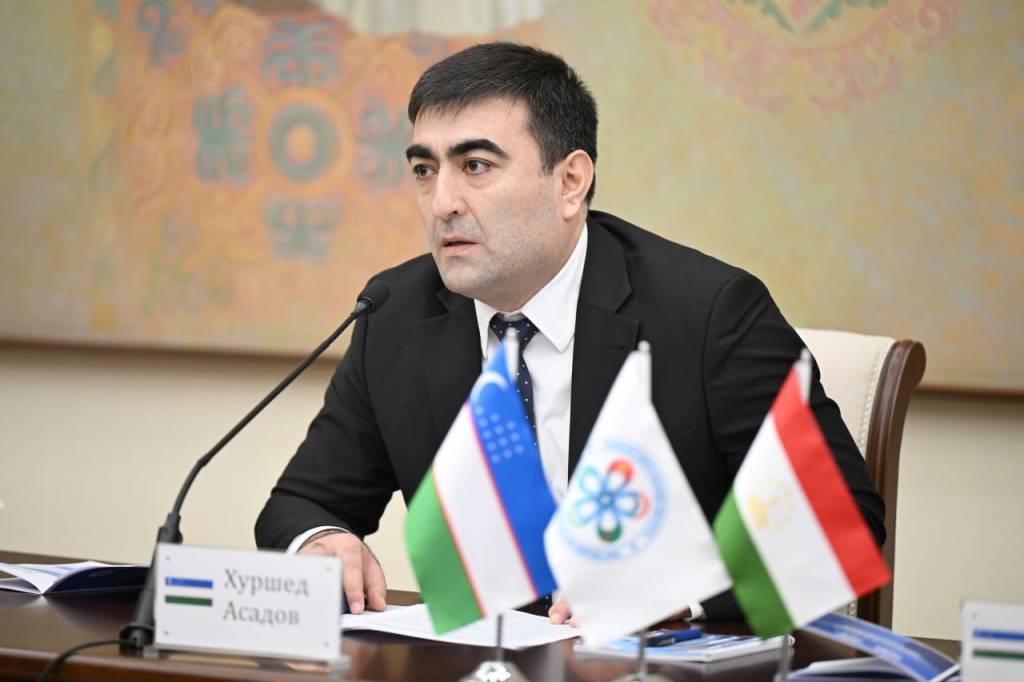
Uzbekistan’s Dialogue with Business: Five Years of Change
Over the past five years, the open dialogue between the President of Uzbekistan and entrepreneurs has evolved from a new feedback format into a stable mechanism of economic policy. Its importance is defined not only by the number of appeals received or proposals voiced. The main result has been a consistent transition from removing individual barriers to changing the rules of doing business themselves – in taxation, lending, access to land and infrastructure, export support, digitalization of services, and protection of entrepreneurs’ rights.
The logic of the five meetings held so far is clearly reflected in their dynamics. The first dialogue in 2021 focused on removing the most urgent post-pandemic restrictions and restoring trust between the state and the private sector. The second established a categorized approach to businesses and territories. The third set the goal of helping companies grow from microbusiness to small business, from small to medium-sized and large enterprises. The fourth expanded access to capital, land, energy, and markets. The fifth focused on legalizing entrepreneurial activity, developing digital financial services, simplifying tax administration, supporting startups, and protecting investments.
It is important to note that entrepreneurship indicators are the result of the full range of economic reforms, not only the annual meetings. However, the open dialogues have become the platform where business problems are translated into specific decisions, and their practical implementation is reviewed at the next meeting.
As Uzbekistan approaches the upcoming sixth dialogue, scheduled for August 2026, the country has a fundamentally different business climate from the one with which this process began.
2021: The First Dialogue
The first open dialogue took place on August 20, 2021. At that time, entrepreneurship was emerging from a difficult pandemic period, and businesses needed affordable financial resources, predictable taxation, simplified exports, protection of property, and reduced administrative pressure.
More than 15,000 appeals were received before the meeting, and about half of them were resolved on the spot. Following the discussion, the President outlined seven main areas of work and proposed holding the open dialogue annually. August 20 was designated as Entrepreneurs’ Day.
One of the central issues was access to financing. To strengthen banks’ resource base, $600 million was allocated through the Fund for Reconstruction and Development, and Eurobonds worth about $417 million were placed in the national currency. Foreign-currency loans of around 6,000 entrepreneurs, totaling about $1 billion, were converted into the national currency. This reduced currency risks for borrowers and expanded opportunities for long-term local-currency lending.
Conditions for microfinance organizations were simplified, while in the tax sphere the reduction of the tax burden and simplification of administration continued. For exporters, a mechanism was introduced to refund 80% of VAT within 7 days instead of 60 days, without additional inspections.
Significant changes also affected exports and logistics. Enterprises exporting goods with high added value were given the opportunity to receive compensation for up to 50% of transport costs for deliveries to neighboring countries and up to 70% for deliveries to the EU. The requirement for repeated national certification of a number of types of equipment, components, and raw materials already certified in countries with advanced quality control systems was abolished.
In regulation, more than 40 duplicating control functions were eliminated. The digitalization of permitting procedures expanded, while the process of receiving subsidies was transferred to a Single Window system.
As a result, by August 2022, the number of exporting enterprises reached 7,500, while total exports grew by 30%. In the first seven months of 2022, exporters received about $14.2 million in transport subsidies, and the geography of exports expanded by another 32 markets. A total of 15,800 land plots were put up for online auction, while more than 54,000 vacant land plots with a total area of over 22,000 hectares were entered into the YerElectron system.
2022: The Second Dialogue
The second open dialogue took place on August 22, 2022. Before the meeting, more than 12,000 appeals were received. Entrepreneurs were mainly concerned with issues related to financing new projects, working capital, connection to infrastructure, allocation of land, tax administration, and inspections.
The main decision of the dialogue was the categorization of businesses. Enterprises were divided by annual turnover: up to about $83,000 as microbusinesses, up to about $834,000 as small businesses, and up to about $8.3 million as medium-sized businesses. This made it possible to apply differentiated regulatory and support measures based on the scale, financial capacity, and stage of development of each enterprise. As a result, smaller companies no longer had to bear the same regulatory burden as larger businesses.
Starting in 2023, a single turnover tax rate of 4% was introduced for microbusinesses, replacing the previous range of 4% to 25%. For enterprises moving to the general taxation regime as their turnover increased, a twofold reduction in profit tax for one year was introduced. This measure helped 370,000 entrepreneurs move to the next stage of development.
Another major decision was the reduction of the VAT rate to 12% from January 1, 2023. At the same time, about $167 million of debt arising from the application of increased tax rates on unused buildings and land plots was written off.
The categorization of districts and cities according to business conditions was also important. Territories were divided into five groups, for which different regimes of taxation, subsidies, interest compensation, guarantees, and infrastructure connection began to be formed. Special tax, credit, and financial conditions were introduced in 60 districts of the republic.
A principle was also established under which a decision to allocate land or property to an entrepreneur can be canceled only by a court. In addition, criminal liability for violating trade rules was abolished.
By August 2023, the results of the second dialogue were already reflected not only in regulatory acts but also in measurable indicators. State support measures began to depend on the scale of a company and the conditions of a territory, while business growth no longer automatically meant a sharp increase in the regulatory burden.
2023: The Third Dialogue
The third open dialogue was held on August 18, 2023. It announced the creation of a comprehensive system for training entrepreneurs, preparing projects, providing financing, and finding new markets and partners.
Fourteen small business centers were established in each region with the aim of helping 150,000 small business entities get on their feet, moving 25,000 companies into the medium-sized category, and creating 250,000 permanent jobs.
To support the transition from small to medium-sized business, an industrial mortgage system was launched, providing businesses with ready-made production facilities. The program “New Uzbekistan: A Country of Competitive Products,” which previously covered 100 leading exporters, was expanded to 500 enterprises. The state moved from general export support to targeted work with companies capable of entering new markets and introducing international standards.
By August 2024, more than 700 issues, initiatives, and new projects proposed by entrepreneurs had been supported. An additional about $667 million was allocated, while another about $1.5 billion was directed to industry, agriculture, services, and entrepreneurial infrastructure.
The turnover of entrepreneurs grew by 25% over the year and reached about $82.2 billion. The number of medium-sized enterprises with turnover from about $834,000 to $8.3 million doubled, while the number of large companies with turnover above about $8.3 million exceeded 2,200, also roughly doubling compared to the previous year.
Joint work by the tax, banking, and financial-economic systems at the level of mahallas and clients helped 16,000 previously loss-making enterprises earn about $542 million in profit in half a year. The number of enterprises in categories “A” and “B” in the entrepreneurship rating increased by 91,000, while another 170,000 companies moved out of the lowest “D” category.
The level of business sustainability was especially telling: the share of enterprises operating for more than three years reached 76%, while the number of such active entities approached 300,000 for the first time.
2024: The Fourth Dialogue
The fourth open dialogue took place on August 20, 2024, in Nukus. During the year, the government, the Chamber of Commerce and Industry, the Business Ombudsman, and khokims worked with entrepreneurial initiatives on a permanent basis. As a result, a number of effective economic measures were adopted.
The amount of microcredit was tripled to about $25,000, while collateral was no longer required for part of the loan up to about $8,300. Work began on preparing a law on Islamic finance, which was estimated as a source of an additional $5 billion in resources. VAT on land purchased through auctions was abolished. Installment payment terms for land were set at up to 3 years in Tashkent and regional centers, up to 5 years in other regions, and up to 10 years in districts of the fourth and fifth categories.
For industrial enterprises, the procedure for paying for electricity and gas when consumption limits were exceeded was softened. To launch the production of new types of domestic products based on long-term orders, $100 million was allocated.
As a result, by August 2025, 1,600 microenterprises had increased their turnover above about $834,000 and moved into the medium-sized category. Another 143 microenterprises exceeded turnover of about $8.3 million and became large businesses, while 122 small enterprises also entered the large business category.
In 2024 alone, 16 types of licenses and permits were abolished, which, according to estimates, saved entrepreneurs about $29.2 million.
By the time of the fifth dialogue, more than 600 startups were operating in the country. In the first seven months of 2025, they attracted $264 million in foreign investment, four times more than in the whole of 2024.
2025: The Fifth Dialogue
The fifth open dialogue took place on August 20, 2025, in New Tashkent. In preparation for the dialogue, meetings and consultations were held with almost 7,000 entrepreneurs representing 26 sectors. In addition, more than 13,000 appeals and initiatives were received through call centers.
The main result of the five-year cycle was that hundreds of entrepreneurial initiatives had already been enshrined in legislation. The agenda of the fifth meeting focused on further reducing the cost of doing business and supporting the transition from the informal sector to the legal economy.
The largest changes affected 300,000 individual entrepreneurs and 5.5 million self-employed people. A special legal regime was introduced for them until 2030, with digital services from registration to reporting, remote biometrics, electronic wallets for salary payments, and a universal QR code for accepting payments.
In addition, starting from January 1, 2026, individual entrepreneurs and self-employed people with annual turnover of up to about $83,000 pay turnover tax at a rate of 1% instead of 4%. Thus, the tax burden for businesses with turnover of up to about $83,000 was reduced by 3 to 4 times.
According to Presidential Decree No.214 of November 14, 2025, the principle of “Starting a business in 15 minutes” is introduced from January 1, 2026. Under this approach, when registering a business, an entrepreneur immediately receives an electronic digital signature, a bank account, the ability to formalize a lease, register a cash register, and submit the necessary notifications. This further simplifies the start of entrepreneurial activity and makes opening one’s own business more accessible.
It is important to note that 2025 data show that 493,000 enterprises were operating in the country, while 82,400 new enterprises were created during the year. The share of small business amounted to 52.2% of GDP, 36.6% of exports, and 28.5% of industrial production. In construction, its share reached 75.6%; in trade, 83%; and in services, 47.2%.
These figures show that entrepreneurship has become one of the pillars of Uzbekistan’s economy, accounting for a significant share of production, trade, construction, services, and exports. The scale of the private sector that has been formed creates a solid foundation for the further expansion of business activity, higher competitiveness, and sustainable economic growth in Uzbekistan.
Conclusion
The five open dialogues have formed a new tradition of interaction between the state and the business community. Its key feature is continuity: each new year begins with an assessment of already implemented decisions and then expands the horizon of new tasks.
During this period, many effective and useful decisions for business development have been adopted. However, the main outcome lies not so much in the number of measures taken as in the formation of a stable class of entrepreneurs capable of creating jobs, investing, introducing new technologies, and competing in foreign markets.
The sixth dialogue will be important precisely as the next stage of this trajectory. It is expected that particular importance will be attached to decisions that help introduce artificial intelligence and digital technologies into business, train managerial and engineering personnel, improve energy efficiency, implement international standards, and create competitive national brands.
If these expectations are translated into measurable decisions and implemented with the same continuity as in previous years, the open dialogue format will continue to perform its main function: turning the accumulated experience of entrepreneurs into a practical development program for the entire economy.
Khurshed Asadov,
Deputy Director of the Center for Economic Research and Reforms
📅 12.08.2026
Uzbekistan news
SCO AND WATER DIPLOMACY: IN PURSUIT OF COMMON INTERESTS
Uzbekistan’s Dialogue with Business: Five Years of Change
ON THE STATUS OF THE HOST COUNTRY AND A NEW PHASE OF INTERNATIONAL CULTURAL COOPERATION
Transport and Logistics Cooperation Between Uzbekistan and the US: A New Stage of Strategic Partnership
Reforms and Active Dialogue in Entrepreneurship: The President's 6th Open Dialogue as a Catalyst for New Economic Growth
How China–Kyrgyzstan–Uzbekistan railway is redrawing the economic map of the continent
G20 and Uzbekistan: Investment, Industry and Trade in a New Economic Reality
CULTURE — THE TREE OF A NATION'S TRUST UZBEKISTAN — THE UNITED STATES
Uzbekistan and Kyrgyzstan: A New Stage and Future Prospects for Environmental Cooperation
Uzbekistan–Azerbaijan: Environmental cooperation emerges as a key pillar of the strategic partnership
Samarkand hosted an international scientific and practical conference on “Brother Cities: A New Model for Sustainable Development and Public Diplomacy”
Uzbekistan and Kyrgyzstan: Strategic Partnership, Institutionalization, and Mechanisms of Cooperation
Uzbekistan–Kyrgyzstan: From Border Neighbourhood to Long-Term Economic Cooperation
Uzbekistan and Kyrgyzstan: Transitioning to Joint Value Chains
Towards a Unified Intellectual Space of the Turkic World: A New Era of Scientific Integration in the Renaissance Age
Uzbekistan – Kyrgyzstan: Prospects for Cooperation on Water Resources
Central Asia and Azerbaijan: Prospects for a Common Transport Area
Central Asia and Azerbaijan Are Emerging as a Shared Hub for Startups, Investors, and Talent
Uzbekistan - Azerbaijan: economy of trust, routes and joint projects
Uzbekistan - Kyrgyzstan: from border neighborhood to long-term economic cooperation
Central Asia and Azerbaijan: Strategic Partners Building a Green Energy Hub Together
Through the Caspian to New Markets
Uzbekistan embraces the language of international law and becomes part of the global financial system
On July 24–25, Samarkand Will Bring Together Global Sister Cities at International Forum
Uzbekistan: An Open and Safe Destination Recognized by the International Community
Green Economy, Social Sustainability, and Transparent Governance: Uzbekistan’s New Development Formula
The text of the appeal of the participants of the first international forum of Islamic civilization to the head of State
Declaration adopted by the participants of the First International Islamic Civilization Forum
Uzbekistan–Belarus economic cooperation: promising projects in the Agri-food sector
Uzbekistan and Belarus: Stable Partnership and Strategic Development Prospects

-
 Ministry of Foreign Affairs of the Republic of Uzbekistan
 -
 Diplomatic Service of the Ministry of Foreign Affairs
 -
 State Committee for Tourism Development
 -
Ministry of Investments and Foreign Trade of the Republic of Uzbekistan
-
 invest.gov.uz
 -

-

-

-
-

-

-

of Uzbekistan in the Republic
of Latvia
When using the information, a link to www.uzembassy.lv
must be provided.
All rights reserved
Address
Address: Riga c., LV-1010. 11-11 Elizabetes Str., Latvia
Phone: 37167322424
Fax: 37167322306
Email: embassy@uzbekistan.lv
Useful links
HomeIssuance of biometric passport for departure abroad
Certificate to return to Uzbekistan
Withdrawal of citizenship
Loss of citizenship