Phone
Consular Issues
Phone
Uzbekistan news
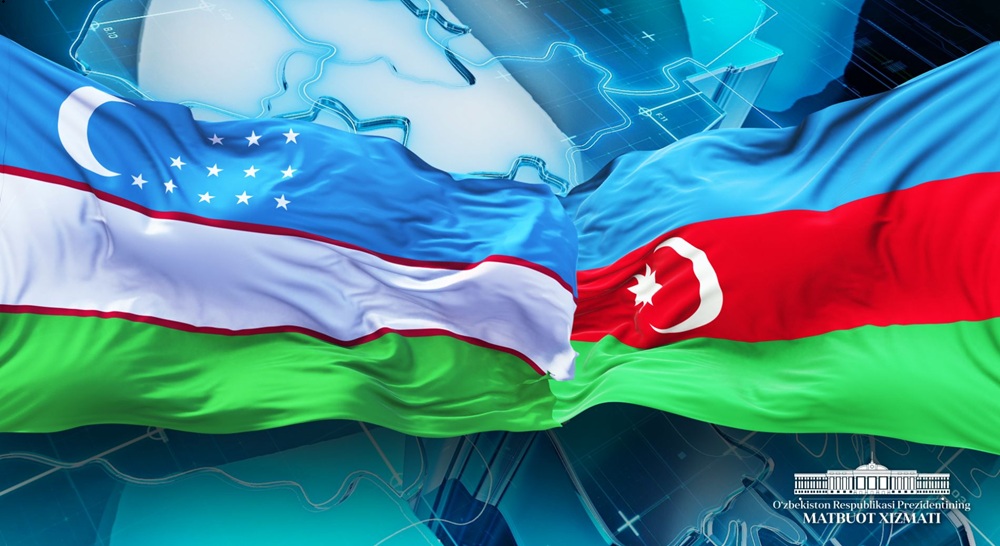
Uzbekistan - Azerbaijan: economy of trust, routes and joint projects
Relations between Uzbekistan and Azerbaijan have in recent years become one of the most dynamic links between Central Asia and the South Caucasus. They are underpinned by sustained dialogue between the two countries’ leaders, political trust, cultural and historical affinity, and growing mutual interest in trade, investment, transport, industry, energy, and the development of transport routes. Consequently, bilateral cooperation is increasingly moving beyond traditional partnership and evolving into comprehensive economic cooperation.
Regular high-level contacts provide the strategic framework for this work. In recent years, the two countries’ leaders have exchanged state and working visits, giving the relationship sustained political momentum. The Joint Commission on Bilateral Cooperation remains the principal mechanism for intergovernmental coordination. Fourteen meetings have already been held, while the forthcoming meeting in Tashkent is expected to give fresh impetus to trade, investment, and economic cooperation.
Direct interregional ties remain an important element of this architecture. The intergovernmental agreement on interregional cooperation, regional forums held in Tashkent, Quba, and Baku, as well as agreements signed between cities of the two countries, demonstrate that the partnership is gradually moving from government-level decisions towards practical cooperation between regions. The forthcoming Forum of Regions could provide a platform for concrete agreements in trade, industry, tourism, and urban infrastructure.
Trade statistics confirm the growing economic interest. By the end of 2025, bilateral trade had reached USD 307.3 million. The positive trend strengthened in January–May 2026, with trade turnover increasing by 38.2%. The next target is to raise bilateral trade to USD 1 billion by 2030.
To consolidate this trend, it is important to move beyond growth in individual product categories towards a more sustainable supply model. This involves expanding the range of traded goods, developing promotion and distribution channels, opening a trade mission of Uzbekistan in Baku, and making use of new logistics opportunities. Within this framework, the southern route is of particular importance: promoting Azerbaijani products through trade platforms in Termez could facilitate access to neighbouring markets and give bilateral trade a broader regional dimension.
The investment component is supported by the growing presence of Azerbaijani businesses in Uzbekistan. As of July 2026, 442 enterprises with Azerbaijani capital were operating in the country. Their activities cover trade, mechanical engineering, metalworking, finance, insurance, real estate, energy, services, food production, and light industry. This indicates a transition from one-off trade transactions to more sustainable forms of business engagement.
The Azerbaijan–Uzbekistan Investment Company provides the financial foundation for some of these initiatives. Its current portfolio comprises nine projects with a total value of USD 651 million, with the company’s financing amounting to USD 170.9 million. Funding has already been allocated to four projects, while five more have received approval. The importance of this instrument lies not only in the volume of available resources but also in its ability to translate political agreements into practical solutions in trade, education, healthcare, industry, logistics, and the financial sector.
On this basis, industrial cooperation is acquiring tangible substance. The automotive industry is one of the key areas: the production of Chevrolet vehicles and Isuzu commercial vehicles is being developed in Azerbaijan with the participation of Uzbek enterprises, while the expansion of the production facility in Hajiqabul is expected to ensure a deeper manufacturing cycle, including welding and painting. This format is important because it involves not merely the supply of finished products but also the development of assembly and component supply chains and technological exchange.
Sectoral opportunities are not limited to the automotive industry. In the mining sector, the parties are developing cooperation in the geological exploration and development of precious and critical metal deposits in Uzbekistan. This strengthens the industrial dimension of the bilateral agenda and creates a foundation for more technologically advanced cooperation in the field of mineral resources.
Alongside the mining industry, oil and gas and chemical cooperation hold considerable potential. SOCAR’s participation creates opportunities for joint work in geological exploration, energy supplies, processing, and the development of related services. In a broader context, this makes it possible to view cooperation not only through the lens of the raw materials sector but also as a foundation for industrial and technological linkages with significant practical value.
Transport and logistics occupy a special place in bilateral cooperation. The production and use of ferries for Uzbekistan’s needs, with access to routes through the ports of Kuryk and Alat, are currently under consideration. For Uzbekistan, this represents an additional opportunity to strengthen access to Trans-Caspian transport links, while for Azerbaijan it offers a means of expanding the role of its ports and logistics infrastructure in the movement of goods between Central Asia, the Caucasus, and external markets.
Urban development, tourism, and municipal infrastructure are also of particular importance. Major projects involving Azerbaijani investors are being implemented in Tashkent, including hotel, tourism, and residential complexes. Within the bilateral agenda, these investments are significant not only as capital invested in real estate but also as a contribution to the quality of the urban environment and the development of tourism and the service economy.
Light industry remains another closely related area of cooperation. Cotton and textile clusters involving Uzbek companies are being developed in Azerbaijan, allowing the parties to combine the raw-material base, manufacturing expertise, and access to new markets. In the longer term, such cooperation could increase exports of finished textile products and reduce dependence on trade in raw materials.
The sectoral framework is complemented by cooperation in finance, construction materials, electrical engineering, food production, agriculture, pharmaceuticals, and jewellery. Projects in these areas are at different stages of development, but collectively they broaden the foundation of bilateral cooperation.
The strength of the current Uzbek-Azerbaijani model lies in its combination of political trust and practical instruments: investment capital, production chains, interregional ties, and Trans-Caspian logistics. In this context, transport routes are becoming more than merely a logistics issue; they are evolving into part of a broader economic architecture connecting markets, enterprises, and regions. Cooperation between the two countries is therefore increasingly viewed as one of the sustainable bridges linking Central Asia, the Caucasus, and external markets.
📅 21.07.2026
Uzbekistan news
Uzbekistan – Kyrgyzstan: Prospects for Cooperation on Water Resources
Central Asia and Azerbaijan: Prospects for a Common Transport Area
Central Asia and Azerbaijan Are Emerging as a Shared Hub for Startups, Investors, and Talent
Uzbekistan - Azerbaijan: economy of trust, routes and joint projects
Uzbekistan - Kyrgyzstan: from border neighborhood to long-term economic cooperation
Central Asia and Azerbaijan: Strategic Partners Building a Green Energy Hub Together
Through the Caspian to New Markets
Uzbekistan embraces the language of international law and becomes part of the global financial system
On July 24–25, Samarkand Will Bring Together Global Sister Cities at International Forum
Uzbekistan: An Open and Safe Destination Recognized by the International Community
Green Economy, Social Sustainability, and Transparent Governance: Uzbekistan’s New Development Formula
The text of the appeal of the participants of the first international forum of Islamic civilization to the head of State
Declaration adopted by the participants of the First International Islamic Civilization Forum
Uzbekistan–Belarus economic cooperation: promising projects in the Agri-food sector
Uzbekistan and Belarus: Stable Partnership and Strategic Development Prospects
Uzbekistan and Belarus strengthen multifaceted partnership based on mutual trust and pragmatic cooperation
Areas of Cooperation between Belarus and Uzbekistan in Strengthening Sustainable Transport Corridors in Eurasia
Uzbekistan–Belarus economic cooperation: promising projects in the Agri-food sector
Uzbekistan and Georgia: From historical friendship to a strategic partnership
Uzbekistan–Georgia Relations: Contemporary Priorities for Bilateral Development
Ecological cooperation between Uzbekistan and the United States elevated to the level of a strategic partnership
Cooperation Between Uzbekistan and Georgia in Strengthening Connectivity in Central Asia and the South Caucasus
Uzbekistan as an Operational Hub for Technology Companies: Key Figures, Conditions, and Advantages
“O'zbek futboli” – A Documentary Chronicle of a Century-Long Journey Toward the Nation’s Greatest Football Dream
GENDER POLICY IN UZBEKISTAN
Uzbekistan launches a brand new media bankfeaturing high-quality photo and video materials
Building Effective Transport Connectivity in the Context of Global Change
Uzbekistan as a Driver of Regional Connectivity: The Significance of the Termez Dialogue
A SHARED GENETIC CODE: THE REVIVAL OF THE CULTURAL AND CIVILISATIONAL HERITAGE OF CENTRAL AND SOUTH ASIA
The Termez Dialogue Sets the Course for Economic Integration with South Asia

-
 Ministry of Foreign Affairs of the Republic of Uzbekistan
 -
 Diplomatic Service of the Ministry of Foreign Affairs
 -
 State Committee for Tourism Development
 -
Ministry of Investments and Foreign Trade of the Republic of Uzbekistan
-
 invest.gov.uz
 -

-

-

-

-
-

-

of Uzbekistan in the Republic
of Latvia
When using the information, a link to www.uzembassy.lv
must be provided.
All rights reserved
Address
Address: Riga c., LV-1010. 11-11 Elizabetes Str., Latvia
Phone: 37167322424
Fax: 37167322306
Email: embassy@uzbekistan.lv
Useful links
HomeIssuance of biometric passport for departure abroad
Certificate to return to Uzbekistan
Withdrawal of citizenship
Loss of citizenship