Phone
Consular Issues
Phone
Uzbekistan news
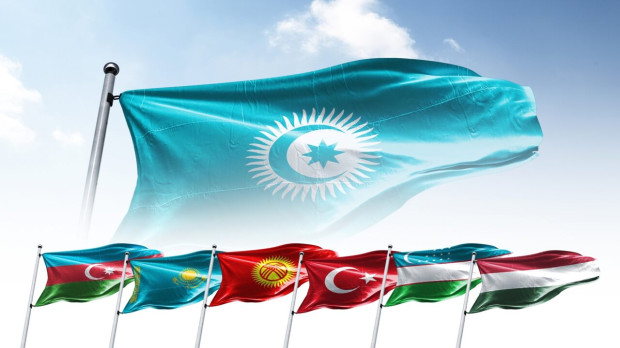
The Transit Potential of the Turkic World: Integrating Economies and New Logistical Solutions
In the 21st century, the rapid development of global economic ties has further heightened the strategic importance of transport and logistics systems. From this perspective, strengthening transport cooperation among the member states of the Organization of Turkic States (OTS) —located in a key geoeconomic region connecting Europe and Asia—has become a priority.
Within the OTS framework, practical initiatives are being advanced to develop modern transport corridors, build up transit capacity, and create a single logistics space. This serves not only to deepen regional integration but also to ensure sustainable economic growth and connectivity across Eurasia.
The OTS countries are among Uzbekistan's primary trade and economic partners. Specifically, Uzbekistan maintains a large volume of trade with Kazakhstan, a free trade agreement with Azerbaijan, and most-favored-nation status with Turkey and Hungary.
In 2023, Uzbekistan's cargo transport volume with OTS member countries reached 17.5 million tons, accounting for nearly 38 percent of its total export-import shipments.
To further intensify multilateral cooperation within the Organization and strengthen the strategic partnership between its member states, the 12th Summit of the Organization of Turkic States was held on October 7, 2024, in Gabala, Azerbaijan, under the motto "Regional Peace and Security."
Following the summit, the parties adopted the 121-point Gabala Declaration. This document outlined a number of priority objectives for expanding cooperation in the political, economic, transport, communications, energy, and security spheres. The declaration paid special attention to the transport sector, identifying the further strengthening of transport connectivity between Europe and Asia, the enhancement of the region's transit potential, and the expansion of trade and economic ties as key tasks.
Additionally, the development of the Trans-Caspian International Transport Corridor (the Middle Corridor) was recognized as one of the organization's strategic priorities. Special emphasis was placed on increasing the efficiency of freight supply chains across Eurasia, diversifying transport routes, and enhancing the region's importance in the global logistics system by improving this corridor.
Furthermore, an agreement was reached at the summit to implement the "OTS+" format, aimed at expanding the geographical scope of cooperation between the Organization of Turkic States and external partners and third countries.
At this summit, the head of our state underscored the importance of connecting the Middle Corridor with the China–Kyrgyzstan–Uzbekistan railway and the Trans-Afghan Corridor, as well as digitalizing customs procedures and optimizing tariffs. The proposed initiatives were supported by the organization's member states, who expressed their readiness for joint work in these areas.
According to experts, the China–Kyrgyzstan–Uzbekistan railway is expected to create the shortest corridor from China to countries in Europe and the Middle East, reducing the distance by 900 kilometers and freight delivery times by 7–8 days.
The construction of the Uzbekistan–Afghanistan–Pakistan railway is another vital project for transregional cooperation. This project will link the South Asian railway system with the railway networks of Central Asia and Eurasia.
In recent years, as attention to the Trans-Caspian Corridor has grown, the volume of freight transported along it has been steadily increasing. In 2023, the transit of Uzbek cargo on this route through the Port of Baku exceeded 1.2 million tons, and there are plans to increase this figure to 1.5 million tons in the near future.
Uzbekistan is an active user of the strategic "China–Kyrgyzstan–Uzbekistan–Turkmenistan/Kazakhstan–Caspian Sea–Azerbaijan–Georgia–Turkey–Europe" route, which runs through the member states of the Organization of Turkic States (OTS). In cooperation with the OTS, special importance is attached to the development of this corridor. Specifically, large-scale work is underway to modernize infrastructure and coordinate logistics processes.
As the development and diversification of global logistics chains and transport corridors, along with the formation of a unified transit network, become particularly relevant, realizing the potential of the Organization of Turkic States is coming to the forefront.
Within the OTS framework, special attention is also given to implementing digital solutions in supply chains. In particular, an electronic permit exchange system (e-Permit) has been established among the Organization's member states, and the e-TIR system has been implemented with Azerbaijan. Alongside these efforts, solutions such as electronic customs, automated cargo tracking systems, and the "digital customs corridor" are being widely introduced in OTS countries.
The aforementioned initiatives are an important step toward creating a single transport space among the Turkic states. Through digital systems, new transport routes, and joint investments, the OTS countries are deepening their mutual integration and strengthening their positions within the Eurasian transport network.
IA “Dunyo”
📅 12.05.2026
Uzbekistan news
BRIGHT PROSPECTS FOR MUTUALLY BENEFICIAL PARTNERSHIP
Transport and Logistics Connectivity of the SCO Amid Geopolitical Turbulence: New Opportunities for the Regions
Business in Uzbekistan are moving from digitalization to technological modernization
Uzbekistan and Serbia expand prospects for cooperation in ecology and environmental protection
SCO AND WATER DIPLOMACY: IN PURSUIT OF COMMON INTERESTS
TASHKENT-DELHI: A NEW STAGE OF STRATEGIC PARTNERSHIP
On September 4–6th, Samarkand will host XII Inter-Parliamentary Union Global Conference of Young Parliamentarians
The Infrastructure Already Linking Uzbekistan and Korea What Korea Has Already Built Inside Uzbekistan's Digital Economy From Fiber Optics to AI: The Scope of Uzbek-Korean Digital Cooperation The Digital Bridge Already Built Between Uzbekistan and South Korea
On September 8–10th, Tashkent to gather International Textile Industry Professionals
New Uzbekistan: A Builder of Peace and Trust
‘Mustaqillik’ Generation: New Navigators of the Silk Road
GLOBAL COMPETITION AND NEW PEACE DIPLOMACY: THE VOICE OF ENLIGHTENMENT OF NEW UZBEKISTAN IN THE GLOBAL ARENA
SCO AND WATER DIPLOMACY: IN PURSUIT OF COMMON INTERESTS
Uzbekistan’s Dialogue with Business: Five Years of Change
ON THE STATUS OF THE HOST COUNTRY AND A NEW PHASE OF INTERNATIONAL CULTURAL COOPERATION
Transport and Logistics Cooperation Between Uzbekistan and the US: A New Stage of Strategic Partnership
Reforms and Active Dialogue in Entrepreneurship: The President's 6th Open Dialogue as a Catalyst for New Economic Growth
How China–Kyrgyzstan–Uzbekistan railway is redrawing the economic map of the continent
G20 and Uzbekistan: Investment, Industry and Trade in a New Economic Reality
CULTURE — THE TREE OF A NATION'S TRUST UZBEKISTAN — THE UNITED STATES
Uzbekistan and Kyrgyzstan: A New Stage and Future Prospects for Environmental Cooperation
Uzbekistan–Azerbaijan: Environmental cooperation emerges as a key pillar of the strategic partnership
Samarkand hosted an international scientific and practical conference on “Brother Cities: A New Model for Sustainable Development and Public Diplomacy”
Uzbekistan and Kyrgyzstan: Strategic Partnership, Institutionalization, and Mechanisms of Cooperation
Uzbekistan–Kyrgyzstan: From Border Neighbourhood to Long-Term Economic Cooperation
Uzbekistan and Kyrgyzstan: Transitioning to Joint Value Chains
Towards a Unified Intellectual Space of the Turkic World: A New Era of Scientific Integration in the Renaissance Age
Uzbekistan – Kyrgyzstan: Prospects for Cooperation on Water Resources
Central Asia and Azerbaijan: Prospects for a Common Transport Area
Central Asia and Azerbaijan Are Emerging as a Shared Hub for Startups, Investors, and Talent

-
 Ministry of Foreign Affairs of the Republic of Uzbekistan
 -
 Diplomatic Service of the Ministry of Foreign Affairs
 -
 State Committee for Tourism Development
 -
Ministry of Investments and Foreign Trade of the Republic of Uzbekistan
-
 invest.gov.uz
 -

-

-

-

-
-

-

of Uzbekistan in the Republic
of Latvia
When using the information, a link to www.uzembassy.lv
must be provided.
All rights reserved
Address
Address: Riga c., LV-1010. 11-11 Elizabetes Str., Latvia
Phone: 37167322424
Fax: 37167322306
Email: embassy@uzbekistan.lv
Useful links
HomeIssuance of biometric passport for departure abroad
Certificate to return to Uzbekistan
Withdrawal of citizenship
Loss of citizenship