Phone
Consular Issues
Phone
Uzbekistan news
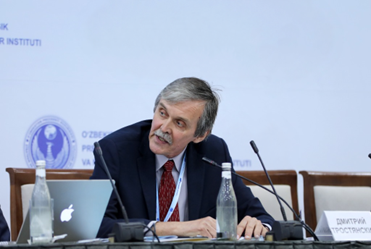
Uzbekistan’s cooperation with the ADB: From infrastructure financing to an expanded strategic partnership
From 3 to 6 May 2026, Samarkand will host the 59th Annual Meeting of the Asian Development Bank (ADB). The event is expected to bring together heads of banking and financial institutions from 69 member countries, as well as representatives of international organizations. Discussions will focus on the key development challenges facing the countries of Asia and possible ways to address them.
The holding of such a high-level forum in Uzbekistan reflects the growing recognition of the country’s ongoing economic reforms and the strengthening of its position within the global financial system. A significant factor has also been the notable expansion of cooperation between Uzbekistan and the ADB in recent years, as evidenced by a number of objective international assessments of the country’s socio-economic development.
First, there has been a steady rise in Uzbekistan’s international standing and stronger performance in global rankings. In particular, in the Government Technology Maturity Index published by the World Bank, the country advanced by 71 positions, entering the world’s top ten.
Second, despite continuing disruptions in global production and transport-logistics chains, rising commodity prices, and tighter financial conditions, Uzbekistan continues to demonstrate устойчивый economic growth. In 2025, for the first time in the country’s history, gross domestic product exceeded USD 145 billion, while gold and foreign exchange reserves surpassed USD 60 billion.
At the same time, the volume of attracted foreign investment increased significantly, reaching USD 43.1 billion, while the share of investment in GDP exceeded 31 percent. Moreover, despite growing protectionism and sanctions pressure in the global trading system, the republic increased exports by 23 percent, bringing them to USD 33.4 billion.
Third, cooperation between Uzbekistan and the ADB is comprehensive and long-term in nature. The total portfolio of joint initiatives amounts to 174 projects worth USD 27.5 billion, of which 66 projects worth USD 10.5 billion have already been completed, while another 30 projects valued at USD 4.6 billion are currently under implementation. These figures confirm the ADB’s status as one of Uzbekistan’s leading development partners.
Building on accumulated experience, the ADB launched a new five-year partnership strategy with Uzbekistan in August 2024 for the period 2024–2028. Its key priorities include supporting the republic’s transition toward a green and inclusive economy, enhancing private sector competitiveness, and stimulating investment in human capital.
In addition, Uzbekistan and the ADB approved a Memorandum of Understanding for 2026–2028, which envisages the implementation of 28 projects with a total value of USD 4.2 billion.
The fact that the meeting is being held in Uzbekistan positions the country as a regional hub for dialogue on development and investment, demonstrates the progress of reforms, and contributes to attracting global partners to accelerate the country’s sustainable development. According to experts, the meeting will serve as an important platform for strengthening cooperation and concluding priority agreements between the Government of Uzbekistan and the ADB.
Furthermore, in order to consolidate long-term priorities, President of Uzbekistan Shavkat Mirziyoyev put forward an initiative to mark the Samarkand summit with the signing of an important document — the Expanded Strategic Partnership Programme with the ADB for 2027–2030. It will serve as a medium-term roadmap, with primary emphasis placed on human capital and social resilience.
Thus, cooperation between Uzbekistan and the ADB has evolved from financial assistance into a strategic partnership. Today, the Bank finances key projects, shapes the reform agenda, and supports the long-term transformation of the national economy, effectively acting as an institutional partner.
Such cooperation opens a number of significant advantages for Uzbekistan:
Economic – access to concessional loans and grants, reduced budgetary burden in implementing large-scale programmes, improvement of the investment climate and inflow of long-term foreign investment, infrastructure development, and employment growth;
Structural – acceleration of market reforms, liberalization and diversification of the economy, and private sector development;
Strategic – integration into the global economy, transition to a green growth model, and participation in regional value chains and transport-logistics corridors.
As can be seen, the modern ADB agenda largely coincides with Uzbekistan’s current reform trajectory. According to experts, the republic has synchronized its national strategy with the Bank’s priorities and, as a result, can attract even greater volumes of financing to accelerate structural reforms and strengthen economic resilience.
Overall, the key features of the modern model of cooperation between Uzbekistan and the ADB are: comprehensiveness (covering all major sectors), strategic orientation (alignment with the long-term goals of “Uzbekistan–2030”), institutional depth (reforms, regulation, standards), and sustainability (environmental protection and inclusiveness).
Thus, today the ADB is not merely a creditor, but a key strategic partner participating in structural reforms, economic modernization, and Uzbekistan’s integration into global economic processes.
Dmitriy Trostyanskiy
Chief Research Fellow,
Institute for Strategic and Regional Studies
under the President of the Republic of Uzbekistan,
Doctor of Economic Sciences
📅 02.05.2026
Uzbekistan news
BRIGHT PROSPECTS FOR MUTUALLY BENEFICIAL PARTNERSHIP
Transport and Logistics Connectivity of the SCO Amid Geopolitical Turbulence: New Opportunities for the Regions
Business in Uzbekistan are moving from digitalization to technological modernization
Uzbekistan and Serbia expand prospects for cooperation in ecology and environmental protection
SCO AND WATER DIPLOMACY: IN PURSUIT OF COMMON INTERESTS
TASHKENT-DELHI: A NEW STAGE OF STRATEGIC PARTNERSHIP
On September 4–6th, Samarkand will host XII Inter-Parliamentary Union Global Conference of Young Parliamentarians
The Infrastructure Already Linking Uzbekistan and Korea What Korea Has Already Built Inside Uzbekistan's Digital Economy From Fiber Optics to AI: The Scope of Uzbek-Korean Digital Cooperation The Digital Bridge Already Built Between Uzbekistan and South Korea
On September 8–10th, Tashkent to gather International Textile Industry Professionals
New Uzbekistan: A Builder of Peace and Trust
‘Mustaqillik’ Generation: New Navigators of the Silk Road
GLOBAL COMPETITION AND NEW PEACE DIPLOMACY: THE VOICE OF ENLIGHTENMENT OF NEW UZBEKISTAN IN THE GLOBAL ARENA
SCO AND WATER DIPLOMACY: IN PURSUIT OF COMMON INTERESTS
Uzbekistan’s Dialogue with Business: Five Years of Change
ON THE STATUS OF THE HOST COUNTRY AND A NEW PHASE OF INTERNATIONAL CULTURAL COOPERATION
Transport and Logistics Cooperation Between Uzbekistan and the US: A New Stage of Strategic Partnership
Reforms and Active Dialogue in Entrepreneurship: The President's 6th Open Dialogue as a Catalyst for New Economic Growth
How China–Kyrgyzstan–Uzbekistan railway is redrawing the economic map of the continent
G20 and Uzbekistan: Investment, Industry and Trade in a New Economic Reality
CULTURE — THE TREE OF A NATION'S TRUST UZBEKISTAN — THE UNITED STATES
Uzbekistan and Kyrgyzstan: A New Stage and Future Prospects for Environmental Cooperation
Uzbekistan–Azerbaijan: Environmental cooperation emerges as a key pillar of the strategic partnership
Samarkand hosted an international scientific and practical conference on “Brother Cities: A New Model for Sustainable Development and Public Diplomacy”
Uzbekistan and Kyrgyzstan: Strategic Partnership, Institutionalization, and Mechanisms of Cooperation
Uzbekistan–Kyrgyzstan: From Border Neighbourhood to Long-Term Economic Cooperation
Uzbekistan and Kyrgyzstan: Transitioning to Joint Value Chains
Towards a Unified Intellectual Space of the Turkic World: A New Era of Scientific Integration in the Renaissance Age
Uzbekistan – Kyrgyzstan: Prospects for Cooperation on Water Resources
Central Asia and Azerbaijan: Prospects for a Common Transport Area
Central Asia and Azerbaijan Are Emerging as a Shared Hub for Startups, Investors, and Talent

-
 Ministry of Foreign Affairs of the Republic of Uzbekistan
 -
 Diplomatic Service of the Ministry of Foreign Affairs
 -
 State Committee for Tourism Development
 -
Ministry of Investments and Foreign Trade of the Republic of Uzbekistan
-
 invest.gov.uz
 -
-

-

-

-

-

-

of Uzbekistan in the Republic
of Latvia
When using the information, a link to www.uzembassy.lv
must be provided.
All rights reserved
Address
Address: Riga c., LV-1010. 11-11 Elizabetes Str., Latvia
Phone: 37167322424
Fax: 37167322306
Email: embassy@uzbekistan.lv
Useful links
HomeIssuance of biometric passport for departure abroad
Certificate to return to Uzbekistan
Withdrawal of citizenship
Loss of citizenship