Phone
Consular Issues
Phone
Uzbekistan news
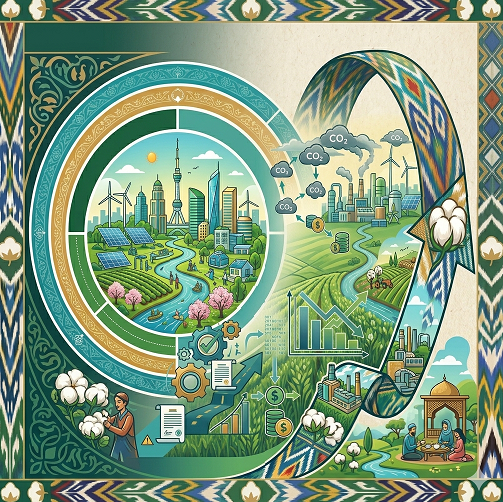
Uzbekistan’s Green Economy Transition: Institutional Reform, Carbon Markets, and a New Growth Model
In recent years, the Republic of Uzbekistan has embarked on a structured and institutionally grounded transition toward a green economy, positioning sustainability as a core driver of long-term economic resilience, competitiveness, and global integration.
This transformation reflects a comprehensive approach that combines policy reform, market-based instruments, and active international cooperation, enabling the country to move from strategic commitments to measurable outcomes.
The foundation of Uzbekistan’s green transition was laid through the adoption of a comprehensive policy framework in 2022, which established strategic priorities for green growth through 2030. This framework includes sectoral energy efficiency concepts, a national green growth program, and a detailed action plan.
Importantly, the government has set clear quantitative targets, including reducing the energy intensity of GDP by 20 percent by 2026 compared to 2022 levels. Institutional capacity has also been strengthened through the establishment of interagency coordination mechanisms and donor engagement platforms, ensuring coherent implementation across sectors.
A major milestone in the reform process has been the introduction of a green energy certificate system, which enables verification that electricity is generated from renewable sources. This system has facilitated the development of a transparent renewable energy market and strengthened the ability of domestic producers to access environmentally regulated export markets.
To date, more than 446,000 green energy certificates have been issued and traded, reflecting growing demand for clean energy solutions and increasing private sector engagement.
Uzbekistan has taken a pioneering role in Central Asia in developing carbon market mechanisms. In cooperation with the World Bank, the country is implementing innovative approaches to carbon trading in line with Article 6 of the Paris Agreement.
Through initiatives such as the iCRAFT project, supported by the Transformative Carbon Asset Facility (TCAF), Uzbekistan is mobilizing up to $46.2 million in climate finance between 2024 and 2028. Initial results include the reduction of approximately 10 million tons of CO₂-equivalent emissions and the attraction of around $15 million in funding.
At the same time, regulatory frameworks for international carbon trading and emissions accounting are being developed, positioning Uzbekistan for full participation in global carbon markets.
A key achievement has been the adoption of the Law on Limiting Greenhouse Gas Emissions in 2025, which establishes the legal foundation for emissions regulation, national registries, and climate policy instruments.
Complementing this, Uzbekistan has introduced a national transparency system to monitor progress toward its Nationally Determined Contributions (NDCs). This system enhances data reliability, strengthens accountability, and builds trust among international investors and development partners.
Uzbekistan is actively developing a national green finance ecosystem aimed at mobilizing public, private, and international capital. Policy efforts include the development of green financing frameworks, institutional mechanisms, and project pipelines.
International partners play a critical role in this process. Cooperation with institutions such as the European Bank for Reconstruction and Development has enabled the implementation of green financing programs, including the Green Economy Financing Facility (GEFF), channeling substantial resources into energy efficiency and sustainable technologies.
Furthermore, Uzbekistan’s participation in the Climate Investment Funds Industrial Decarbonization Program provides access to up to $250 million in concessional financing, significantly expanding the scale of green investments.
The transition to a green economy is closely linked to industrial modernization.
Uzbekistan is implementing targeted programs to support enterprises in adopting low-carbon technologies, improving resource efficiency, and enhancing competitiveness.
Partnerships with international organizations, including German development institutions, are facilitating policy development, capacity building, and practical support for small and medium-sized enterprises in reducing emissions and transitioning to sustainable production models.
Uzbekistan continues to strengthen its role in global climate governance through active international engagement. The country has joined the Global Methane Pledge, committing to reduce methane emissions by at least 30 percent by 2030.
Bilateral cooperation is expanding through mechanisms such as the Joint Crediting Mechanism (JCM) with Japan, as well as climate partnerships with the Republic of Korea, Germany, and Hungary under the Paris Agreement framework.
In addition, the Ministry of Economy and Finance has joined the Coalition of Finance Ministers for Climate Action, reflecting the integration of climate considerations into macroeconomic and fiscal policy.
Digital transformation plays an increasingly important role in supporting green reforms. Uzbekistan has launched a national online platform that consolidates data on green projects, regulatory frameworks, and international practices.
This digital infrastructure enhances transparency, supports evidence-based policymaking, and improves coordination across institutions.
Uzbekistan’s transition to a green economy represents a comprehensive and forward-looking reform agenda that integrates institutional development, market mechanisms, and international cooperation.
The progress achieved to date demonstrates a clear shift from policy design to effective implementation. By strengthening governance frameworks, mobilizing green finance, and fostering global partnerships, Uzbekistan is building a resilient and sustainable economic model.
In the long term, the green transition is expected to serve not only as an environmental imperative but also as a key driver of economic growth, investment attractiveness, and deeper integration into the global economy.
Ministry of Economy and Finance
of the Republic of Uzbekistan
📅 20.04.2026
Uzbekistan news
BRIGHT PROSPECTS FOR MUTUALLY BENEFICIAL PARTNERSHIP
Transport and Logistics Connectivity of the SCO Amid Geopolitical Turbulence: New Opportunities for the Regions
Business in Uzbekistan are moving from digitalization to technological modernization
Uzbekistan and Serbia expand prospects for cooperation in ecology and environmental protection
SCO AND WATER DIPLOMACY: IN PURSUIT OF COMMON INTERESTS
TASHKENT-DELHI: A NEW STAGE OF STRATEGIC PARTNERSHIP
On September 4–6th, Samarkand will host XII Inter-Parliamentary Union Global Conference of Young Parliamentarians
The Infrastructure Already Linking Uzbekistan and Korea What Korea Has Already Built Inside Uzbekistan's Digital Economy From Fiber Optics to AI: The Scope of Uzbek-Korean Digital Cooperation The Digital Bridge Already Built Between Uzbekistan and South Korea
On September 8–10th, Tashkent to gather International Textile Industry Professionals
New Uzbekistan: A Builder of Peace and Trust
‘Mustaqillik’ Generation: New Navigators of the Silk Road
GLOBAL COMPETITION AND NEW PEACE DIPLOMACY: THE VOICE OF ENLIGHTENMENT OF NEW UZBEKISTAN IN THE GLOBAL ARENA
SCO AND WATER DIPLOMACY: IN PURSUIT OF COMMON INTERESTS
Uzbekistan’s Dialogue with Business: Five Years of Change
ON THE STATUS OF THE HOST COUNTRY AND A NEW PHASE OF INTERNATIONAL CULTURAL COOPERATION
Transport and Logistics Cooperation Between Uzbekistan and the US: A New Stage of Strategic Partnership
Reforms and Active Dialogue in Entrepreneurship: The President's 6th Open Dialogue as a Catalyst for New Economic Growth
How China–Kyrgyzstan–Uzbekistan railway is redrawing the economic map of the continent
G20 and Uzbekistan: Investment, Industry and Trade in a New Economic Reality
CULTURE — THE TREE OF A NATION'S TRUST UZBEKISTAN — THE UNITED STATES
Uzbekistan and Kyrgyzstan: A New Stage and Future Prospects for Environmental Cooperation
Uzbekistan–Azerbaijan: Environmental cooperation emerges as a key pillar of the strategic partnership
Samarkand hosted an international scientific and practical conference on “Brother Cities: A New Model for Sustainable Development and Public Diplomacy”
Uzbekistan and Kyrgyzstan: Strategic Partnership, Institutionalization, and Mechanisms of Cooperation
Uzbekistan–Kyrgyzstan: From Border Neighbourhood to Long-Term Economic Cooperation
Uzbekistan and Kyrgyzstan: Transitioning to Joint Value Chains
Towards a Unified Intellectual Space of the Turkic World: A New Era of Scientific Integration in the Renaissance Age
Uzbekistan – Kyrgyzstan: Prospects for Cooperation on Water Resources
Central Asia and Azerbaijan: Prospects for a Common Transport Area
Central Asia and Azerbaijan Are Emerging as a Shared Hub for Startups, Investors, and Talent

-
 Ministry of Foreign Affairs of the Republic of Uzbekistan
 -
 Diplomatic Service of the Ministry of Foreign Affairs
 -
 State Committee for Tourism Development
 -
Ministry of Investments and Foreign Trade of the Republic of Uzbekistan
-
 invest.gov.uz
 -
-

-

-

-
-

-

of Uzbekistan in the Republic
of Latvia
When using the information, a link to www.uzembassy.lv
must be provided.
All rights reserved
Address
Address: Riga c., LV-1010. 11-11 Elizabetes Str., Latvia
Phone: 37167322424
Fax: 37167322306
Email: embassy@uzbekistan.lv
Useful links
HomeIssuance of biometric passport for departure abroad
Certificate to return to Uzbekistan
Withdrawal of citizenship
Loss of citizenship