Phone
Consular Issues
Phone
Uzbekistan news
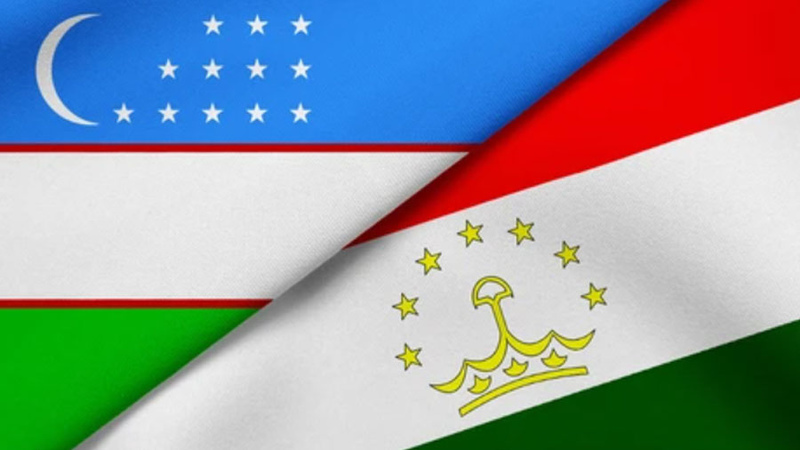
Uzbekistan-Tajikistan Alliance: Towards Further Expansion of Multidimensional Cooperation
The upcoming visit of the President of Tajikistan, Emomali Rahmon, to Uzbekistan on March 26–27 is set to provide additional momentum to Uzbek-Tajik relations, which have demonstrated steady positive dynamics in recent years.
Today, bilateral ties are on the rise, experiencing the best period in their history. Tashkent and Dushanbe have successfully resolved long-standing issues, creating a solid foundation for a transition to a qualitatively new stage of engagement. While cooperation was previously characterized as episodic and largely dependent on opportunistic factors, it has now acquired a systemic, multi-level, and strategic nature.
The consistent and far-sighted policies of the two heads of state have played a pivotal role in this process. Regular and trust-based contacts between Shavkat Mirziyoyev and Emomali Rahmon have contributed to the renewal of the entire system of interstate relations, imparting a resilient internal dynamic.
Since 2017, the leaders of Uzbekistan and Tajikistan have held over 40 meetings, underscoring a shared political will for the consistent development of cooperation. The logical culmination of this course was the signing of the Treaty on Allied Relations in 2024, which institutionalized the long-term strategic character of their interaction. The upcoming negotiations are expected to consolidate achieved results and define new benchmarks for the partnership.
This atmosphere of trust has been reinforced by a robust institutional framework. Regular consultations between foreign ministries, expanded cooperation across line agencies, and the effective work of the Intergovernmental Commission form a stable architecture for bilateral engagement. The inter-parliamentary dimension has also strengthened significantly: the cooperation group established in 2020 provides essential support for initiatives and oversees their implementation.
The intensive political dialogue is naturally reflected in the economy, which serves as a barometer of profound structural changes. Since 2017, bilateral trade turnover has increased nearly fourfold – from $237 million to over $900 million by the end of 2025 – demonstrating sustainable growth. Furthermore, the trade structure is evolving: alongside traditional commodities, the share of high-value-added products, such as textiles, construction materials, electrical engineering, and machinery, is increasing. This indicates a transition to a more diversified model of economic engagement aimed at reaching the $2 billion mark in the medium term.
Simultaneously, the focus is gradually shifting from trade to investment and industrial cooperation. Since 2017, the number of enterprises with Tajik capital in Uzbekistan has grown more than 13 times, reaching 343. Uzbek business is also actively expanding in Tajikistan, where approximately 70 companies currently operate, reflecting the growing mutual trust within the business community.
As part of this cooperation, the Uzbek-Tajik Interregional Investment Forum was launched in 2021. In the same year, a joint investment company was established with an authorized capital that subsequently increased more than fourfold – from $12 million to over $50 million. This has provided a financial base for implementing major projects in industry, energy, agriculture, healthcare, banking, and construction.
The development of modern border infrastructure is of substantial importance for further integration. Specifically, the creation of a trade and logistics hub at the "Fotekhobod – Oybek" border crossing will enhance the efficiency of trans-border trade. Concurrently, the Urgut district is being developed as a comprehensive transport, logistics, and trade hub, capable of transforming border areas into centers of economic activity.
Ongoing projects include the establishment of trade, logistics, and medical complexes, as well as a logistics center with a capacity of up to 100 heavy-duty trucks per day. In parallel, efforts are underway to simplify customs procedures. The construction of the Samarkand–Urgut railway line will be a significant step toward reducing transport costs and enhancing regional connectivity.
Equally indicative is the transformation of cooperation in the water and energy sector – traditionally one of the most sensitive issues in the region. Moving away from past competition, the parties are consistently building a pragmatic model that accounts for mutual interests, implementing joint projects to modernize irrigation systems and develop hydropower. This approach demonstrates that even the most complex issues can serve as a basis for sustainable cooperation and development.
The most profound changes are occurring in the cultural and humanitarian sphere. Expanding contacts between citizens, the growth of mutual travel, and the development of cultural and educational exchanges are forming a shared humanitarian space where interstate ties have acquired a new quality.
The liberalization of travel regulations has revitalized tourism cooperation. In June 2022, the Tashkent–Dushanbe passenger train was launched; regular bus routes between Tashkent–Khujand and Kokand–Shaidon were resumed; and air connectivity has expanded, currently reaching 16 flights per week.
As a result, 2.7 million citizens of Tajikistan visited Uzbekistan last year alone, reflecting a high level of mutual trust and openness. Political agreements are increasingly translating into the practical reality of daily interaction.
This process is further bolstered by the historical and ethno-cultural proximity of the two nations. The presence of significant Tajik communities in Uzbekistan and Uzbek communities in Tajikistan makes this cooperation a natural extension of established social and cultural ties. In this context, the humanitarian dimension has become a key factor in the stability of the allied relationship.
Against this backdrop, the upcoming visit of Emomali Rahmon to Tashkent is intended not only to consolidate achieved milestones but also to set new strategic directions for future engagement. Its outcomes will undoubtedly be reflected in concrete projects and initiatives that will further strengthen the bilateral partnership and enhance the resilience of the entire region.
📅 25.03.2026
Uzbekistan news
BRIGHT PROSPECTS FOR MUTUALLY BENEFICIAL PARTNERSHIP
Transport and Logistics Connectivity of the SCO Amid Geopolitical Turbulence: New Opportunities for the Regions
Business in Uzbekistan are moving from digitalization to technological modernization
Uzbekistan and Serbia expand prospects for cooperation in ecology and environmental protection
SCO AND WATER DIPLOMACY: IN PURSUIT OF COMMON INTERESTS
TASHKENT-DELHI: A NEW STAGE OF STRATEGIC PARTNERSHIP
On September 4–6th, Samarkand will host XII Inter-Parliamentary Union Global Conference of Young Parliamentarians
The Infrastructure Already Linking Uzbekistan and Korea What Korea Has Already Built Inside Uzbekistan's Digital Economy From Fiber Optics to AI: The Scope of Uzbek-Korean Digital Cooperation The Digital Bridge Already Built Between Uzbekistan and South Korea
On September 8–10th, Tashkent to gather International Textile Industry Professionals
New Uzbekistan: A Builder of Peace and Trust
‘Mustaqillik’ Generation: New Navigators of the Silk Road
GLOBAL COMPETITION AND NEW PEACE DIPLOMACY: THE VOICE OF ENLIGHTENMENT OF NEW UZBEKISTAN IN THE GLOBAL ARENA
SCO AND WATER DIPLOMACY: IN PURSUIT OF COMMON INTERESTS
Uzbekistan’s Dialogue with Business: Five Years of Change
ON THE STATUS OF THE HOST COUNTRY AND A NEW PHASE OF INTERNATIONAL CULTURAL COOPERATION
Transport and Logistics Cooperation Between Uzbekistan and the US: A New Stage of Strategic Partnership
Reforms and Active Dialogue in Entrepreneurship: The President's 6th Open Dialogue as a Catalyst for New Economic Growth
How China–Kyrgyzstan–Uzbekistan railway is redrawing the economic map of the continent
G20 and Uzbekistan: Investment, Industry and Trade in a New Economic Reality
CULTURE — THE TREE OF A NATION'S TRUST UZBEKISTAN — THE UNITED STATES
Uzbekistan and Kyrgyzstan: A New Stage and Future Prospects for Environmental Cooperation
Uzbekistan–Azerbaijan: Environmental cooperation emerges as a key pillar of the strategic partnership
Samarkand hosted an international scientific and practical conference on “Brother Cities: A New Model for Sustainable Development and Public Diplomacy”
Uzbekistan and Kyrgyzstan: Strategic Partnership, Institutionalization, and Mechanisms of Cooperation
Uzbekistan–Kyrgyzstan: From Border Neighbourhood to Long-Term Economic Cooperation
Uzbekistan and Kyrgyzstan: Transitioning to Joint Value Chains
Towards a Unified Intellectual Space of the Turkic World: A New Era of Scientific Integration in the Renaissance Age
Uzbekistan – Kyrgyzstan: Prospects for Cooperation on Water Resources
Central Asia and Azerbaijan: Prospects for a Common Transport Area
Central Asia and Azerbaijan Are Emerging as a Shared Hub for Startups, Investors, and Talent

-
 Ministry of Foreign Affairs of the Republic of Uzbekistan
 -
 Diplomatic Service of the Ministry of Foreign Affairs
 -
 State Committee for Tourism Development
 -
Ministry of Investments and Foreign Trade of the Republic of Uzbekistan
-
 invest.gov.uz
 -

-

-

-

-

-

-

of Uzbekistan in the Republic
of Latvia
When using the information, a link to www.uzembassy.lv
must be provided.
All rights reserved
Address
Address: Riga c., LV-1010. 11-11 Elizabetes Str., Latvia
Phone: 37167322424
Fax: 37167322306
Email: embassy@uzbekistan.lv
Useful links
HomeIssuance of biometric passport for departure abroad
Certificate to return to Uzbekistan
Withdrawal of citizenship
Loss of citizenship