Phone
Consular Issues
Phone
Uzbekistan news
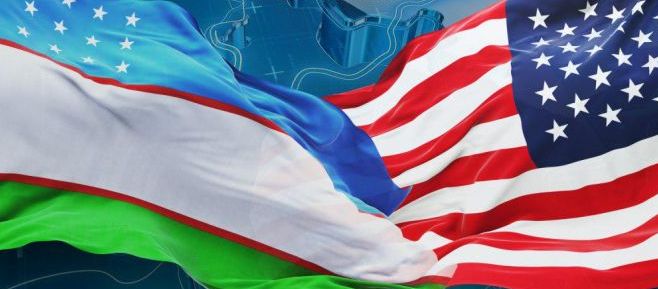
Strengthening the Peace Agenda: Uzbekistan Aims to Advance Constructive Initiatives within the Peace Council
On 17–19 February, the President of Uzbekistan, Shavkat Mirziyoyev, will pay a visit to the United States and take part in the inaugural meeting of the Peace Council, a new international body established as a multilateral platform to promote dialogue and the peaceful resolution of pressing global and regional conflicts.
The Peace Council was founded in January 2026 at the World Economic Forum in Davos, where the founding charter was formally signed in a ceremony attended by heads of state and government, as well as representatives of several founding countries.
Launched earlier this year, the initiative has garnered the support of a number of states, including Uzbekistan, which joined as a founding member, thereby reaffirming its commitment to the principles of peaceful diplomacy, multilateral engagement, and shared responsibility for maintaining international stability.
The establishment of the Peace Council represents a logical continuation of the international community’s efforts to develop effective mechanisms for conflict prevention and to seek political and diplomatic solutions to the most acute crises of our time, particularly in the Middle East.
Uzbekistan’s participation in the creation of this structure reflects Tashkent’s consistent foreign policy course aimed at promoting dialogue, respect for international law, and the rejection of force-based scenarios. The country’s position on the Palestinian issue—grounded in support for a just and sustainable peace settlement in accordance with United Nations resolutions—has gained additional international resonance within the framework of this initiative.
The upcoming participation of the Uzbek head of state in the first meeting of the Peace Council also aligns with the recent intensification of Uzbek–American political dialogue. Over the past six months, high-level contacts between Tashkent and Washington have significantly increased, signaling a qualitatively new stage in bilateral relations.
In September of last year, the President of Uzbekistan visited New York to attend a regular session of the United Nations General Assembly, where he held meetings with world leaders and heads of international organizations and discussed key issues on the global and regional agenda.
Further momentum was generated in early November 2025 during the Uzbek President’s working visit to the United States, which included talks with the U.S. President, as well as meetings with representatives of the American establishment, Congress, and business circles. Particular attention during the visit was devoted to strategic partnership, economic cooperation, investment engagement, and regional security, including the “C5+1” format, viewed by both sides as an effective mechanism for coordinating efforts in Central Asia.
Contacts between Tashkent and Washington have been maintained across various channels, including telephone conversations and interagency cooperation. An additional indication of growing mutual trust has been the expansion of economic dialogue and the establishment of new business cooperation platforms, reflecting a shared interest in deepening practical engagement. In the United States, Uzbekistan is increasingly perceived as a reliable, predictable, and responsible partner pursuing a balanced and pragmatic foreign policy.
Uzbekistan’s participation in the Peace Council is thus seen as further evidence of the country’s growing international standing and recognition of its constructive role in global affairs. For Washington, it also confirms that Tashkent is an important partner in advancing initiatives aimed at strengthening peace, security, and sustainable development across Eurasia and beyond.
Amid the intensification of political dialogue, Uzbek–American cooperation continues to expand across key areas. These include collaboration in regional security, support for economic reforms in Uzbekistan, the development of trade and investment, and the deepening of humanitarian and educational ties. Joint projects in energy, digitalization, infrastructure, and human capital development are laying a solid foundation for a long-term partnership.
In sum, the forthcoming participation of the President of Uzbekistan in the inaugural meeting of the Peace Council not only underscores the country’s active role in shaping a new architecture of international dialogue, but also complements the positive trajectory of Uzbek–American relations. The visit to the United States will undoubtedly contribute to elevating interaction between Tashkent and Washington to a stable strategic level, serving the interests of both sides and the broader goal of strengthening peace and stability in the region and worldwide.
«Dunyo» IA
📅 19.02.2026
Uzbekistan news
Inaugural Central Asia – Republic of Korea Summit at the highest level opens in Seoul
Uzbekistan and Korea: Advancing Green Energy and New Technologies
Uzbekistan and the Republic of Korea in the Emerging Framework for Cooperation with Central Asia
Tashkent brings together leaders and key deals in Polymer Market of Central Asia
The 1st Republic of Korea–Central Asia Summit: Why This Moment Matters
Uzbekistan – Serbia: A New Geography of Industrial Cooperation
The President of Uzbekistan’s Visit to Serbia: A New Stage in Economic Partnership Between Central Asia and the Balkans
Uzbekistan and the Republic of Korea: From Investment Partnership to Technological Cooperation
Regional Approaches to SDG Delivery: What Can Central Asia Offer?
Uzbekistan Opens a Balkan Gateway to Europe
The SCO Bishkek Summit: The Economic Agenda of a New Stage of Cooperation
Tourism: A new dimension of Uzbekistan-Kyrgyzstan partnership
Uzbekistan’s Role in the SCO: Economy, Security and Regional Cooperation
Economic Cooperation of Uzbekistan within the SCO at a New Stage of Development
Uzbekistan and Serbia: From Labour Mobility to a Strategic Partnership in Human Capital
Prospects for Uzbekistan–Serbia Cooperation in the ICT Sector
Prospects for Cooperation between the Republic of Uzbekistan and the Republic of Korea within the Framework of the Central Asia–Republic of Korea Cooperation Forum
THE SCO’S NEW FINANCIAL ARCHITECTURE: FROM COORDINATION TO PRACTICAL DEVELOPMENT MECHANISMS
INFORMATION NOTE ON COOPERATION WITH SERBIA
On September 8–10th, Tashkent to gather International Textile Industry Professionals
The Seoul Summit: Uzbekistan in the New Industrial Architecture of C5+1
New Opportunities to Expand Cooperation Between Uzbekistan and Serbia
Uzbekistan and Azerbaijan: Turning Political Alignment into Economic Growth
BRIGHT PROSPECTS FOR MUTUALLY BENEFICIAL PARTNERSHIP
Transport and Logistics Connectivity of the SCO Amid Geopolitical Turbulence: New Opportunities for the Regions
Business in Uzbekistan are moving from digitalization to technological modernization
Uzbekistan and Serbia expand prospects for cooperation in ecology and environmental protection
SCO AND WATER DIPLOMACY: IN PURSUIT OF COMMON INTERESTS
TASHKENT-DELHI: A NEW STAGE OF STRATEGIC PARTNERSHIP
On September 4–6th, Samarkand will host XII Inter-Parliamentary Union Global Conference of Young Parliamentarians

-
 Ministry of Foreign Affairs of the Republic of Uzbekistan
 -
 Diplomatic Service of the Ministry of Foreign Affairs
 -
 State Committee for Tourism Development
 -
Ministry of Investments and Foreign Trade of the Republic of Uzbekistan
-
 invest.gov.uz
 -
-

-

-
-

-

-

of Uzbekistan in the Republic
of Latvia
When using the information, a link to www.uzembassy.lv
must be provided.
All rights reserved
Address
Address: Riga c., LV-1010. 11-11 Elizabetes Str., Latvia
Phone: 37167322424
Fax: 37167322306
Email: embassy@uzbekistan.lv
Useful links
HomeIssuance of biometric passport for departure abroad
Certificate to return to Uzbekistan
Withdrawal of citizenship
Loss of citizenship