Phone
Consular Issues
Phone
Uzbekistan news
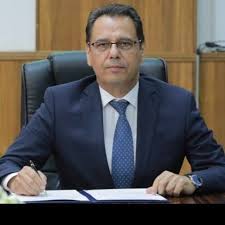
Uzbekistan–U.S. Higher Education Cooperation Enters a New Stage: Opportunities and Prospects within the C5+1 Format
Today one of the priority directions of Uzbekistan’s foreign policy is the expansion of strategic partnerships and the exchange of modern knowledge and scientific innovations. In this process, cooperation with the United States–especially in higher education, science, and innovation–is reaching a new level.
Under the leadership of President Shavkat Mirziyoyev, the reforms implemented in education, the state policy aimed at human capital development, and the integrated “education–science–innovation” system have positioned Uzbekistan as an attractive partner on the international stage. Moreover, the C5+1 format between Central Asia and the United States is opening new opportunities for regional cooperation. Within this framework, Uzbekistan’s collaboration with American universities is already producing practical results not only in education but also in science, technology, and innovation.
Investing in Human Capital – Development through Education
One of the earliest areas of Uzbekistan–U.S. cooperation is the deep teaching of the English language and the introduction of modern pedagogical practices. Every year, dozens of experienced instructors from U.S. universities visit Uzbekistan’s higher education institutions through programs such as Fulbright, English Language Fellows Program, and English Teaching Assistants, working alongside local specialists.
In addition, under the ACCESS program supported by the U.S. Department of State, children from low-income families are given the opportunity to study English intensively for two years. Currently, these centers operate successfully under 11 universities. Each center receives a grant of around $30,000–50,000, which is used to fund teaching materials, teacher salaries, interactive excursions for students, and other educational expenses.
“American Window” and “Summer Camp”: Platforms of Inspiration
The “American Window” information center established at Karakalpak State University has become a new symbol of dialogue between the two nations in education and culture. The center houses over 150 English-language books, journals, and dictionaries, as well as brochures and guides about admission to U.S. universities. It serves not only as an information hub but also as a venue for Speaking Clubs, interactive lessons, and cultural events.
During summer holidays, the “Summer Camp” project provides schoolchildren with the opportunity to learn English through interactive classes, games, and excursions. In 2022, 150 children participated in the summer camp organized by the Samarkand State Institute of Foreign Languages, where they improved their language proficiency and developed cross-cultural communication skills.
EducationUSA and Inter-University Cooperation: Opening New Doors
The EducationUSA program under the U.S. Embassy is helping young Uzbeks pursue higher education at American universities and participate in scholarship and grant programs. Embassy representatives regularly visit Uzbek universities and hold practical seminars for students.
Furthermore, projects such as UNICEN and the Faculty Enrichment Program (FEP), implemented by the American Councils for International Education, actively support university partnerships. Over the past two years alone, 22 universities in Uzbekistan have established direct collaboration with more than 25 U.S. universities. During the 2023–2024 academic year, nine professors and researchers from Uzbekistan took part in 4–5 month professional development courses in the United States.
Webster University and New Steps Forward
Webster University in Tashkent, the first U.S. university branch in Uzbekistan, continues to expand its academic programs and increase student enrollment each year. Its success has become an inspiration for other American universities considering operations in Uzbekistan.
The Government of Uzbekistan has proposed that U.S. universities open new branches, establish dual-degree programs, and engage American professors for both short- and long-term teaching initiatives. Priority areas of cooperation include engineering, energy, medicine, architecture, and information technology (IT).
New Directions with Utah and Opportunities within the C5+1 Framework
In recent years, Uzbekistan–U.S. cooperation has taken on a new strategic dimension. In 2024 and 2025, a number of high-level meetings were held in Tashkent and Samarkand with delegations led by Stuart Adams, President of the Utah State Senate. These meetings focused on bilateral scientific and educational projects, faculty exchange, and collaboration in innovation and artificial intelligence.
Utah is one of the most economically stable states in the U.S. and is currently experiencing a shortage of professionals in engineering and medicine. Therefore, practical cooperation with Uzbek universities in these fields is mutually beneficial.
Within the C5+1 framework, the U.S. side is also supporting cooperation in the areas of science and education development, climate change, efficient water resource management, energy, and innovative economy across Central Asia.
Science and Innovation – For Shared Progress
Uzbekistan–U.S. cooperation is not limited to language education or student exchanges. Joint projects in scientific research, startups, innovation labs, artificial intelligence, and green technologies are being developed, alongside plans to organize joint scientific forums.
Currently, more than 40 universities in Uzbekistan are working with over 25 American universities and research centers under memoranda of understanding. These partnerships include faculty development programs, joint research, conferences, and academic exchanges.
The growing cooperation between Uzbekistan and the United States in higher education—especially within the C5+1 framework—will naturally move to an even higher level in the coming years. This partnership strengthens mutual trust and friendship, unlocks the potential of youth, and accelerates innovative development.
Every investment in human capital is an investment in the future. In this sense, collaboration with American universities is a crucial step for Uzbekistan in expanding access to knowledge, experience, and scientific opportunity.
Kongratbay Sharipov,
Minister of Higher Education, Science and Innovation
of the Republic of Uzbekistan
📅 11.11.2025
Uzbekistan news
Prospects for Uzbekistan–Serbia Cooperation in the ICT Sector
Prospects for Cooperation between the Republic of Uzbekistan and the Republic of Korea within the Framework of the Central Asia–Republic of Korea Cooperation Forum
THE SCO’S NEW FINANCIAL ARCHITECTURE: FROM COORDINATION TO PRACTICAL DEVELOPMENT MECHANISMS
INFORMATION NOTE ON COOPERATION WITH SERBIA
On September 8–10th, Tashkent to gather International Textile Industry Professionals
The Seoul Summit: Uzbekistan in the New Industrial Architecture of C5+1
New Opportunities to Expand Cooperation Between Uzbekistan and Serbia
Uzbekistan and Azerbaijan: Turning Political Alignment into Economic Growth
BRIGHT PROSPECTS FOR MUTUALLY BENEFICIAL PARTNERSHIP
Transport and Logistics Connectivity of the SCO Amid Geopolitical Turbulence: New Opportunities for the Regions
Business in Uzbekistan are moving from digitalization to technological modernization
Uzbekistan and Serbia expand prospects for cooperation in ecology and environmental protection
SCO AND WATER DIPLOMACY: IN PURSUIT OF COMMON INTERESTS
TASHKENT-DELHI: A NEW STAGE OF STRATEGIC PARTNERSHIP
On September 4–6th, Samarkand will host XII Inter-Parliamentary Union Global Conference of Young Parliamentarians
The Infrastructure Already Linking Uzbekistan and Korea What Korea Has Already Built Inside Uzbekistan's Digital Economy From Fiber Optics to AI: The Scope of Uzbek-Korean Digital Cooperation The Digital Bridge Already Built Between Uzbekistan and South Korea
On September 8–10th, Tashkent to gather International Textile Industry Professionals
New Uzbekistan: A Builder of Peace and Trust
‘Mustaqillik’ Generation: New Navigators of the Silk Road
GLOBAL COMPETITION AND NEW PEACE DIPLOMACY: THE VOICE OF ENLIGHTENMENT OF NEW UZBEKISTAN IN THE GLOBAL ARENA
SCO AND WATER DIPLOMACY: IN PURSUIT OF COMMON INTERESTS
Uzbekistan’s Dialogue with Business: Five Years of Change
ON THE STATUS OF THE HOST COUNTRY AND A NEW PHASE OF INTERNATIONAL CULTURAL COOPERATION
Transport and Logistics Cooperation Between Uzbekistan and the US: A New Stage of Strategic Partnership
Reforms and Active Dialogue in Entrepreneurship: The President's 6th Open Dialogue as a Catalyst for New Economic Growth
How China–Kyrgyzstan–Uzbekistan railway is redrawing the economic map of the continent
G20 and Uzbekistan: Investment, Industry and Trade in a New Economic Reality
CULTURE — THE TREE OF A NATION'S TRUST UZBEKISTAN — THE UNITED STATES
Uzbekistan and Kyrgyzstan: A New Stage and Future Prospects for Environmental Cooperation
Uzbekistan–Azerbaijan: Environmental cooperation emerges as a key pillar of the strategic partnership

-
 Ministry of Foreign Affairs of the Republic of Uzbekistan
 -
 Diplomatic Service of the Ministry of Foreign Affairs
 -
 State Committee for Tourism Development
 -
Ministry of Investments and Foreign Trade of the Republic of Uzbekistan
-
 invest.gov.uz
 -
-

-

-
-

-

-

of Uzbekistan in the Republic
of Latvia
When using the information, a link to www.uzembassy.lv
must be provided.
All rights reserved
Address
Address: Riga c., LV-1010. 11-11 Elizabetes Str., Latvia
Phone: 37167322424
Fax: 37167322306
Email: embassy@uzbekistan.lv
Useful links
HomeIssuance of biometric passport for departure abroad
Certificate to return to Uzbekistan
Withdrawal of citizenship
Loss of citizenship