Phone
Consular Issues
Phone
Uzbekistan news
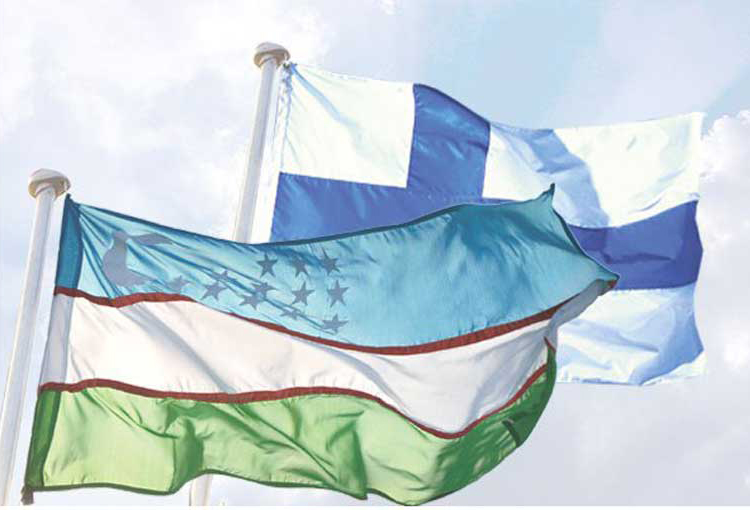
Uzbekistan and Finland: An Economic Partnership Built on Technology and Trust
Historical Background
The history of Uzbek - Finnish relations dates back to the early 1990s, when Finland became one of the first countries to recognize the independence of the Republic of Uzbekistan - on 30 December 1991. Just two months later, on 26 February 1992, diplomatic relations were officially established, marking the beginning of a new chapter based on mutual respect, trust, and a shared commitment to technological progress.
The first high-level visits in 1992 laid the foundation for political dialogue. During that year, Uzbekistan took part in the signing ceremonies of the OSCE Helsinki Final Act and the Paris Charter. In October of the same year, Finnish President Mauno Koivisto paid an official visit to Tashkent, further consolidating the partnership. Since then, cooperation between the two countries has developed steadily across political and economic spheres.
Legal and Institutional Framework
Today, the legal framework governing Uzbek-Finnish relations comprises eight active documents, including two interstate and six intergovernmental agreements. These include the 1992 Agreements on Mutual Protection of Investments and on Trade, Economic, and Technological Cooperation, as well as treaties on air and road transport (1996 and 1997) and agreements on avoiding double taxation and on customs cooperation.
New initiatives reflecting the modern stage of partnership are under consideration - such as a draft agreement on visa exemption for holders of diplomatic passports, a memorandum on cooperation in environmental protection, and a protocol on consultations between the foreign ministries.
Cooperation Priorities: Technology, Ecology, and Innovation
Finland, recognized globally as a leader in innovation, sustainable development, and green technologies, serves as a valuable model for Uzbekistan in its transition toward a digital and energy-efficient economy.
In 2017, a business delegation of nine Finnish companies specializing in engineering, agribusiness, telecommunications, and logistics visited Uzbekistan to participate in the AgroWorld Uzbekistan international exhibition. This visit gave new impetus to direct business-to-business engagement.
In April 2019, Tashkent hosted a delegation led by Mikko Koiranen, Deputy State Secretary of Finland for Foreign Economic Relations. The delegation included 29 representatives from leading companies and organizations - such as Nokia Siemens Networks, ABB, Wärtsilä, Uponor Infra, Tikkurila, ISKU, and Airbus Defense and Space. Discussions focused on implementing Finnish technologies in Uzbekistan, joint energy and raw material processing projects, and opportunities in smart cities and water management.
Later, in November 2019, Antti Koskelainen from the Finnish export credit agency Finnvera visited Tashkent, marking an important step toward deeper financial and investment cooperation. Meetings with the Ministry of Investment, Industry and Trade, the Ministry of Finance, and the Agency for State Asset Management addressed mechanisms for crediting and insuring Finnish export operations in Uzbekistan.
Trade: A Threefold Growth in One Year
Economic cooperation between Uzbekistan and Finland continues to expand. The two countries enjoy Most-Favored-Nation trade status, and regular meetings of the Joint Intergovernmental Commission on Trade, Economic, and Scientific-Technical Cooperation (five sessions to date, the latest held in Tashkent in February 2023) ensure a dynamic dialogue.
Trade turnover has shown remarkable growth in recent years: from USD 48.45 million in 2020 to USD 151.7 million in 2024 - an increase of over threefold. This upward trend reflects intensified business ties and growing interest among Finnish companies in the Uzbek market.
Investment and Business Cooperation
Finland is viewed in Uzbekistan not only as a trading partner but also as a source of innovation and investment. Currently, 14 enterprises with Finnish capital operate in Uzbekistan - four joint ventures and ten with 100% foreign ownership - active in sectors such as electronics, software, energy, agriculture, food processing, chemicals, and telecommunications equipment.
Finnish businesses are showing strong interest in renewable energy, waste recycling, eco-construction, water management, and sustainable agriculture. Uzbekistan, in turn, offers attractive conditions for investors - tax incentives, developed industrial infrastructure, and access to a 75-million-strong Central Asian market.
Finland’s Economic Potential: Opportunities for Partnership
Finland is one of Europe’s most advanced and innovative economies, known for its high living standards, sound macroeconomics, and strong industrial base. In 2024, its GDP exceeded USD 320 billion, with GDP per capita around USD 58,000. The economy is well-balanced, with services accounting for over 70%, industry 27%, and agriculture 2.5%. Inflation remains one of the lowest in Europe - around 3% - ensuring a stable and predictable business environment.
For Uzbekistan, cooperation with Finland opens wide-ranging opportunities for industrial, investment, and technological partnership, including:
- Energy: joint projects in renewable energy, smart grids, and energy storage; development of solar panel and wind equipment manufacturing.
- Water and Environment: Finnish expertise in water purification, waste processing, and efficient water management, particularly relevant for agriculture and urban infrastructure.
- Engineering and Electronics: creation of joint ventures in industrial equipment, automation systems, and telecommunications.
- Construction and Green Materials: Finnish participation in energy-efficient building projects, production of eco-friendly insulation and finishing materials, and smart home systems.
- Education and Science: joint engineering and IT education programs, establishment of research laboratories, and introduction of dual education models based on Finnish experience.
- Agro-Industry: cooperation in precision farming, agricultural digitalization, and production of eco-friendly export-oriented goods.
Finland’s experience in sustainable development and digital transformation makes it a strategic partner for Uzbekistan’s “green economy” agenda and industrial modernization. At the same time, Uzbekistan - with its abundant natural resources, young workforce, and expanding domestic market - offers Finnish companies favorable conditions for localization and regional expansion.
A Look Ahead
The partnership between Uzbekistan and Finland goes beyond traditional economic cooperation. It stands as an example of how innovation and sustainability can form the foundation of long-term, mutually beneficial relations. Joint projects in digitalization, green energy, and education are paving new avenues for the exchange of expertise, technologies, and investments.
Finland regards Uzbekistan as a reliable partner in Central Asia, while Uzbekistan views Finland as a strategic ally in advancing its “smart growth” model and building a knowledge-based economy.
The synergy between Finland’s pragmatic northern experience and Uzbekistan’s dynamic eastern development creates a powerful foundation for further strengthening bilateral relations - grounded in trust, innovation, and mutual respect.
📅 06.11.2025
Uzbekistan news
BRIGHT PROSPECTS FOR MUTUALLY BENEFICIAL PARTNERSHIP
Transport and Logistics Connectivity of the SCO Amid Geopolitical Turbulence: New Opportunities for the Regions
Business in Uzbekistan are moving from digitalization to technological modernization
Uzbekistan and Serbia expand prospects for cooperation in ecology and environmental protection
SCO AND WATER DIPLOMACY: IN PURSUIT OF COMMON INTERESTS
TASHKENT-DELHI: A NEW STAGE OF STRATEGIC PARTNERSHIP
On September 4–6th, Samarkand will host XII Inter-Parliamentary Union Global Conference of Young Parliamentarians
The Infrastructure Already Linking Uzbekistan and Korea What Korea Has Already Built Inside Uzbekistan's Digital Economy From Fiber Optics to AI: The Scope of Uzbek-Korean Digital Cooperation The Digital Bridge Already Built Between Uzbekistan and South Korea
On September 8–10th, Tashkent to gather International Textile Industry Professionals
New Uzbekistan: A Builder of Peace and Trust
‘Mustaqillik’ Generation: New Navigators of the Silk Road
GLOBAL COMPETITION AND NEW PEACE DIPLOMACY: THE VOICE OF ENLIGHTENMENT OF NEW UZBEKISTAN IN THE GLOBAL ARENA
SCO AND WATER DIPLOMACY: IN PURSUIT OF COMMON INTERESTS
Uzbekistan’s Dialogue with Business: Five Years of Change
ON THE STATUS OF THE HOST COUNTRY AND A NEW PHASE OF INTERNATIONAL CULTURAL COOPERATION
Transport and Logistics Cooperation Between Uzbekistan and the US: A New Stage of Strategic Partnership
Reforms and Active Dialogue in Entrepreneurship: The President's 6th Open Dialogue as a Catalyst for New Economic Growth
How China–Kyrgyzstan–Uzbekistan railway is redrawing the economic map of the continent
G20 and Uzbekistan: Investment, Industry and Trade in a New Economic Reality
CULTURE — THE TREE OF A NATION'S TRUST UZBEKISTAN — THE UNITED STATES
Uzbekistan and Kyrgyzstan: A New Stage and Future Prospects for Environmental Cooperation
Uzbekistan–Azerbaijan: Environmental cooperation emerges as a key pillar of the strategic partnership
Samarkand hosted an international scientific and practical conference on “Brother Cities: A New Model for Sustainable Development and Public Diplomacy”
Uzbekistan and Kyrgyzstan: Strategic Partnership, Institutionalization, and Mechanisms of Cooperation
Uzbekistan–Kyrgyzstan: From Border Neighbourhood to Long-Term Economic Cooperation
Uzbekistan and Kyrgyzstan: Transitioning to Joint Value Chains
Towards a Unified Intellectual Space of the Turkic World: A New Era of Scientific Integration in the Renaissance Age
Uzbekistan – Kyrgyzstan: Prospects for Cooperation on Water Resources
Central Asia and Azerbaijan: Prospects for a Common Transport Area
Central Asia and Azerbaijan Are Emerging as a Shared Hub for Startups, Investors, and Talent

-
 Ministry of Foreign Affairs of the Republic of Uzbekistan
 -
 Diplomatic Service of the Ministry of Foreign Affairs
 -
 State Committee for Tourism Development
 -
Ministry of Investments and Foreign Trade of the Republic of Uzbekistan
-
 invest.gov.uz
 -
-

-

-
-
-

-

of Uzbekistan in the Republic
of Latvia
When using the information, a link to www.uzembassy.lv
must be provided.
All rights reserved
Address
Address: Riga c., LV-1010. 11-11 Elizabetes Str., Latvia
Phone: 37167322424
Fax: 37167322306
Email: embassy@uzbekistan.lv
Useful links
HomeIssuance of biometric passport for departure abroad
Certificate to return to Uzbekistan
Withdrawal of citizenship
Loss of citizenship