Phone
Consular Issues
Phone
Uzbekistan news
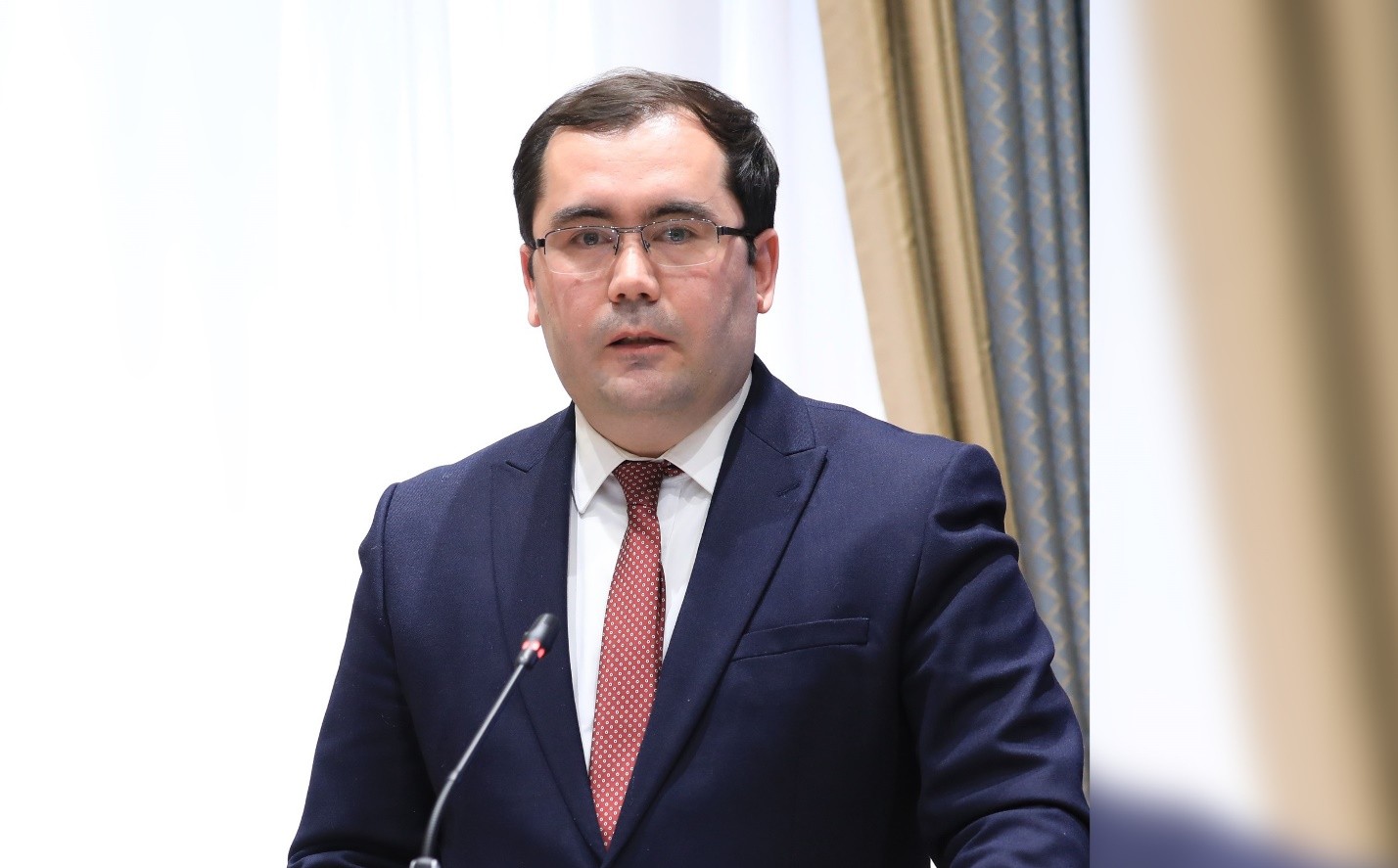
A New Chapter in Uzbekistan–EU Relations: Why the EPCA Matters
On 24 October 2025, Uzbekistan and the European Union signed the Enhanced Partnership and Cooperation Agreement (EPCA) — a comprehensive framework that culminates negotiations launched in February 2019 and initialled in July 2022. More than a ceremonial milestone, the EPCA codifies a strategic upgrade in our relationship with the EU. It is broad in scope — nine titles, 356 articles, and 14 annexes — and practical in ambition: to align our cooperation with the realities of a rapidly changing world economy while reinforcing the rule-of-law foundations of sustainable development at home.
The agreement’s timing is revealing. Uzbekistan’s recent balanced, multi-vector foreign policy and people-centred reforms — strengthening the rule of law, expanding public administration openness, and advancing market reforms — have laid the necessary groundwork. These steps in human rights and governance have increased international confidence, enabling a rules-based partnership with Europe. The EPCA is both a vote of confidence in Uzbekistan’s reform trajectory and a tangible roadmap to deliver measurable outcomes.
Economically, the EPCA offers a clear pathway for integration and growth. It promotes approximation to EU norms on technical regulations, product safety, and sanitary and phytosanitary measures. The agreement is designed to reduce non-tariff barriers, simplify border procedures, and make our exporters more competitive in the EU market. It encourages joint ventures and industrial clustering, extends agro-processing and manufacturing value chains, and supports energy efficiency and industrial modernisation. In short: more trade, more investment, and more quality jobs at home.
Human capital is an equally central pillar. The EPCA expands cooperation across education, science, skills development, and public health. It encourages joint university programmes, faculty and student exchanges, and research grants — mechanisms that accelerate knowledge transfer and help align our skills base with the demands of a digital and green economy. The spillovers are immediate and tangible: better public services, higher productivity, and new career pathways for our young people.
The rule-of-law dimension is another strategic gain. Deeper cooperation on judicial reform, anti-corruption, data protection, and cybersecurity increases predictability for investors and protections for citizens. The agreement’s chapter on foreign and security policy expands dialogue on conflict prevention, crisis management, non-proliferation, and export controls. This cooperation supports regional stability, which is essential for long-term growth.
Connectivity is the backbone that makes these ambitions feasible. Through synergies with the EU’s Global Gateway initiative and the Trans-Caspian Transport Corridor, the EPCA supports logistics hubs, border modernisation, and greener infrastructure. Better connectivity means lower trade costs, faster delivery times, and diversified export routes — practical levers for competitiveness. It also enables cooperation on water management, climate adaptation, and resilient energy systems — strategic priorities for a land-linked Central Asian economy.
Critically, the EPCA opens structured avenues for collaboration on critical raw materials needed for the green and digital transitions. This builds on the EU-Uzbekistan memorandum of understanding signed in 2024. It creates opportunities to upgrade domestic standards, attract responsible investment, and join higher segments of global value chains, while maintaining environmental and social safeguards.
Beyond the text, the joint statement issued at the signing underscores a shared commitment to the UN Charter and to the principles of independence, sovereignty, and territorial integrity — principles that guide our positions in international fora. It also welcomes the outcomes of the EU–Central Asia Summit, including plans for a Central Asia–EU Economic Forum and a Trans-Caspian Connectivity Investors Forum in Tashkent in 2025. In short, the EPCA is embedded in a wider, forward-looking regional agenda.
In practical terms, success requires implementation of three clear priorities: coordinated institution building, enhanced business support, and transparent, data-driven tracking. These will ensure commitments translate to outcomes.
First, institutional coordination. Translating commitments into outcomes requires a whole-of-government mechanism with clear mandates, timelines, and dashboards. A national EPCA coordination council, supported by technical working groups, should steer approximation to EU standards, monitor progress, and troubleshoot bottlenecks.
Second, business enablement. Firms need guidance to navigate new standards and opportunities. An 'EU Helpdesk' for exporters and investors would offer practical advice on certification, rules of origin, and compliance. This would turn legal text into business practice. Expanding the capacity of testing, inspection, and certification bodies will further reduce transaction costs and speed market entry.
Third, open, data-driven delivery. Customs and trade facilitation should be fully digitised through single-window systems and interoperable data exchange. Regular public reporting on milestones — such as education partnerships, financed projects, and adopted standards — will sustain credibility and invite feedback from business and civil society.
The EPCA also aligns with Uzbekistan’s WTO accession path by encouraging market-based reforms and transparent, rules-based trade. As reforms deepen, our economy will see more diversified exports, stronger investor protections, and a more competitive domestic market. These outcomes raise household incomes and expand opportunity.
This agreement is ambitious by design. Ambition alone is empty; execution alone is stagnant. The EPCA combines both — setting a high bar and supplying the means to reach it. By acting decisively, we turn this framework into a catalyst for inclusive growth, institutional maturity, and global credibility.
Ultimately, the EPCA is more than a diplomatic success; it is the engine for Uzbekistan’s reform agenda. By linking citizen welfare, business competitiveness, and international engagement, the EPCA puts us on a path to fundamental transformation. The critical task ahead is to deliver on this promise and make the Uzbekistan-EU partnership impactful and enduring.
By Eldor Tulyakov,
Executive Director, Development Strategy Centre, Uzbekistan
📅 06.11.2025
Uzbekistan news
BRIGHT PROSPECTS FOR MUTUALLY BENEFICIAL PARTNERSHIP
Transport and Logistics Connectivity of the SCO Amid Geopolitical Turbulence: New Opportunities for the Regions
Business in Uzbekistan are moving from digitalization to technological modernization
Uzbekistan and Serbia expand prospects for cooperation in ecology and environmental protection
SCO AND WATER DIPLOMACY: IN PURSUIT OF COMMON INTERESTS
TASHKENT-DELHI: A NEW STAGE OF STRATEGIC PARTNERSHIP
On September 4–6th, Samarkand will host XII Inter-Parliamentary Union Global Conference of Young Parliamentarians
The Infrastructure Already Linking Uzbekistan and Korea What Korea Has Already Built Inside Uzbekistan's Digital Economy From Fiber Optics to AI: The Scope of Uzbek-Korean Digital Cooperation The Digital Bridge Already Built Between Uzbekistan and South Korea
On September 8–10th, Tashkent to gather International Textile Industry Professionals
New Uzbekistan: A Builder of Peace and Trust
‘Mustaqillik’ Generation: New Navigators of the Silk Road
GLOBAL COMPETITION AND NEW PEACE DIPLOMACY: THE VOICE OF ENLIGHTENMENT OF NEW UZBEKISTAN IN THE GLOBAL ARENA
SCO AND WATER DIPLOMACY: IN PURSUIT OF COMMON INTERESTS
Uzbekistan’s Dialogue with Business: Five Years of Change
ON THE STATUS OF THE HOST COUNTRY AND A NEW PHASE OF INTERNATIONAL CULTURAL COOPERATION
Transport and Logistics Cooperation Between Uzbekistan and the US: A New Stage of Strategic Partnership
Reforms and Active Dialogue in Entrepreneurship: The President's 6th Open Dialogue as a Catalyst for New Economic Growth
How China–Kyrgyzstan–Uzbekistan railway is redrawing the economic map of the continent
G20 and Uzbekistan: Investment, Industry and Trade in a New Economic Reality
CULTURE — THE TREE OF A NATION'S TRUST UZBEKISTAN — THE UNITED STATES
Uzbekistan and Kyrgyzstan: A New Stage and Future Prospects for Environmental Cooperation
Uzbekistan–Azerbaijan: Environmental cooperation emerges as a key pillar of the strategic partnership
Samarkand hosted an international scientific and practical conference on “Brother Cities: A New Model for Sustainable Development and Public Diplomacy”
Uzbekistan and Kyrgyzstan: Strategic Partnership, Institutionalization, and Mechanisms of Cooperation
Uzbekistan–Kyrgyzstan: From Border Neighbourhood to Long-Term Economic Cooperation
Uzbekistan and Kyrgyzstan: Transitioning to Joint Value Chains
Towards a Unified Intellectual Space of the Turkic World: A New Era of Scientific Integration in the Renaissance Age
Uzbekistan – Kyrgyzstan: Prospects for Cooperation on Water Resources
Central Asia and Azerbaijan: Prospects for a Common Transport Area
Central Asia and Azerbaijan Are Emerging as a Shared Hub for Startups, Investors, and Talent

-
 Ministry of Foreign Affairs of the Republic of Uzbekistan
 -
 Diplomatic Service of the Ministry of Foreign Affairs
 -
 State Committee for Tourism Development
 -
Ministry of Investments and Foreign Trade of the Republic of Uzbekistan
-
 invest.gov.uz
 -

-

-

-

-

-

-

of Uzbekistan in the Republic
of Latvia
When using the information, a link to www.uzembassy.lv
must be provided.
All rights reserved
Address
Address: Riga c., LV-1010. 11-11 Elizabetes Str., Latvia
Phone: 37167322424
Fax: 37167322306
Email: embassy@uzbekistan.lv
Useful links
HomeIssuance of biometric passport for departure abroad
Certificate to return to Uzbekistan
Withdrawal of citizenship
Loss of citizenship