Phone
Consular Issues
Phone
Uzbekistan news
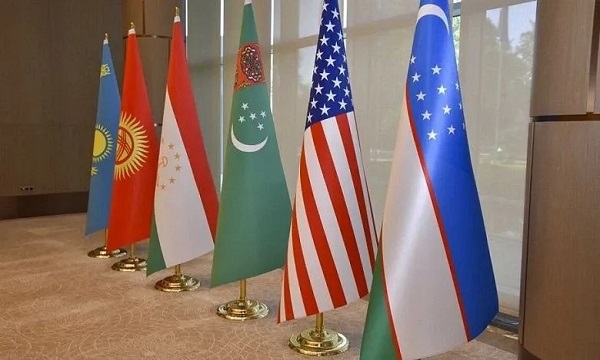
Uzbekistan–USA: Strategic Partnership as a Driver of Interregional Cooperation
President of Uzbekistan Shavkat Mirziyoyev has arrived in Washington on a working visit to participate in the “C5+1” summit of the leaders of Central Asian countries and the United States and to hold meetings with U.S. President Donald Trump, members of the Senate and the House of Representatives, as well as heads of U.S. government departments and agencies.
The C5+1 format, launched in November 2015 in Samarkand, has become an important mechanism for coordination and cooperation in areas such as regional development, economic resilience, environmental protection, energy, and security. Its primary goal is to establish a permanent platform for diplomatic dialogue, exchange views on pressing issues, and strengthen connectivity in the fields of transport, energy, trade, business, and humanitarian engagement. The Joint Declaration on Partnership and Cooperation, adopted at the first meeting, reaffirmed the United States’ commitment to supporting the sovereignty, independence, and territorial integrity of the Central Asian countries.
The first C5+1 leaders’ summit, held in New York in September 2023, gave a strong impetus to advancing the comprehensive agenda of the platform and marked the launch of new initiatives, including the B5+1 Private Sector Business Platform (Almaty, March 2024) and the Critical Minerals Dialogue (February 2024). Since its inception, the format has held 13 ministerial meetings and three high-level gatherings, as well as specialized forums on climate change, development, Afghanistan, and other priority areas.
Uzbekistan has taken an active and constructive role within the C5+1, consistently advocating for the institutionalization of cooperation, enhanced border-security coordination, intensified action on climate and environmental challenges, and the continuation of projects in trade, investment, transport, and energy. Tashkent also supports initiatives related to Afghanistan. Many Uzbek initiatives have been endorsed and implemented in practice, including the establishment of the Virtual C5+1 Secretariat (2021), the TIFA meetings (Samarkand, March 2023), and projects on artificial intelligence and educational cooperation under the C5+1 framework.
The impact of these multilateral initiatives is evident: strengthened regional cooperation has opened new export routes, enhanced investment attractiveness, and created expert-exchange platforms — all contributing to the overall resilience of Central Asia.
Uzbekistan’s active engagement in the C5+1 format is fully aligned with its broader policy of deepening bilateral cooperation with the United States, which continues to expand across all key areas - politics, security, the economy, science, and culture.
Since the establishment of diplomatic relations on February 19, 1992, Uzbekistan and the United States have made substantial progress. A milestone was President Mirziyoyev’s official visit to the United States on May 15–17, 2018, which laid the foundation for a new era of strategic partnership. The President has also met with U.S. leaders on various multilateral platforms — on the sidelines of the Riyadh Summit in May 2017 and during the UN General Assembly sessions in New York in September 2017 and 2025.
The bilateral political dialogue evolved in 2021 into the Uzbekistan–U.S. Strategic Partnership Dialogue, whose sessions are held alternately in the two capitals. The fourth meeting, held in Washington on November 13, 2024, concluded with an agreement to elevate its status to the Expanded Strategic Partnership Dialogue.
The regular visits of senior U.S. officials and special envoys to Uzbekistan further underscore the growing intensity of the partnership.
In 2025, Uzbekistan hosted several high-level American representatives, including Paolo Zampolli, the Special Representative of the U.S. President for Global Partnerships (August 28 – September 1, 2025), and Sergio Góvar, the Special Envoy for South and Central Asian Affairs, accompanied by First Deputy Secretary of State Christopher Landau (October 25–27, 2025).
A clear demonstration of the high level of bilateral relations was the official visit of Foreign Minister Bakhtiyor Saidov to Washington on April 8–10, 2025, during which he met with U.S. Secretary of State Marco Rubio and National Security Advisor Michael Waltz. The sides discussed a wide range of regional and international issues, paying particular attention to strengthening the strategic partnership between Uzbekistan and the United States. Special emphasis was placed on cooperation in security, economic development, regional connectivity, and sustainable growth in Central Asia.
Inter-parliamentary ties are also expanding dynamically. In 2018, the Uzbekistan Caucus was established in the U.S. House of Representatives, with participation from both parties. Regular visits of congressional delegations contribute to the strengthening of parliamentary diplomacy.
Economic and investment cooperation is developing at a robust pace. The bilateral trade turnover and the number of joint projects continue to grow annually. Major American companies such as Air Products, General Electric, General Motors, Boeing, Honeywell, The Coca-Cola Company, and John Deere are successfully operating in Uzbekistan.
During the IV Tashkent International Investment Forum on June 9, 2025, the U.S.–Uzbekistan Business Forum was held with the participation of around 100 U.S. companies. Memorandums of understanding were signed and negotiations held with Boeing, FLS, Visa, NASDAQ, Air Products, Franklin Templeton, Morgan Stanley, and others.
The United States supports Uzbekistan’s accession to the World Trade Organization (WTO). In December 2024, the parties signed a protocol concluding bilateral negotiations on accession — an important milestone in Uzbekistan’s integration into the global trading system.
The cultural and humanitarian sphere constitutes a significant dimension of bilateral cooperation. Sister-city relations have been established between Tashkent–Seattle, Bukhara–Santa Fe, and Zarafshan–Clinton. These municipal partnerships foster cultural and educational exchange, tourism, and business collaboration.
Educational cooperation is also advancing: the Tashkent branch of Webster University (opened in 2019) and the American University of Technology (AUT), established in partnership with Arizona State University, play a key role. On August 30, 2025, an American Corner — a cultural and educational hub promoting academic and scientific collaboration — was inaugurated at AUT.
In October 2023, Tashkent hosted the Education USA Regional Forum with the participation of 65 U.S. universities. The activities of American Councils for International Education (ACIE) have resumed, and work is underway to restore the Peace Corps presence in Uzbekistan.
Transport connectivity has also improved: since July 2017, direct Tashkent–New York–Tashkent flights operated by the national airline have resumed, facilitating business and humanitarian exchanges.
Furthermore, the United States continues to support Uzbekistan’s domestic reforms. Reports by the U.S. Department of State and the Department of Labor highlight progress in combating human trafficking and eradicating the worst forms of child labour. Uzbek cotton has been removed from the lists of goods produced with forced child labour; in December 2020, Uzbekistan was delisted from the “Countries of Particular Concern” regarding religious freedom; and in April 2024, the U.S. Trade Representative (USTR) removed Uzbekistan from the Special 301 Watch List on intellectual property protection.
In summary, President Shavkat Mirziyoyev’s current visit to the United States and participation in the C5+1 Summit will provide a new and powerful impetus for the practical implementation of initiatives on both the multilateral and bilateral agenda. The visit will undoubtedly strengthen political dialogue, accelerate the realization of investment agreements, expand educational and cultural exchanges, and give fresh momentum to joint projects in energy, transport, and digital technologies.
For Uzbekistan, this visit represents another opportunity to reaffirm its status as an active and reliable partner in Central Asia; for the United States, it serves as a platform to deepen engagement in a region of strategic importance for global stability and economic growth.
Dunyo IA
📅 06.11.2025
Uzbekistan news
Inaugural Central Asia – Republic of Korea Summit at the highest level opens in Seoul
Uzbekistan and Korea: Advancing Green Energy and New Technologies
Uzbekistan and the Republic of Korea in the Emerging Framework for Cooperation with Central Asia
Tashkent brings together leaders and key deals in Polymer Market of Central Asia
The 1st Republic of Korea–Central Asia Summit: Why This Moment Matters
Uzbekistan – Serbia: A New Geography of Industrial Cooperation
The President of Uzbekistan’s Visit to Serbia: A New Stage in Economic Partnership Between Central Asia and the Balkans
Uzbekistan and the Republic of Korea: From Investment Partnership to Technological Cooperation
Regional Approaches to SDG Delivery: What Can Central Asia Offer?
Uzbekistan Opens a Balkan Gateway to Europe
The SCO Bishkek Summit: The Economic Agenda of a New Stage of Cooperation
Tourism: A new dimension of Uzbekistan-Kyrgyzstan partnership
Uzbekistan’s Role in the SCO: Economy, Security and Regional Cooperation
Economic Cooperation of Uzbekistan within the SCO at a New Stage of Development
Uzbekistan and Serbia: From Labour Mobility to a Strategic Partnership in Human Capital
Prospects for Uzbekistan–Serbia Cooperation in the ICT Sector
Prospects for Cooperation between the Republic of Uzbekistan and the Republic of Korea within the Framework of the Central Asia–Republic of Korea Cooperation Forum
THE SCO’S NEW FINANCIAL ARCHITECTURE: FROM COORDINATION TO PRACTICAL DEVELOPMENT MECHANISMS
INFORMATION NOTE ON COOPERATION WITH SERBIA
On September 8–10th, Tashkent to gather International Textile Industry Professionals
The Seoul Summit: Uzbekistan in the New Industrial Architecture of C5+1
New Opportunities to Expand Cooperation Between Uzbekistan and Serbia
Uzbekistan and Azerbaijan: Turning Political Alignment into Economic Growth
BRIGHT PROSPECTS FOR MUTUALLY BENEFICIAL PARTNERSHIP
Transport and Logistics Connectivity of the SCO Amid Geopolitical Turbulence: New Opportunities for the Regions
Business in Uzbekistan are moving from digitalization to technological modernization
Uzbekistan and Serbia expand prospects for cooperation in ecology and environmental protection
SCO AND WATER DIPLOMACY: IN PURSUIT OF COMMON INTERESTS
TASHKENT-DELHI: A NEW STAGE OF STRATEGIC PARTNERSHIP
On September 4–6th, Samarkand will host XII Inter-Parliamentary Union Global Conference of Young Parliamentarians

-
 Ministry of Foreign Affairs of the Republic of Uzbekistan
 -
 Diplomatic Service of the Ministry of Foreign Affairs
 -
 State Committee for Tourism Development
 -
Ministry of Investments and Foreign Trade of the Republic of Uzbekistan
-
 invest.gov.uz
 -
-

-

-
-
-

-

of Uzbekistan in the Republic
of Latvia
When using the information, a link to www.uzembassy.lv
must be provided.
All rights reserved
Address
Address: Riga c., LV-1010. 11-11 Elizabetes Str., Latvia
Phone: 37167322424
Fax: 37167322306
Email: embassy@uzbekistan.lv
Useful links
HomeIssuance of biometric passport for departure abroad
Certificate to return to Uzbekistan
Withdrawal of citizenship
Loss of citizenship