Phone
Consular Issues
Phone
Uzbekistan news
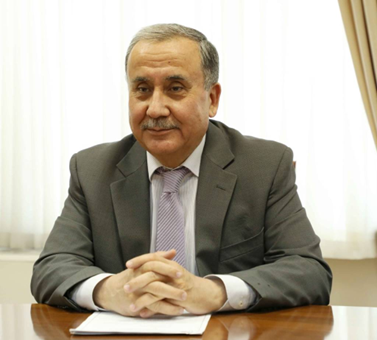
Uzbekistan’s Priorities in the Organization of Turkic States: A Factor Ensuring Sustainable Development of Turkic Countries
The evolution of the Organization of Turkic States (OTS) has attracted particular attention from the international expert community, especially in the context of sustainable development, where Uzbekistan’s accession in 2019 became a catalyst for creating new opportunities for joint progress among Turkic countries.
Originally established on October 3, 2009, as the Cooperation Council of Turkic-Speaking States, the organization has undergone significant institutional evolution and was officially renamed the Organization of Turkic States at the 8th Summit in Istanbul on November 12, 2021. This decision reflected not only the deepening interaction among member states but also their shared aspiration to develop a collective approach to contemporary risks and challenges related to the sustainable development of the Turkic world—a role in which Uzbekistan soon assumed a prominent position.
Uzbekistan’s policy within the OTS has been primarily manifested in the economic sphere, where deeper integration has become not only a sign of growing mutual trust but also a practical foundation for jointly ensuring stability and sustainable development.
By 2024, mutual trade among OTS member states exceeded $45 billion, and the combined GDP of the five member states reached $1.9 trillion, demonstrating increasing economic interdependence. According to data from the Center for Economic Research and Reforms (CERR), Uzbekistan’s trade turnover with OTS countries grew from $3.34 billion in 2016 to $9.4 billion in 2023, reaching $10 billion by 2024—nearly triple the figure from seven years earlier.
This dynamic growth in economic ties has not only strengthened mutual interest among OTS countries in regional stability but also laid a solid foundation for a new approach to security—one actively promoted by Uzbekistan in its foreign policy.
An analysis of initiatives put forward by President of Uzbekistan Shavkat Mirziyoyev at OTS summits confirms Tashkent’s consistent and systematic approach to strengthening regional security. In place of the traditional military-political dimension, Uzbekistan advocates a model in which security is understood as the outcome of sustainable development, interconnectedness, and long-term, structured cooperation.
This approach is embodied in the following strategic directions, covering key aspects of contemporary security:
First, Uzbekistan was among the first in the region to propose cooperation in responding to systemic threats. During the COVID-19 pandemic (April 2020), Tashkent proposed establishing a permanent mechanism for epidemiological surveillance, a coordination group under the OTS Secretariat, and partnership arrangements with the World Health Organization (WHO).
Following the earthquake in Türkiye (March 2023), Tashkent initiated the creation of an OTS platform for practical cooperation on disaster prevention and response, as well as the development of a multilateral agreement on risk reduction and the establishment of a Natural Disaster Monitoring Center in Tashkent.
All these measures aim at early warning, reducing vulnerability, and enhancing collective resilience—key elements of preventive security.
Second, Uzbekistan advances sustainable development through deeper economic interconnectivity.
In transport, Uzbekistan proposed joint use of the multimodal corridor “Tashkent–Karakalpakstan–Aktau–Baku–Tbilisi–Kars–Istanbul,” implementation of a “single window” system and “green corridors” along the Trans-Caspian route, and full digitalization of road transport through the eTIR system. In 2022, Uzbekistan and Azerbaijan became the first countries to successfully carry out a transport operation using electronic eTIR carnets.
In food security, Uzbekistan proposed developing a multilateral agreement on supply systems and cooperation with the Food and Agriculture Organization (FAO).
In the environmental sphere, Tashkent proposed establishing a Turkic environmental protection body headquartered in the Aral Sea region, forming an Environmental Council, and adopting a “Turkic Green Energy Transition” concept.
All these initiatives create an infrastructure-economic foundation for security, reducing dependence on external shocks and strengthening regional autonomy.
Third, Tashkent’s key contribution lies in promoting the institutionalization of the OTS. At the Samarkand Summit (November 2022), Uzbekistan proposed creating dedicated ministerial-level committees on energy, IT, healthcare, and other sectors.
Later, Uzbekistan initiated hosting the headquarters of strategically important OTS bodies in Tashkent, including the Emergency Response Center, the Council of Railway Administrations, the Turkic Investment Bank, the Research Center for Human Capital Development, and the Academy of Space Research.
During Uzbekistan’s OTS Chairmanship (2022–2023), over 100 events were held, and new cooperation platforms were established, including the Organization of Trade Unions of Turkic States and the Institute for Drought Prevention.
These measures enhance joint preparedness and rapid response capabilities to contemporary challenges, strengthen trust among member states, and support sustainable development.
Fourth, alongside deepening cooperation in humanitarian, economic, and legal spheres, Uzbekistan consistently develops avenues of interaction related to coordinating responses to threats to regional stability.
For example, at the Shusha Summit in July 2024, Uzbekistan proposed formulating unified OTS approaches to the Afghan issue in light of the new regional realities. Such initiatives reflect Tashkent’s commitment to consolidating foreign policy positions and developing a coordinated strategy on the most sensitive issues of regional stability.
Thus, Uzbekistan’s initiatives within the OTS form a comprehensive, prevention-oriented model of sustainable development, in which humanitarian, economic, environmental, and political components are viewed as interdependent. Tashkent’s approach not only aligns with current trends in international relations but also creates conditions for strengthening the strategic autonomy of the Turkic world amid global fragmentation.
However, it should be noted that this model is not developed in isolation. On the contrary, it is organically complemented by the OTS’s external openness and its aspiration to integrate into the international architecture of relations through cooperation with key global and regional institutions. This helps avoid duplication, enhances the legitimacy of OTS initiatives, and aligns them with international standards.
In this process, Uzbekistan plays a significant role by consistently promoting synergy between the OTS and multilateral platforms, particularly in epidemiological, environmental, and humanitarian areas.
The OTS maintains especially close cooperation with the United Nations and its specialized agencies. Uzbekistan’s 2021 initiative to establish a Turkic environmental body under UN auspices, headquartered in the Aral Sea region, directly integrates regional efforts into the global environmental agenda.
Proposals for cooperation with the UN Food and Agriculture Organization (FAO) (2022) and collaboration with the World Health Organization (WHO) (2020) further demonstrate the desire to leverage the UN’s expertise and institutional capacity to implement homegrown security mechanisms.
Additionally, Tashkent initiated partnerships with the UN Office for Disaster Risk Reduction (UNDRR) and the Global Facility for Disaster Reduction and Recovery (GFDRR) in the context of establishing the Natural Disaster Monitoring Center (2023), underscoring the OTS’s commitment to the principles of sustainable development and preventive security enshrined in the UN 2030 Agenda.
Simultaneously, the OTS is expanding its international presence: in 2024, the organization obtained observer status in the Economic Cooperation Organization (ECO), submitted similar applications to the UN and the Organization of Islamic Cooperation (OIC), and strengthened ties with the EU and OSCE through its European office in Budapest. At the Budapest Informal Summit (May 2025)—the first ever organized by an observer country—the Budapest Declaration was adopted, reaffirming the OTS’s commitment to combating terrorism, cyber threats, and organized crime.
This foreign policy orientation is also confirmed by assessments from international analytical circles.
According to an analytical report by the Global Security Research Center at the Geneva Centre for Security Policy (GCSP), the OTS demonstrates a unique model of regional cooperation that combines cultural identity with pragmatic measures to reduce vulnerability to transboundary threats. Experts from the “AIR Center” (Azerbaijan) note that for Central Asian countries and Azerbaijan, the OTS has become a strategic shield against external threats and a platform for asserting independence.
Thus, the OTS not only strengthens the collective resilience of its member states to external challenges but also creates a space for developing joint approaches to implementing projects aimed at the sustainable development of Turkic countries.
In this regard, Uzbekistan consistently promotes a comprehensive, prevention-oriented model for addressing risks and factors undermining sustainable development, in which traditional threats are complemented by non-traditional challenges—from pandemics and natural disasters to destructive ideologies. Particular emphasis is placed on building trust through humanitarian diplomacy, youth initiatives, cultural rapprochement, and institutional cooperation.
In the context of regional stability, Uzbekistan advocates for unified approaches to the Afghan issue, supports counter-terrorism and anti-organized crime efforts, and initiates mechanisms for collective crisis response.
The adoption of the Charter of Turkic Peace at the 11th OTS Summit in Bishkek, along with President Shavkat Mirziyoyev’s proposal at the same forum to sign a Treaty on Strategic Partnership, Eternal Friendship, and Brotherhood among Turkic States, became pivotal factors in shaping a long-term architecture of trust and shared responsibility.
Overall, Uzbekistan’s initiatives within the OTS represent a comprehensive strategy aimed at creating an alternative model for ensuring sustainable regional development, grounded in the cultural-historical commonality and economic interconnectedness of Turkic countries.
Alisher Kadyrov,
the head of the Department of the Institute for Strategic and Interregional Studies under the President of the Republic of Uzbekistan📅 08.10.2025
Uzbekistan news
BRIGHT PROSPECTS FOR MUTUALLY BENEFICIAL PARTNERSHIP
Transport and Logistics Connectivity of the SCO Amid Geopolitical Turbulence: New Opportunities for the Regions
Business in Uzbekistan are moving from digitalization to technological modernization
Uzbekistan and Serbia expand prospects for cooperation in ecology and environmental protection
SCO AND WATER DIPLOMACY: IN PURSUIT OF COMMON INTERESTS
TASHKENT-DELHI: A NEW STAGE OF STRATEGIC PARTNERSHIP
On September 4–6th, Samarkand will host XII Inter-Parliamentary Union Global Conference of Young Parliamentarians
The Infrastructure Already Linking Uzbekistan and Korea What Korea Has Already Built Inside Uzbekistan's Digital Economy From Fiber Optics to AI: The Scope of Uzbek-Korean Digital Cooperation The Digital Bridge Already Built Between Uzbekistan and South Korea
On September 8–10th, Tashkent to gather International Textile Industry Professionals
New Uzbekistan: A Builder of Peace and Trust
‘Mustaqillik’ Generation: New Navigators of the Silk Road
GLOBAL COMPETITION AND NEW PEACE DIPLOMACY: THE VOICE OF ENLIGHTENMENT OF NEW UZBEKISTAN IN THE GLOBAL ARENA
SCO AND WATER DIPLOMACY: IN PURSUIT OF COMMON INTERESTS
Uzbekistan’s Dialogue with Business: Five Years of Change
ON THE STATUS OF THE HOST COUNTRY AND A NEW PHASE OF INTERNATIONAL CULTURAL COOPERATION
Transport and Logistics Cooperation Between Uzbekistan and the US: A New Stage of Strategic Partnership
Reforms and Active Dialogue in Entrepreneurship: The President's 6th Open Dialogue as a Catalyst for New Economic Growth
How China–Kyrgyzstan–Uzbekistan railway is redrawing the economic map of the continent
G20 and Uzbekistan: Investment, Industry and Trade in a New Economic Reality
CULTURE — THE TREE OF A NATION'S TRUST UZBEKISTAN — THE UNITED STATES
Uzbekistan and Kyrgyzstan: A New Stage and Future Prospects for Environmental Cooperation
Uzbekistan–Azerbaijan: Environmental cooperation emerges as a key pillar of the strategic partnership
Samarkand hosted an international scientific and practical conference on “Brother Cities: A New Model for Sustainable Development and Public Diplomacy”
Uzbekistan and Kyrgyzstan: Strategic Partnership, Institutionalization, and Mechanisms of Cooperation
Uzbekistan–Kyrgyzstan: From Border Neighbourhood to Long-Term Economic Cooperation
Uzbekistan and Kyrgyzstan: Transitioning to Joint Value Chains
Towards a Unified Intellectual Space of the Turkic World: A New Era of Scientific Integration in the Renaissance Age
Uzbekistan – Kyrgyzstan: Prospects for Cooperation on Water Resources
Central Asia and Azerbaijan: Prospects for a Common Transport Area
Central Asia and Azerbaijan Are Emerging as a Shared Hub for Startups, Investors, and Talent

-
 Ministry of Foreign Affairs of the Republic of Uzbekistan
 -
 Diplomatic Service of the Ministry of Foreign Affairs
 -
 State Committee for Tourism Development
 -
Ministry of Investments and Foreign Trade of the Republic of Uzbekistan
-
 invest.gov.uz
 -
-

-

-

-
-

-

of Uzbekistan in the Republic
of Latvia
When using the information, a link to www.uzembassy.lv
must be provided.
All rights reserved
Address
Address: Riga c., LV-1010. 11-11 Elizabetes Str., Latvia
Phone: 37167322424
Fax: 37167322306
Email: embassy@uzbekistan.lv
Useful links
HomeIssuance of biometric passport for departure abroad
Certificate to return to Uzbekistan
Withdrawal of citizenship
Loss of citizenship