Phone
Consular Issues
Phone
Uzbekistan news
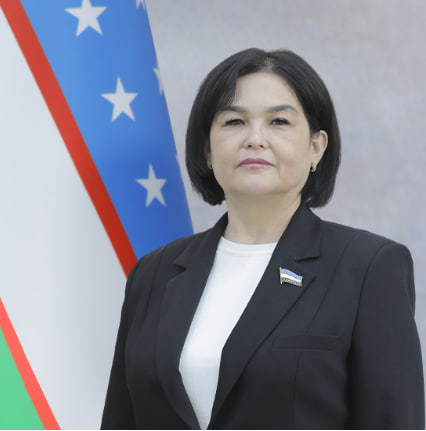
Food security in Uzbekistan begins with support for agricultural producers
Starting January 1, 2026, Value-Added Tax will be exempted for Farmers and Dehkan producers
С 1
Almost half of the population of the Republic of Uzbekistan lives in rural areas. Millions of hardworking individuals in these communities play a crucial role in ensuring the country’s food security and establishing a solid foundation for the export of agricultural products. The nation’s development cannot be limited solely to urban centers; it is equally important to ensure that life in rural and peripheral regions is comfortable and sustainable.
The care for rural residents and the stimulation of their activities merit special attention from both the state and society. Governmental support measures have become pivotal in strengthening the agricultural sector.
However, the agricultural industry still faces significant challenges, including high tax burdens and limited access to financing, which contribute to the expansion of the informal economy. According to various estimates, up to half of agricultural producers operate outside the legal framework, resulting in reduced profitability and hindering sectoral development. Without genuine incentives to transition towards a formal economy, the agrarian sector’s capacity for investment and modernization will remain constrained.
In this context, the introduction of a zero rate of Value Added Tax (VAT) starting January 1, 2026, for farmers and dehkan producers selling their own products—including vegetables, fruits, meat, milk, eggs, and other food items—is a timely and significant measure. Producers of grain and cotton are excluded from this provision, as these sectors are regulated through state-managed clusters.
The existing practice of VAT refunds on expenses related to the production of seeds, fertilizers, fuel, logistics, electricity, and other operational costs will remain in place. As a result, farmers are expected to save up to 700 billion Uzbek soms annually.
The zero VAT rate will reduce the tax burden, increase farmers’ net income, and enable the allocation of additional funds toward modernization.
According to projections, farm profitability is expected to rise from 5–7 percent to approximately 15 percent. This measure will also facilitate more accurate planning of subsidies and incentives.
Another positive impact will be the growth of domestic processing industries. When products are processed locally, demand for investment in processing facilities and export logistics chains increases, leading to job creation and improved working conditions.
The reorientation of agriculture towards food crops has been one of the strategic priorities pursued in recent years.
Areas allocated to cotton and grain cultivation are being reduced, while orchards, vineyards, and vegetable crops are being developed instead. Approximately 1,500 food production projects have already been implemented, with a total investment of around one billion dollars.
The introduction of a zero VAT rate will further stimulate processing and export activities, strengthening the potential of the agro-food sector and enhancing the competitiveness and attractiveness of its products on the international market.
For farmers and dehkans, this presents an opportunity to retain a significant portion of their income. The savings can be directed towards farm development, improving working and living conditions, and modernizing production processes. Rural areas will benefit from job creation, technology influx, higher product quality, and a favorable environment for sustainable development.
For the state, this translates into a reduction of the shadow economy, increased transparency in reporting, and more accurate planning of support measures, tax incentives, and development programs. For society at large, it means access to higher quality and more affordable food products, enhanced resilience of the rural economy, and the strengthening of domestic agro-industrial value chains.
Nadira RASHIDOVA,
Member of the Legislative Chamber of the Oliy Majlis.
📅 16.09.2025
Uzbekistan news
BRIGHT PROSPECTS FOR MUTUALLY BENEFICIAL PARTNERSHIP
Transport and Logistics Connectivity of the SCO Amid Geopolitical Turbulence: New Opportunities for the Regions
Business in Uzbekistan are moving from digitalization to technological modernization
Uzbekistan and Serbia expand prospects for cooperation in ecology and environmental protection
SCO AND WATER DIPLOMACY: IN PURSUIT OF COMMON INTERESTS
TASHKENT-DELHI: A NEW STAGE OF STRATEGIC PARTNERSHIP
On September 4–6th, Samarkand will host XII Inter-Parliamentary Union Global Conference of Young Parliamentarians
The Infrastructure Already Linking Uzbekistan and Korea What Korea Has Already Built Inside Uzbekistan's Digital Economy From Fiber Optics to AI: The Scope of Uzbek-Korean Digital Cooperation The Digital Bridge Already Built Between Uzbekistan and South Korea
On September 8–10th, Tashkent to gather International Textile Industry Professionals
New Uzbekistan: A Builder of Peace and Trust
‘Mustaqillik’ Generation: New Navigators of the Silk Road
GLOBAL COMPETITION AND NEW PEACE DIPLOMACY: THE VOICE OF ENLIGHTENMENT OF NEW UZBEKISTAN IN THE GLOBAL ARENA
SCO AND WATER DIPLOMACY: IN PURSUIT OF COMMON INTERESTS
Uzbekistan’s Dialogue with Business: Five Years of Change
ON THE STATUS OF THE HOST COUNTRY AND A NEW PHASE OF INTERNATIONAL CULTURAL COOPERATION
Transport and Logistics Cooperation Between Uzbekistan and the US: A New Stage of Strategic Partnership
Reforms and Active Dialogue in Entrepreneurship: The President's 6th Open Dialogue as a Catalyst for New Economic Growth
How China–Kyrgyzstan–Uzbekistan railway is redrawing the economic map of the continent
G20 and Uzbekistan: Investment, Industry and Trade in a New Economic Reality
CULTURE — THE TREE OF A NATION'S TRUST UZBEKISTAN — THE UNITED STATES
Uzbekistan and Kyrgyzstan: A New Stage and Future Prospects for Environmental Cooperation
Uzbekistan–Azerbaijan: Environmental cooperation emerges as a key pillar of the strategic partnership
Samarkand hosted an international scientific and practical conference on “Brother Cities: A New Model for Sustainable Development and Public Diplomacy”
Uzbekistan and Kyrgyzstan: Strategic Partnership, Institutionalization, and Mechanisms of Cooperation
Uzbekistan–Kyrgyzstan: From Border Neighbourhood to Long-Term Economic Cooperation
Uzbekistan and Kyrgyzstan: Transitioning to Joint Value Chains
Towards a Unified Intellectual Space of the Turkic World: A New Era of Scientific Integration in the Renaissance Age
Uzbekistan – Kyrgyzstan: Prospects for Cooperation on Water Resources
Central Asia and Azerbaijan: Prospects for a Common Transport Area
Central Asia and Azerbaijan Are Emerging as a Shared Hub for Startups, Investors, and Talent

-
 Ministry of Foreign Affairs of the Republic of Uzbekistan
 -
 Diplomatic Service of the Ministry of Foreign Affairs
 -
 State Committee for Tourism Development
 -
Ministry of Investments and Foreign Trade of the Republic of Uzbekistan
-
 invest.gov.uz
 -

-

-

-
-
-

-

of Uzbekistan in the Republic
of Latvia
When using the information, a link to www.uzembassy.lv
must be provided.
All rights reserved
Address
Address: Riga c., LV-1010. 11-11 Elizabetes Str., Latvia
Phone: 37167322424
Fax: 37167322306
Email: embassy@uzbekistan.lv
Useful links
HomeIssuance of biometric passport for departure abroad
Certificate to return to Uzbekistan
Withdrawal of citizenship
Loss of citizenship